

Introduction
Modern businesses depend on software for almost everything. From customer data and online payments to internal operations and cloud systems, enterprise companies now run on code. But with digital growth comes a major challenge — code security. Every day, cybercriminals search for weak software, leaked credentials, insecure APIs, and vulnerable applications. A single mistake in code can lead to financial loss, data theft, legal issues, and damage to brand reputation.
This is why AI-powered security solutions are becoming very important for enterprises. Topi AI code security for enterprise helps companies protect their applications, detect threats faster, improve secure coding practices, and reduce security risks before they become serious problems. AI can scan huge amounts of code, identify vulnerabilities, monitor suspicious activity, and help developers fix issues quickly.
In this article, you will learn everything about Topi AI code security for enterprise, how it works, its benefits, features, use cases, challenges, and why businesses should invest in AI-driven cybersecurity today.
Topi AI Code Security for Enterprise
Enterprise software development is growing rapidly. Companies are building websites, mobile apps, SaaS platforms, cloud systems, and AI-based applications every day. As development speed increases, security risks also increase.
Traditional security methods are often slow because human teams cannot manually monitor every line of code or detect every hidden vulnerability. This is where AI-powered code security becomes valuable.
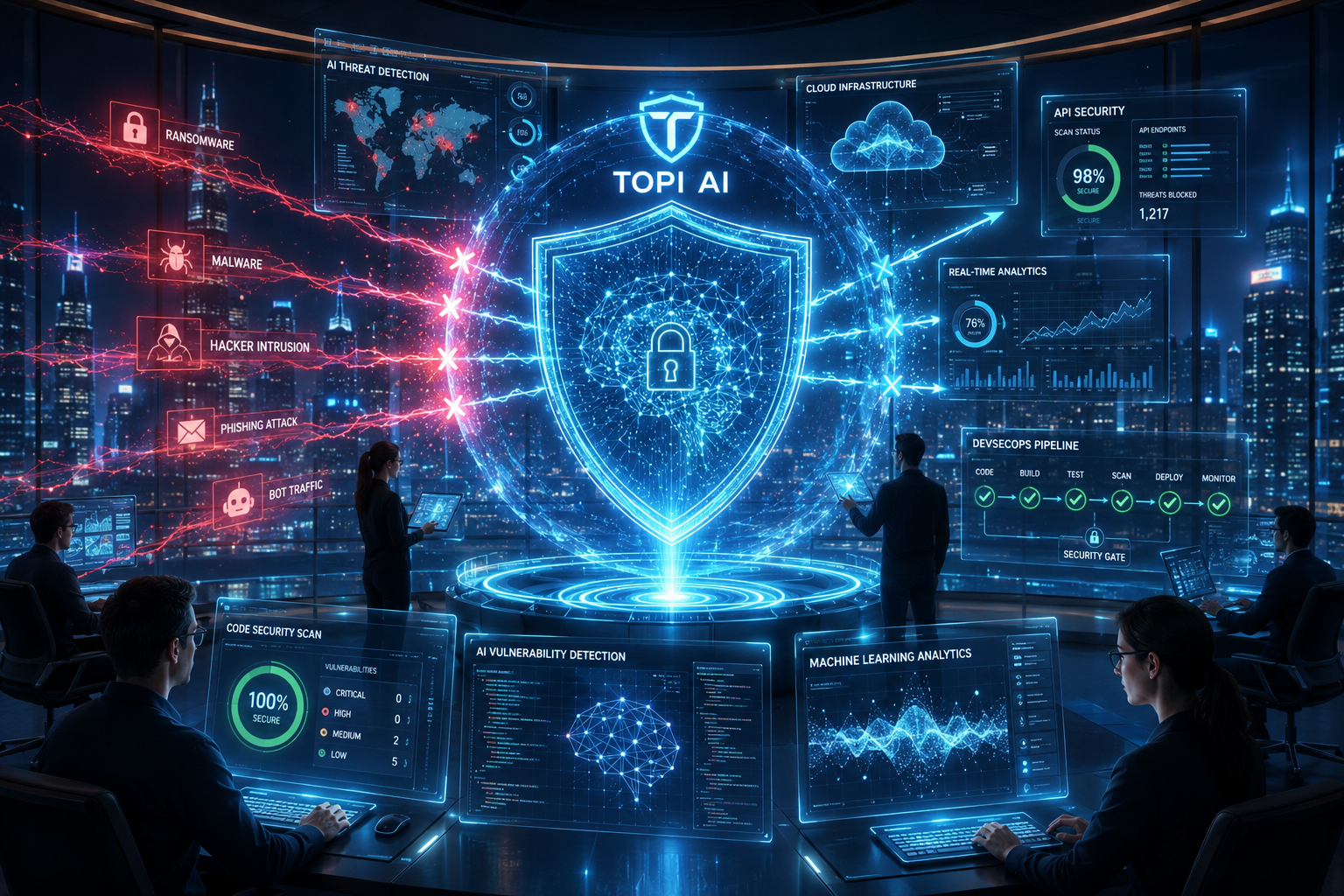
Topi AI code security for enterprise uses artificial intelligence and machine learning to improve software security during development and after deployment. It helps businesses detect vulnerabilities early, reduce human error, automate security testing, and strengthen enterprise cybersecurity.
AI-driven security tools can:
- Detect vulnerable code
- Find malware patterns
- Identify insecure APIs
- Monitor suspicious activities
- Protect sensitive enterprise data
- Improve compliance and governance
- Automate security scans
- Reduce software risks
For modern enterprises, AI-powered security is no longer optional. It is becoming necessary.
Why Enterprise Code Security Is Important
Many companies focus heavily on software development speed but ignore security. This creates dangerous vulnerabilities inside applications.
Cyberattacks are increasing every year. Hackers target enterprise systems because they contain valuable business information, customer records, financial data, and intellectual property.
Poor code security can cause:
- Data breaches
- Financial losses
- Service downtime
- Reputation damage
- Legal penalties
- Compliance violations
- Customer trust issues
A small coding mistake can create massive security problems. Examples include:
- SQL injection
- Cross-site scripting
- Broken authentication
- Weak API security
- Hardcoded passwords
- Cloud misconfigurations
Topi AI code security for enterprise helps prevent these issues before attackers exploit them.
How Topi AI Code Security Works
AI-powered code security systems work by analyzing software code, user behavior, and application environments using machine learning algorithms.
The system learns from millions of security patterns and continuously improves threat detection capabilities.
AI-Based Code Scanning
AI tools scan source code automatically and identify vulnerabilities.
The scanner checks:
- Unsafe coding practices
- Insecure dependencies
- Vulnerable libraries
- Authentication flaws
- API weaknesses
- Data exposure risks
Unlike traditional tools, AI systems learn new attack patterns continuously.
Real-Time Threat Detection
AI security platforms monitor applications in real time.
They can detect:
- Unusual login attempts
- Suspicious user behavior
- Malware activities
- Abnormal traffic patterns
- Insider threats
- Bot attacks
Real-time monitoring helps enterprises stop attacks quickly.
Automated Vulnerability Detection
AI systems reduce manual work by automatically identifying vulnerabilities.
This improves:
- Security team efficiency
- Faster issue detection
- Reduced human error
- Better software quality
Automation is important because enterprise applications often contain millions of lines of code.
Intelligent Risk Analysis
AI security tools prioritize vulnerabilities based on risk levels.
This helps enterprises focus on critical security issues first instead of wasting time on low-risk warnings.
Key Features of Topi AI Code Security for Enterprise
Modern AI-powered code security platforms offer many advanced features.
Secure Code Analysis
AI systems analyze application code deeply and detect hidden weaknesses.
The platform checks:
- Backend code
- Frontend code
- APIs
- Databases
- Cloud configurations
This improves overall enterprise security.
Continuous Security Monitoring
Cyber threats change every day. AI security tools provide continuous monitoring to detect new threats instantly.
Continuous monitoring helps businesses maintain stronger protection.
DevSecOps Integration
Topi AI code security integrates with DevSecOps workflows.
This means security becomes part of the software development lifecycle instead of being added later.
Developers can detect and fix vulnerabilities during coding.
AI-Powered Threat Intelligence
AI systems collect cybersecurity data from multiple sources.
This helps enterprises:
- Understand new attack trends
- Improve threat response
- Strengthen security strategies
- Reduce attack risks
Cloud Security Protection
Most enterprises now use cloud platforms like AWS, Azure, and Google Cloud.
AI-powered security helps protect:
- Cloud applications
- Containers
- Kubernetes environments
- Serverless functions
- Cloud databases
Cloud security is extremely important for modern enterprises.
Compliance Management
Many industries must follow strict compliance standards.
Examples include:
- GDPR
- HIPAA
- ISO 27001
- SOC 2
- PCI DSS
AI security tools help enterprises maintain compliance by identifying risky practices and generating security reports.
Benefits of Topi AI Code Security for Enterprise
AI-driven code security provides major advantages for businesses.
Faster Vulnerability Detection
Traditional security testing can take days or weeks.
AI tools can scan code within minutes and identify issues faster.
This saves time and reduces development delays.
Reduced Security Risks
AI systems identify threats early before they become major attacks.
This reduces:
- Data breach risks
- Malware infections
- Ransomware attacks
- Unauthorized access
Improved Developer Productivity
Developers often spend large amounts of time fixing security issues manually.
AI automation reduces repetitive tasks and allows developers to focus on building better applications.
Better Threat Prevention
AI learns from previous cyberattacks and improves threat prediction.
This proactive approach helps enterprises stop attacks before damage occurs.
Lower Operational Costs
Manual security monitoring requires large security teams.
AI automation reduces operational costs by handling repetitive security tasks automatically.
Stronger Customer Trust
Customers expect businesses to protect their personal data.
Strong security practices improve customer confidence and brand reputation.
Common Enterprise Security Threats
Modern enterprises face many cybersecurity threats.
Ransomware Attacks
Ransomware encrypts company data and demands payment.
AI-powered security can detect suspicious file activities before ransomware spreads.
Insider Threats
Employees or contractors may accidentally or intentionally expose sensitive data.
AI behavior analysis helps detect unusual internal activities.
API Security Risks
APIs connect applications and services.
Weak APIs can expose business data to attackers.
AI systems continuously monitor API security.
Phishing Attacks
Hackers use fake emails and websites to steal login credentials.
AI systems can identify phishing attempts using behavior analysis.
Supply Chain Attacks
Attackers target third-party software libraries and vendors.
AI security tools analyze dependencies and identify vulnerable components.
Cloud Misconfigurations
Improper cloud settings can expose sensitive information publicly.
AI systems detect insecure cloud configurations automatically.
AI and Secure Software Development Lifecycle
Security should exist throughout the software development lifecycle.
Topi AI code security supports every development phase.
Planning Phase
AI helps identify security requirements early.
This reduces future security problems.
Development Phase
Developers receive real-time security suggestions while coding.
This improves secure coding practices.
Testing Phase
AI-powered testing identifies vulnerabilities automatically.
Security teams can fix issues before deployment.
Deployment Phase
AI tools monitor live applications and cloud environments continuously.
Maintenance Phase
AI systems provide ongoing threat detection and security updates.
Role of AI in DevSecOps
DevSecOps combines development, security, and operations together.
AI improves DevSecOps by automating security processes.
Faster Security Automation
AI automates:
- Code scanning
- Threat detection
- Vulnerability analysis
- Security testing
Automation increases development speed.
Better Collaboration
AI-generated reports help developers and security teams work together more effectively.
Continuous Security Integration
Security checks become part of the CI/CD pipeline.
This reduces vulnerabilities before deployment.
Enterprise Industries Using AI Code Security
Many industries now use AI-powered code security solutions.
Banking and Finance
Financial companies protect:
- Payment systems
- Banking applications
- Customer accounts
- Financial transactions
Security is critical because financial data is highly sensitive.
Healthcare
Healthcare organizations protect patient records and medical systems.
AI security helps prevent data breaches.
E-Commerce
Online stores handle payment information and customer data.
AI security improves transaction protection.
Government Organizations
Governments use AI cybersecurity to protect national infrastructure and sensitive information.
SaaS Companies
Software-as-a-service businesses depend on secure cloud platforms.
AI security helps maintain customer trust.
Challenges of AI Code Security
Although AI security offers many benefits, there are also challenges.
False Positives
Some AI systems may identify harmless code as risky.
This can waste developer time.
High Initial Costs
Enterprise AI security solutions can require significant investment initially.
However, long-term benefits often outweigh costs.
Complex Integration
Large enterprises may face integration challenges with legacy systems.
AI Model Limitations
AI systems depend on training data.
Poor-quality data can reduce detection accuracy.
Privacy Concerns
AI systems process large amounts of enterprise data.
Businesses must ensure proper privacy protection.
Best Practices for Enterprise AI Code Security
Enterprises should follow strong security practices.
Implement Security Early
Security should begin during software planning and development.
Train Developers
Developers should learn secure coding techniques regularly.
Use Multi-Layered Security
Combine:
- AI security tools
- Firewalls
- Endpoint security
- Identity management
- Encryption
Multiple layers improve protection.
Monitor Continuously
Cyber threats evolve constantly.
Continuous monitoring is necessary for strong security.
Update Systems Regularly
Outdated software creates vulnerabilities.
Regular updates improve protection.
Perform Security Audits
Regular audits help identify hidden weaknesses.
AI vs Traditional Security Tools
Traditional security tools rely mostly on predefined rules.
AI-powered systems are smarter because they learn continuously.
Traditional Security Limitations
Traditional tools often:
- Miss unknown threats
- Require manual analysis
- Generate too many alerts
- Respond slowly
AI Security Advantages
AI systems:
- Learn new threats
- Detect abnormal behavior
- Automate analysis
- Improve continuously
- Respond faster
This makes AI highly valuable for enterprise cybersecurity.
Future of AI Code Security for Enterprise
AI cybersecurity is evolving rapidly.
Future enterprise security systems may include:
- Self-healing applications
- Autonomous threat response
- Predictive vulnerability analysis
- Advanced behavioral monitoring
- AI-driven incident response
- Intelligent cloud protection
As cyber threats become more advanced, AI security will become even more important.
How to Choose the Right AI Code Security Solution
Businesses should evaluate several factors before selecting a security platform.
Scalability
The solution should support future business growth.
Integration Support
The platform should integrate with:
- CI/CD pipelines
- Cloud platforms
- Development tools
- Security systems
Real-Time Detection
Choose solutions with real-time monitoring capabilities.
Compliance Features
Ensure the platform supports required industry compliance standards.
Reporting and Analytics
Detailed reports help enterprises understand security risks better.
Vendor Reputation
Choose trusted cybersecurity vendors with strong enterprise experience.
Why Enterprises Need AI Security Now
Cyberattacks are becoming more sophisticated every year.
Attackers now use:
- AI-generated malware
- Automated attacks
- Deepfake technology
- Advanced phishing techniques
Traditional security systems struggle against modern cyber threats.
AI-powered enterprise code security helps businesses stay ahead of attackers by improving:
- Threat detection
- Incident response
- Security automation
- Risk management
Companies that ignore cybersecurity may face major financial and operational damage.
Topi AI Code Security and Digital Transformation
Digital transformation increases business dependence on technology.
Enterprises now use:
- Cloud computing
- AI platforms
- Remote work systems
- SaaS applications
- APIs
- IoT devices
This creates larger attack surfaces.
Topi AI code security helps enterprises protect digital infrastructure during transformation.
Security is now a business necessity, not just an IT function.
Human Role in AI Security
AI improves cybersecurity, but human expertise remains important.
Security professionals still handle:
- Strategic decisions
- Incident management
- Risk assessments
- Compliance planning
- Security governance
The best approach combines AI automation with human intelligence.
Enterprise Security Culture
Technology alone cannot fully protect organizations.
Businesses must build strong security culture.
Employees should understand:
- Password security
- Phishing risks
- Data protection
- Safe browsing
- Secure communication
Cybersecurity awareness reduces human mistakes.
Conclusion
Topi AI code security for enterprise is becoming an essential solution for modern businesses. As cyber threats continue to evolve, enterprises need smarter and faster security systems that can protect software, cloud platforms, APIs, customer data, and digital infrastructure.
AI-powered code security improves vulnerability detection, threat monitoring, security automation, compliance management, and secure software development. It helps businesses reduce risks, improve operational efficiency, and build stronger customer trust.
Traditional cybersecurity methods alone are no longer enough for modern enterprise environments. AI-driven security solutions provide proactive protection against advanced cyberattacks and help organizations stay secure in an increasingly digital world.
Businesses that invest in AI code security today will be better prepared for future cybersecurity challenges. Strong security practices combined with AI intelligence can create safer, smarter, and more resilient enterprise systems.
FAQs
1. What is Topi AI code security for enterprise?
Topi AI code security for enterprise is an AI-powered cybersecurity solution that helps businesses detect vulnerabilities, monitor threats, and protect software applications from cyberattacks.
2. Why is AI important in enterprise cybersecurity?
AI improves cybersecurity by automating threat detection, analyzing large amounts of data, identifying abnormal behavior, and responding to attacks faster than traditional systems.
3. Can AI detect software vulnerabilities automatically?
Yes, AI-powered security tools can automatically scan source code and identify vulnerabilities, insecure libraries, API risks, and coding mistakes.
4. What industries use AI code security solutions?
Industries including banking, healthcare, e-commerce, government, SaaS, and technology companies use AI-driven code security solutions.
5. Does AI replace human cybersecurity experts?
No, AI supports cybersecurity experts by automating repetitive tasks and improving threat detection, but human professionals are still needed for strategy and decision-making.
6. What are the biggest enterprise cybersecurity threats?
Major threats include ransomware, phishing, insider threats, cloud misconfigurations, API attacks, and supply chain attacks.
7. How does AI improve DevSecOps?
AI automates security testing, vulnerability detection, and threat monitoring within DevSecOps workflows, improving development speed and security.
8. Is AI-powered code security suitable for cloud environments?
Yes, AI security solutions help protect cloud applications, containers, APIs, and cloud infrastructure from cyber threats.
9. What are the challenges of AI cybersecurity?
Challenges include false positives, integration complexity, privacy concerns, and high initial implementation costs.
10. How can enterprises improve code security?
Enterprises can improve code security by using AI-powered tools, training developers, implementing DevSecOps, monitoring systems continuously, and performing regular security audits.