Subtotal $0.00




Email : 3
Introduction
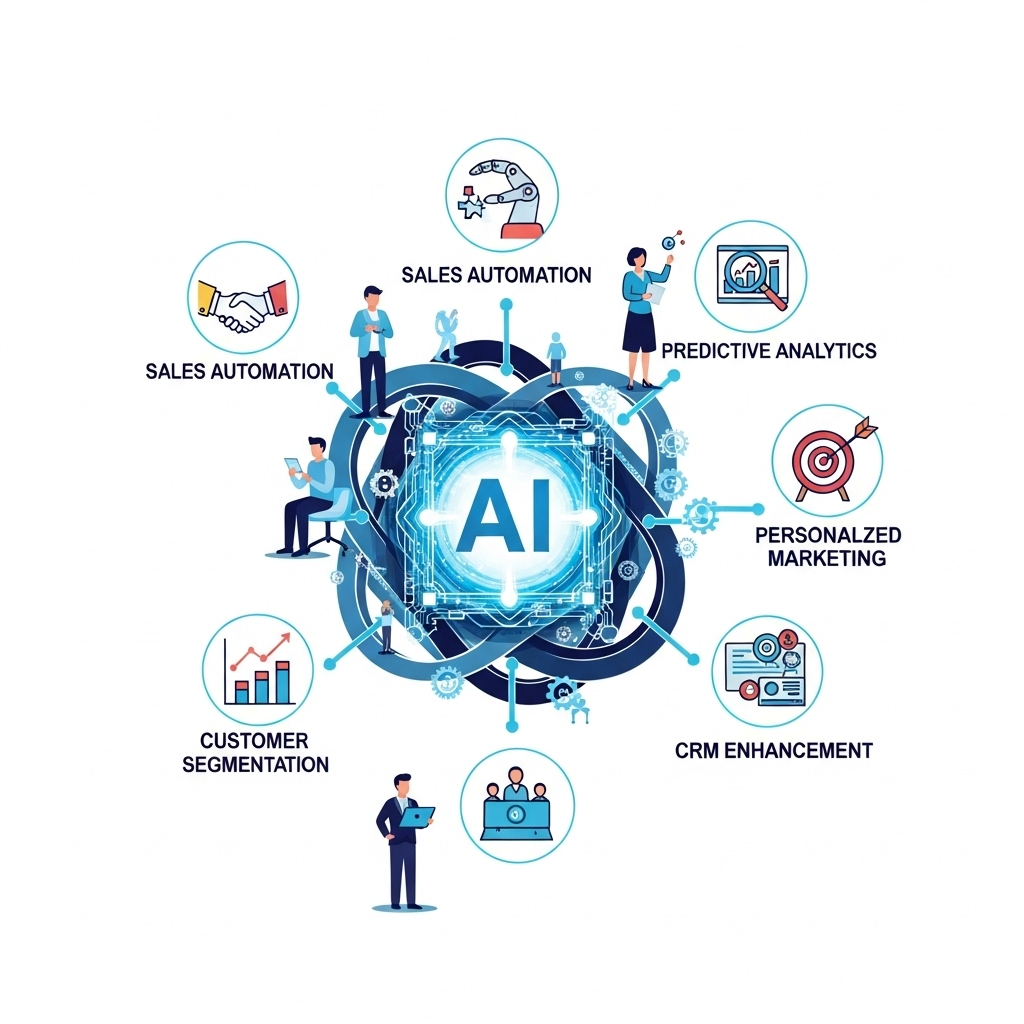
Businesses today handle large amounts of customer data, leads, and communication every day. Managing these processes manually can be time-consuming and inefficient. This is why many companies are turning to AI agent CRM integrations to automate their customer relationship management processes.
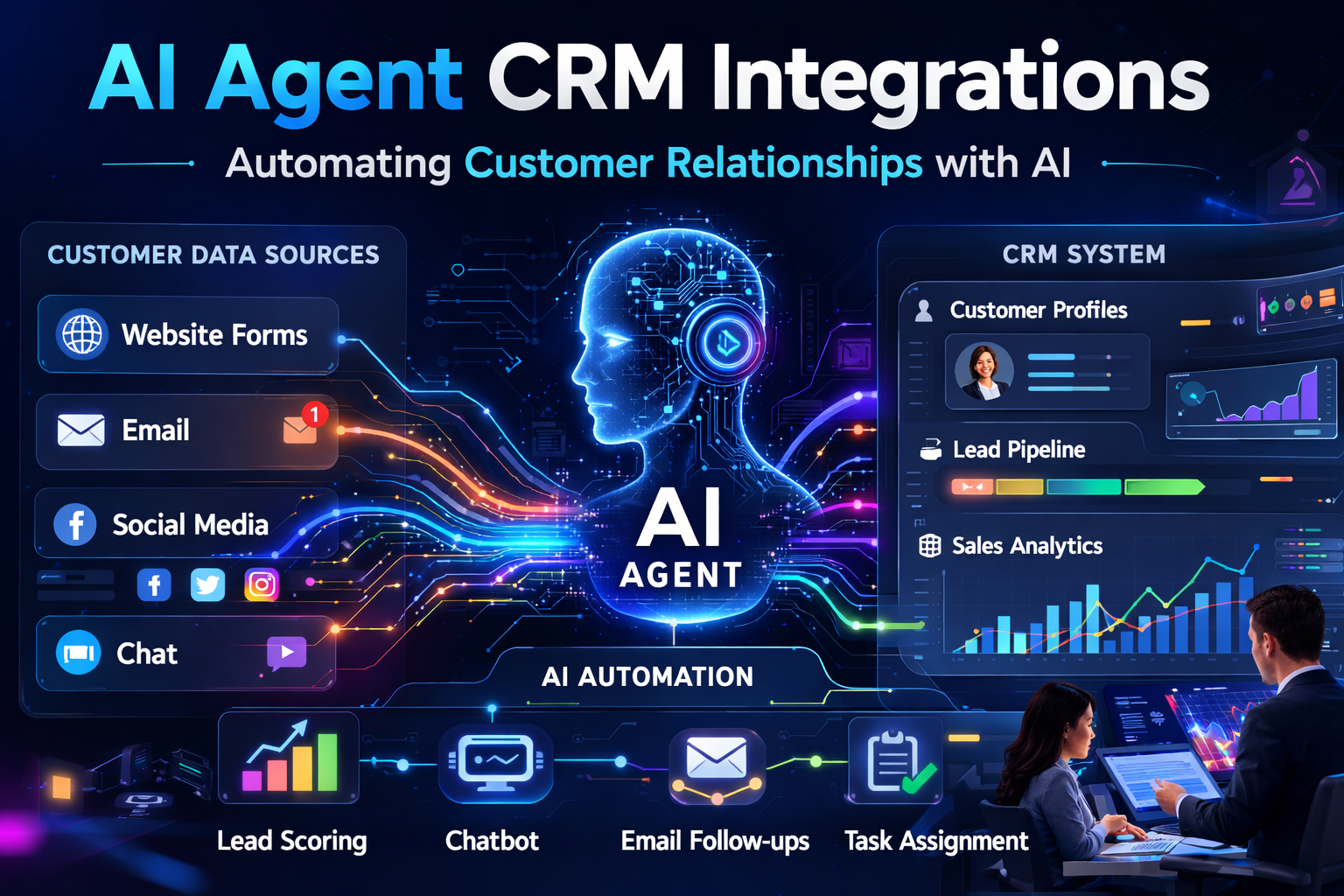
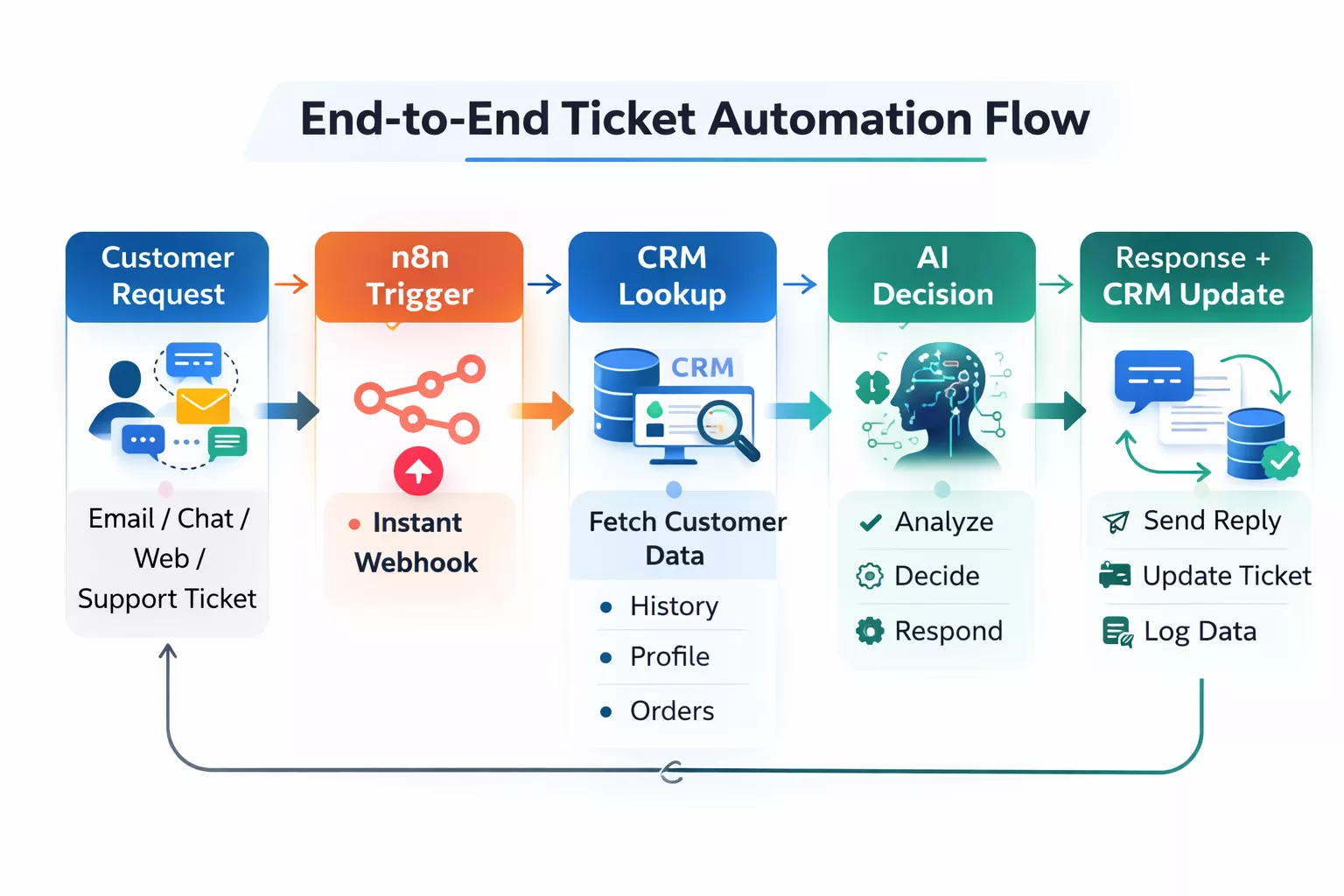
AI agents can connect directly with CRM platforms to handle tasks such as lead management, customer support, follow-ups, and sales automation. Instead of manually updating records or responding to customer queries, AI agents can analyze data, interact with customers, and update CRM systems automatically.
This integration helps businesses save time, reduce errors, and improve customer experiences.
In this article, we will explore how AI agents integrate with CRM systems, the benefits of AI-powered CRM automation, popular CRM platforms that support AI integration, and how businesses can implement these systems to improve efficiency and growth.
What Is CRM Integration with AI Agents?
Before understanding how AI agents improve CRM systems, it is important to understand what CRM integration means.
CRM stands for Customer Relationship Management. It refers to software used by businesses to manage customer data, interactions, and sales activities.
When AI agents are integrated with CRM systems, they can automate many tasks that are usually done manually.
AI agents connected to CRM systems can:
- collect and update customer information
- respond to customer inquiries
- analyze customer behavior
- qualify sales leads
- schedule meetings and follow-ups
This combination creates a smart CRM system that can operate more efficiently and intelligently.
Why Businesses Are Integrating AI Agents with CRM
CRM systems store valuable customer data, but managing that data manually can be difficult.
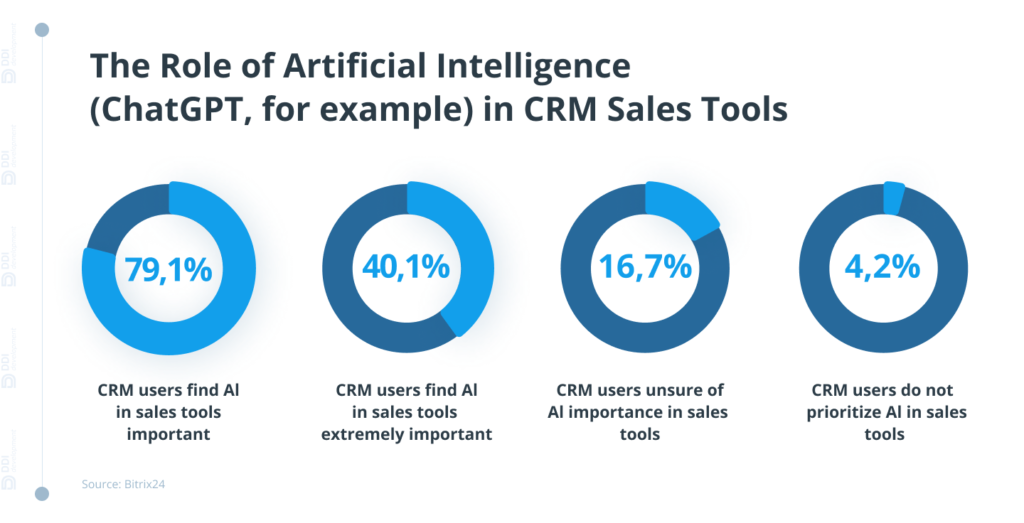
AI agents help businesses make better use of CRM platforms by automating repetitive tasks and providing insights.
Several important benefits explain why companies are adopting AI-powered CRM systems.
Improved Lead Management
AI agents can automatically collect and organize leads from different sources.
These sources may include:
- websites
- social media
- email campaigns
- messaging platforms
The AI agent can then update the CRM system and assign leads to sales teams.
Faster Customer Responses
Customers expect quick responses to their questions.
AI agents connected to CRM systems can respond instantly by accessing customer data and previous conversations.
This improves customer satisfaction.
Automated Sales Workflows
Sales teams often spend time performing administrative tasks.
AI agents can automate tasks such as:
- updating customer records
- scheduling meetings
- sending follow-up messages
This allows sales teams to focus on closing deals.
Better Data Insights
AI agents can analyze CRM data and identify trends.
For example, they can analyze:
- customer behavior
- purchase patterns
- marketing performance
These insights help businesses make smarter decisions.
How AI Agents Work with CRM Systems
AI agents interact with CRM platforms through APIs and automation tools.
These integrations allow AI systems to access and update CRM data in real time.
The process typically involves several steps.
Step 1: Data Collection
The AI agent collects data from different sources.
Examples include:
- website forms
- customer messages
- email inquiries
The collected information is then stored in the CRM system.
Step 2: Data Analysis
The AI agent analyzes customer data to identify patterns and insights.
For example, the AI may determine:
- which leads are most likely to convert
- which customers need follow-up
- which marketing campaigns perform best.
Step 3: Automated Actions
After analyzing the data, the AI agent can perform automated actions.
Examples include:
- assigning leads to sales representatives
- sending personalized emails
- updating CRM records
- scheduling follow-up tasks
Step 4: Continuous Learning
Some AI systems improve over time by learning from new data.
This helps businesses optimize their CRM workflows.
Popular CRM Platforms That Support AI Integration
Many CRM platforms now support AI integrations.
These systems allow businesses to connect AI agents easily.
Below are some of the most popular CRM platforms.
Salesforce
Salesforce offers advanced AI tools such as Einstein AI.
These tools help automate sales and customer insights.
HubSpot
HubSpot integrates AI for marketing automation, lead scoring, and customer communication.
Zoho CRM
Zoho CRM includes AI capabilities through Zia AI assistant, which helps analyze data and automate tasks.
Microsoft Dynamics 365
This platform provides AI-powered analytics and automation tools for enterprise businesses.
Common Use Cases of AI Agent CRM Integration
Businesses use AI agents with CRM systems in many different ways.
Below are some of the most common use cases.
1. Lead Qualification
AI agents can evaluate incoming leads based on predefined criteria.
The AI can analyze factors such as:
- customer interest
- company size
- engagement history
Qualified leads are then prioritized for the sales team.
2. Customer Support Automation
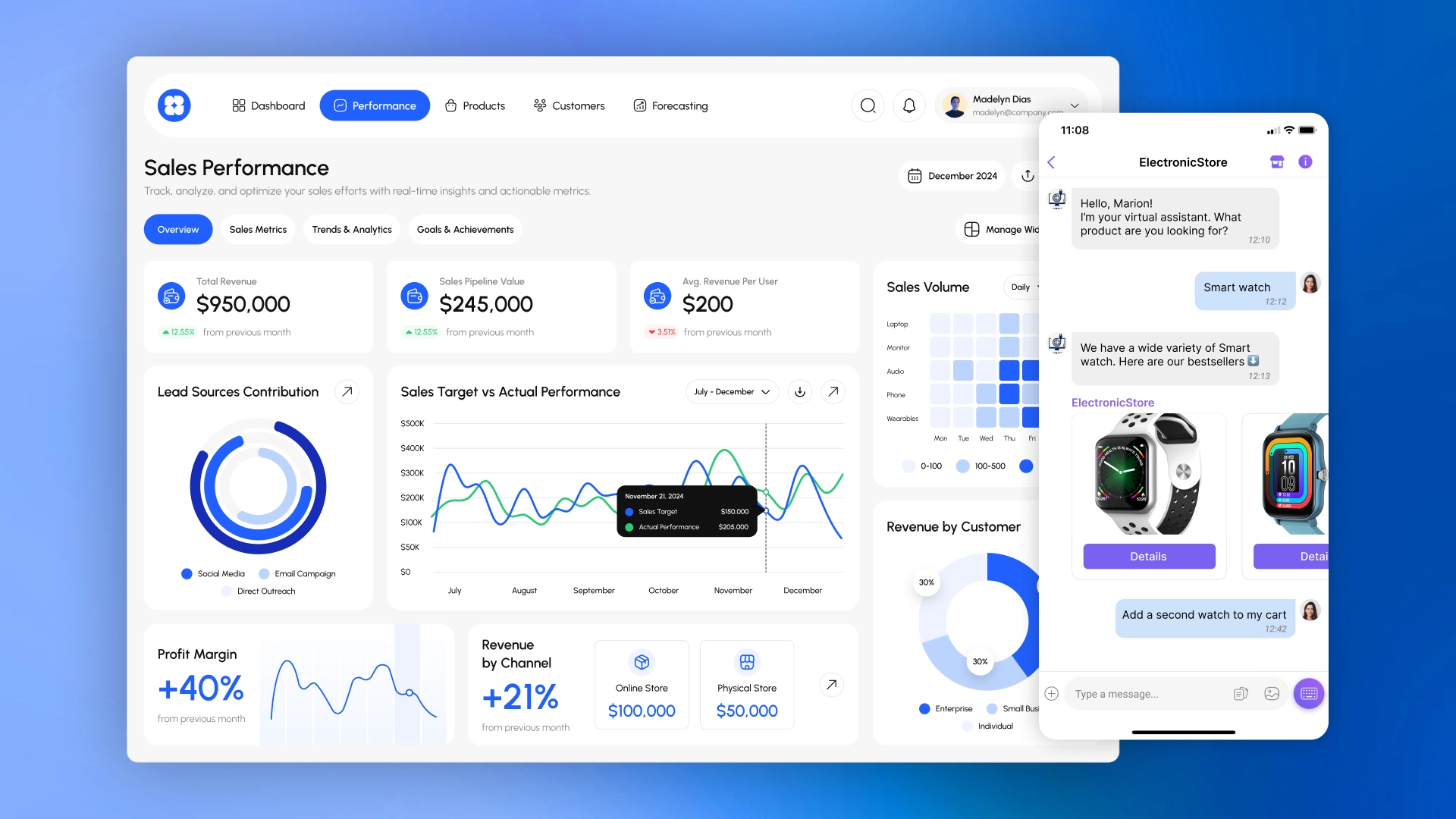
AI chatbots integrated with CRM systems can access customer records and provide personalized support.
They can handle tasks such as:
- answering common questions
- checking order status
- resolving simple issues
3. Sales Follow-Ups
AI agents can send automated follow-up messages to customers.
These messages may include:
- product recommendations
- meeting reminders
- promotional offers
4. Customer Behavior Analysis
AI systems can analyze customer interactions and predict future behavior.
This helps businesses identify opportunities for upselling or cross-selling.
Benefits of AI Agent CRM Integration
Integrating AI agents with CRM systems provides several advantages.
Increased Efficiency
Automation reduces the time required for manual tasks.
Improved Customer Experience
AI agents provide faster responses and personalized interactions.
Better Decision Making
AI-powered analytics provide insights that help businesses make strategic decisions.
Scalability
AI automation allows businesses to handle larger volumes of customers without increasing staff.
Challenges of AI CRM Integration
While AI-powered CRM systems offer many benefits, they also present challenges.
Data Privacy Concerns
CRM systems store sensitive customer information.
Businesses must ensure strong data protection practices.
Integration Complexity
Connecting AI systems with existing CRM platforms may require technical expertise.
Employee Training
Teams may need training to understand how to use AI-powered CRM tools effectively.
Future of AI CRM Integration
The future of CRM systems will likely involve deeper integration with AI technologies.
Several trends may shape the evolution of AI-powered CRM systems.
Predictive Customer Insights
AI systems will predict customer behavior with greater accuracy.
Autonomous Sales Agents
AI agents may manage entire sales pipelines automatically.
Hyper-Personalized Customer Experiences
AI will enable highly personalized marketing and customer engagement.
Conclusion
AI agent CRM integrations are transforming the way businesses manage customer relationships. By automating lead management, customer communication, and sales workflows, AI systems allow companies to operate more efficiently and provide better customer experiences.
While implementing AI-powered CRM systems requires careful planning and data protection measures, the benefits are significant. Businesses that adopt AI CRM integration early will gain a competitive advantage by improving productivity, customer satisfaction, and decision-making.
As AI technology continues to advance, CRM systems will become increasingly intelligent, helping businesses build stronger relationships with customers and drive sustainable growth.
Read More Blog–Will AI Agents Replace Human Employees?
FAQs
1. What is AI CRM integration?
AI CRM integration connects artificial intelligence systems with CRM platforms to automate sales, marketing, and customer support processes.
2. Can AI agents manage CRM data automatically?
Yes. AI agents can collect customer data, update records, and automate workflows within CRM systems.
3. Which CRM platforms support AI integration?
Popular platforms include Salesforce, HubSpot, Zoho CRM, and Microsoft Dynamics 365.
4. Is AI CRM integration expensive?
Costs vary depending on the tools used, but many AI-powered CRM solutions are scalable and affordable.
5. How does AI improve CRM systems?
AI improves CRM systems by automating tasks, analyzing customer data, predicting behavior, and improving customer interactions.