Subtotal $0.00




Email : 8
Introduction
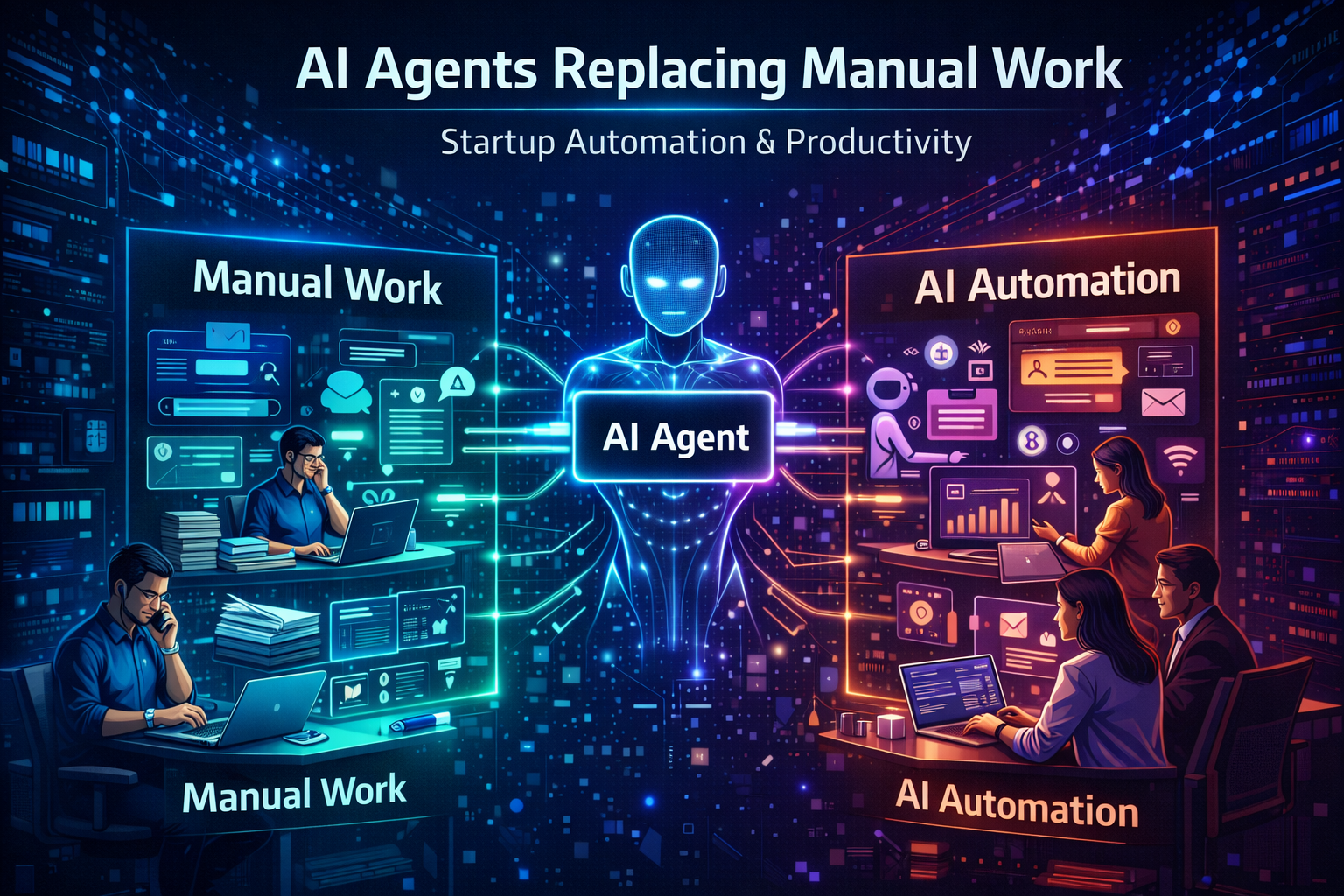
Startups often begin with small teams, limited budgets, and a large number of tasks that need to be completed every day. Founders and employees usually handle multiple responsibilities such as marketing, customer support, sales, data analysis, and operations. Managing all these activities manually can be time-consuming and exhausting.
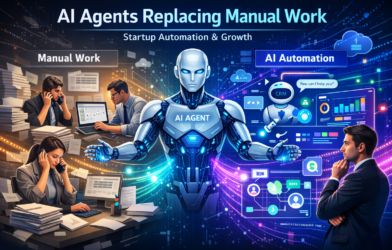
This is where AI agents are changing the way startups operate. AI agents are intelligent systems that can automate repetitive tasks, analyze data, communicate with customers, and manage workflows without constant human involvement. Instead of spending hours on manual work, startup teams can focus on strategy, innovation, and growth.
Today many startups are already using AI agents to automate customer support, lead generation, marketing campaigns, and business processes.
In this article, we will explore how AI agents are replacing manual work in startups, the benefits of AI automation, real business use cases, and how startups can successfully implement AI agents.



What Are AI Agents?
Before understanding how AI agents replace manual work, it is important to understand what AI agents are.
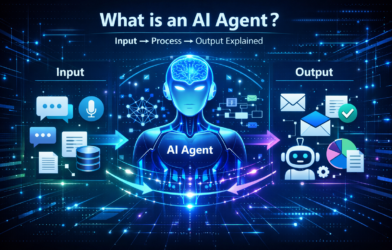
AI agents are intelligent software systems that can perform tasks automatically using artificial intelligence technologies such as machine learning, natural language processing, and data analysis.
Unlike simple automation tools, AI agents can:
- understand natural language
- make decisions
- analyze information
- complete multi-step tasks
- interact with users or other software systems
These capabilities allow AI agents to perform work that was traditionally done by humans.
Startups are adopting AI agents because they help reduce workload and increase efficiency.
Why Startups Are Adopting AI Agents
Startups face many challenges in their early stages.
They often struggle with limited resources, small teams, and increasing operational demands. AI agents help startups overcome these challenges by automating repetitive tasks.
Below are some important reasons why startups are adopting AI agents.
1. Reduced Operational Costs
Hiring employees for every task can be expensive for startups.
AI agents help reduce operational costs by automating routine work.
Examples include:
- answering customer queries
- sending marketing emails
- scheduling meetings
- analyzing business data
This allows startups to operate efficiently with smaller teams.
2. Faster Business Operations
Manual processes often slow down business operations.
AI agents can complete tasks instantly.
For example:
- responding to customers immediately
- generating reports automatically
- managing leads efficiently
Faster operations help startups grow more quickly.
3. 24/7 Business Availability
Human teams need rest, but AI agents can operate continuously.
AI systems can work:
- day and night
- on weekends
- during holidays
This ensures that customers receive support at any time.
4. Increased Productivity
When repetitive tasks are automated, employees can focus on more valuable activities such as:
- strategic planning
- product development
- innovation
AI agents therefore improve overall productivity.
Types of Manual Work Replaced by AI Agents
AI agents are capable of replacing many repetitive tasks that startups traditionally perform manually.
Below are several areas where AI agents are making a major impact.
1. Customer Support Automation
Customer support is one of the most time-consuming tasks for startups.
Businesses receive many customer queries every day through:
- websites
- social media
- messaging apps
AI agents can automate most of these interactions.
Tasks AI Agents Can Perform
AI agents can help manage customer communication in several ways.
Some examples include:
- answering frequently asked questions
- providing product information
- checking order status
- guiding customers through processes
This reduces the workload of customer support teams.
2. Lead Generation and Sales Automation
Generating leads is essential for startup growth.
However, manual lead generation often requires significant time and effort.
AI agents can automate many sales activities.
Sales Tasks Automated by AI
AI agents can perform various sales-related tasks.
These include:
- identifying potential customers
- sending outreach messages
- qualifying leads
- scheduling sales meetings
This allows startups to build stronger sales pipelines.
3. Marketing Automation
Marketing is another area where startups spend a lot of time and resources.
AI agents can help automate marketing activities and improve campaign performance.
Marketing Tasks Automated by AI
AI agents can assist with several marketing activities.
Examples include:
- creating content ideas
- writing marketing emails
- scheduling social media posts
- analyzing marketing performance
These capabilities help startups run more effective campaigns.
4. Data Analysis and Reporting
Startups generate large amounts of data from different sources.
Analyzing this data manually can be difficult and time-consuming.
AI agents can automatically analyze business data and generate insights.
Data Tasks Automated by AI
AI systems can perform tasks such as:
- generating reports
- identifying trends
- analyzing customer behavior
- predicting future performance
This helps startup founders make better decisions.
5. Administrative Work
Administrative tasks consume a lot of time in many startups.
AI agents can automate routine administrative activities.
Examples of Administrative Automation
AI systems can handle tasks such as:
- scheduling meetings
- managing calendars
- sending reminders
- organizing documents
Automation reduces the administrative burden on employees.
Real-World Examples of AI Automation in Startups
Many startups around the world are already using AI agents to automate operations.
Below are some examples of how AI is transforming startup workflows.
Example 1: AI Customer Support Bots
Many startups use AI chatbots on their websites and messaging platforms.
These chatbots handle common customer questions and provide instant responses.
This allows support teams to focus on complex issues.
Example 2: AI Marketing Assistants
AI marketing tools help startups create content, manage advertising campaigns, and analyze customer engagement.
This reduces the time required to manage marketing activities.
Example 3: AI Sales Agents
Some startups use AI agents to automatically contact potential customers and qualify leads.
These systems can send personalized messages and schedule meetings.
Example 4: AI Data Analysts
AI analytics tools can process large datasets and provide insights about customer behavior and market trends.
This helps startups make smarter business decisions.
Benefits of AI Agents for Startups
AI agents provide many advantages for startup businesses.
These benefits go beyond simple automation.
1. Improved Efficiency
AI agents complete tasks quickly and accurately.
This improves business efficiency.
2. Cost Savings
Automation reduces the need for large teams.
Startups can save money on operational costs.
3. Better Customer Experience
AI agents provide instant responses and personalized support.
This improves customer satisfaction.
4. Scalability
As startups grow, AI systems can easily handle increased workloads.
Businesses do not need to hire large numbers of employees immediately.
Challenges of Using AI Agents
While AI agents offer many advantages, startups should also understand the challenges.
Below are some potential issues.
1. Initial Setup Cost
Implementing AI systems may require investment in technology and infrastructure.
However, the long-term benefits often outweigh the initial costs.
2. Data Privacy Concerns
AI systems process large amounts of customer data.
Startups must ensure strong data protection policies.
3. Need for Human Oversight
AI agents should not operate completely without supervision.
Human monitoring is necessary to ensure accurate results.
How Startups Can Implement AI Agents
Startups interested in using AI agents should follow a structured approach.
Below are several steps for successful AI implementation.
Step 1: Identify Repetitive Tasks
Start by identifying tasks that consume large amounts of time.
Examples include:
- customer support
- lead management
- marketing campaigns
These tasks are ideal for automation.
Step 2: Choose the Right AI Tools
Many AI platforms are available today.
Startups should choose tools that match their business needs.
Step 3: Integrate AI with Existing Systems
AI agents should connect with business tools such as:
- CRM systems
- marketing platforms
- customer support software
Integration improves workflow efficiency.
Step 4: Monitor AI Performance
After implementing AI agents, startups should monitor their performance.
Regular evaluation helps improve results.
Future of AI Agents in Startups
The role of AI agents in startups will continue to grow.
Future trends may include:
- fully autonomous AI teams
- advanced AI decision-making systems
- AI-powered business strategy tools
- collaborative AI agents working together
As AI technology improves, startups will increasingly rely on intelligent automation.
Conclusion
AI agents are transforming the way startups operate. By automating repetitive tasks such as customer support, marketing, data analysis, and administrative work, AI systems allow startups to work more efficiently and focus on innovation.
While AI cannot replace human creativity and strategic thinking, it can significantly reduce the burden of manual work. This allows startup teams to spend more time on activities that drive business growth.
Startups that adopt AI agents early will gain a strong competitive advantage by improving productivity, reducing costs, and delivering better customer experiences.
As AI technology continues to evolve, it will become an essential tool for startups aiming to scale their businesses quickly and efficiently.
FAQs
1. What are AI agents in startups?
AI agents are intelligent software systems that automate tasks such as customer support, marketing, data analysis, and administrative work.
2. Can AI agents replace employees?
AI agents mainly replace repetitive tasks, not human creativity or decision-making. Humans are still needed for strategic work.
3. Are AI agents expensive for startups?
Many AI tools are affordable and scalable, making them accessible even for small startups.
4. Which startup tasks can be automated with AI?
Tasks such as customer support, marketing automation, lead generation, scheduling, and data analysis can be automated.
5. Will AI agents become more common in startups?
Yes. AI automation is rapidly growing and will likely become a standard tool for startup operations.