Subtotal $0.00



Email : 7
Introduction
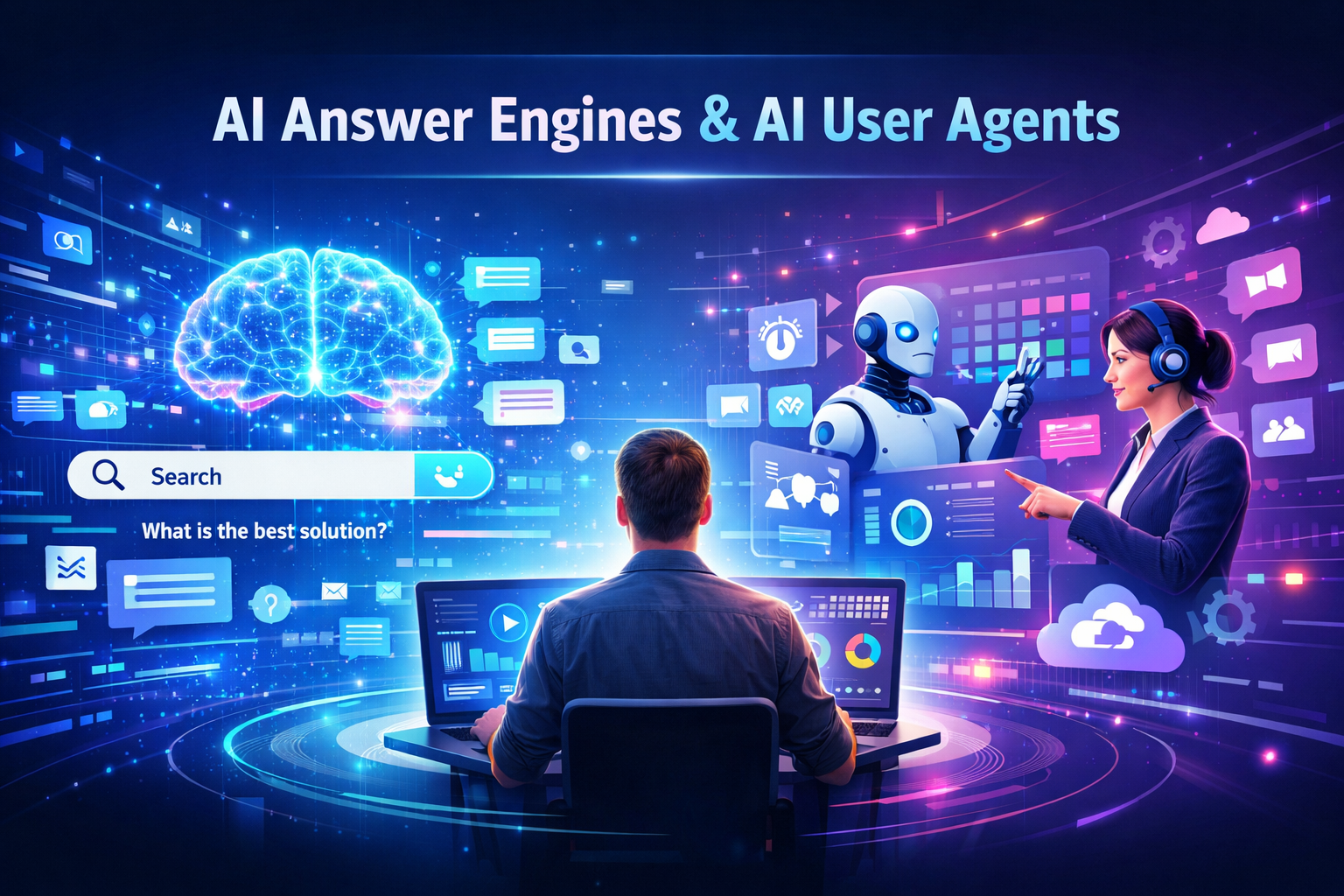
Artificial intelligence is rapidly changing how people search for information, interact with technology, and complete everyday tasks. Two powerful innovations leading this transformation are AI Answer Engines and AI User Agents. Instead of searching through dozens of websites to find answers, modern AI systems can instantly provide clear and accurate responses. At the same time, AI user agents can perform tasks, make decisions, and automate workflows on behalf of users.
These technologies are reshaping industries such as digital marketing, startups, customer service, business automation, and online research. For entrepreneurs, marketers, and businesses, understanding these tools is becoming essential to stay competitive in the digital economy.
In this article, you will learn what AI answer engines and AI user agents are, how they work, their benefits, real-world applications, differences, and how businesses can use them for growth. By the end of this guide, you will have a complete understanding of how these AI systems are shaping the future of work and digital interaction.
What Are AI Answer Engines?
Artificial intelligence is transforming how people search for information online. Traditional search engines show a list of websites, but AI answer engines provide direct answers to users’ questions. These systems understand natural language and generate responses instantly.
An AI answer engine combines technologies such as machine learning, natural language processing, and large language models to understand questions and produce meaningful answers.
Before looking at the features of AI answer engines, it is important to understand what makes them different from traditional search engines.
Key Characteristics of AI Answer Engines
AI answer engines focus on understanding user intent and providing instant responses rather than simply showing links.
- They provide direct answers instead of website lists.
- They use natural language processing (NLP) to understand questions.
- They analyze large amounts of data quickly.
- They can summarize complex information.
- They generate conversational responses.
These features make AI answer engines faster and more user-friendly for information discovery.
How AI Answer Engines Work
AI answer engines work by combining multiple artificial intelligence technologies. They process user queries, analyze context, search relevant data sources, and generate responses.
Understanding the working process helps businesses and users trust the results provided by these systems.
Steps in AI Answer Engine Processing
The system follows several steps to generate answers.
- Query Understanding
The AI reads the user’s question and understands its meaning using natural language processing. - Intent Detection
The system identifies what the user actually wants to know. - Information Retrieval
The engine searches large datasets, documents, or knowledge bases. - Answer Generation
AI models generate a response based on the available information. - Response Delivery
The answer is presented in clear and simple language.
This process happens in seconds, making AI answer engines extremely efficient.
Examples of AI Answer Engines
Many technology companies are developing answer engines that deliver instant responses to users.
These platforms use advanced AI models to understand questions and generate meaningful answers.
Popular AI Answer Engines
Several AI-powered platforms are currently leading this field.
- Chat-based AI assistants
- AI-powered search engines
- Knowledge-based AI systems
- AI research assistants
These tools help users quickly find reliable information without browsing multiple websites.
Benefits of AI Answer Engines
AI answer engines offer several advantages for users, businesses, and researchers.
They reduce time spent searching for information and provide more accurate insights.
Major Advantages of AI Answer Engines
These systems provide multiple benefits in daily life and business operations.
- Faster information access
- Improved user experience
- Better content summarization
- More accurate question answering
- Personalized responses
Because of these benefits, AI answer engines are becoming an important part of the modern internet.
What Are AI User Agents?
AI user agents are intelligent software programs that can perform tasks automatically on behalf of users.
Unlike AI answer engines that only provide information, AI user agents can take actions, make decisions, and complete tasks.
They act as digital assistants capable of interacting with systems, tools, and applications.
Before understanding their capabilities, it is important to understand their basic definition.
Definition of AI User Agents
An AI user agent is a software system that can independently perform tasks using artificial intelligence.
These agents observe environments, analyze information, and take actions to achieve specific goals.
They can operate in websites, apps, operating systems, or business platforms.
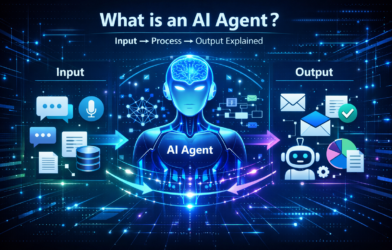
How AI User Agents Work
AI user agents use machine learning, automation systems, and decision-making algorithms to perform tasks.
They operate based on goals given by the user.
Working Process of AI User Agents
The functioning of AI user agents involves several steps.
- Goal Understanding
The agent understands what the user wants to achieve. - Planning
The system creates a strategy to complete the task. - Execution
The agent interacts with systems or applications. - Monitoring
It monitors progress and adjusts actions. - Completion
The task is completed and results are delivered.
This ability to plan and execute tasks makes AI user agents extremely powerful.
Types of AI User Agents
AI agents come in different forms depending on their purpose and level of autonomy.
Each type is designed to solve specific problems.
Common Types of AI Agents
Several types of AI user agents exist in modern technology.
- Reactive Agents
These agents respond to immediate inputs without long-term planning. - Goal-Based Agents
They focus on achieving specific objectives. - Learning Agents
These agents improve performance using experience and data. - Autonomous Agents
They perform tasks independently with minimal human intervention.
Each type plays a role in different industries and applications.
Differences Between AI Answer Engines and AI User Agents
Although both technologies are based on artificial intelligence, they serve different purposes.
AI answer engines focus on providing information, while AI user agents focus on performing actions.
Understanding this difference helps businesses choose the right solution.
Key Differences
Several factors differentiate these two AI technologies.
- Purpose
AI answer engines provide information, while AI agents perform tasks. - Interaction Type
Answer engines respond to questions. AI agents complete workflows. - Autonomy Level
AI agents can operate independently. - Applications
Answer engines help in research, while agents help in automation. - Functionality
Answer engines generate responses, while agents execute actions.
Both technologies are complementary and often work together.
Real-World Applications of AI Answer Engines
AI answer engines are widely used in multiple industries.
They improve efficiency by delivering instant knowledge.
Practical Applications
These systems are used in several real-world scenarios.
- Online research and knowledge discovery
- Customer support automation
- Education and learning assistance
- Medical information systems
- Technical troubleshooting
These applications help users access reliable information quickly.
Real-World Applications of AI User Agents
AI user agents are widely used for automation and decision-making.
Businesses use them to reduce workload and improve productivity.
Major Applications
AI agents are transforming many industries.
- Business process automation
- Customer service automation
- Sales and marketing workflows
- Task scheduling and reminders
- Data analysis and reporting
These applications help organizations operate more efficiently.
AI Answer Engines in Digital Marketing
Digital marketing is one of the industries most affected by AI answer engines.
These tools are changing how users search for information online.
Impact on Marketing
AI answer engines influence marketing strategies in several ways.
- Users get direct answers instead of visiting websites.
- Content must be more informative and structured.
- Businesses must optimize for AI-generated answers.
- SEO strategies must adapt to answer-based search.
Marketers must focus on high-quality, trustworthy content.
AI User Agents in Business Automation
AI user agents are becoming essential tools for modern businesses.
They automate repetitive tasks and improve productivity.
Business Benefits
AI agents bring several advantages to organizations.
- Automated workflows
- Faster decision-making
- Reduced operational costs
- Improved productivity
- Better customer engagement
Companies using AI automation gain a competitive advantage.
The Future of AI Answer Engines and AI Agents
Artificial intelligence continues to evolve rapidly.
Both answer engines and AI agents will become more intelligent and autonomous in the coming years.
Future Trends
Several trends are shaping the future of AI technologies.
- More advanced conversational AI
- Fully autonomous AI agents
- Integration with business tools
- Personalized AI assistants
- AI-powered digital workplaces
These innovations will redefine how humans interact with technology.
Challenges and Limitations
Despite their benefits, AI systems still face several challenges.
Understanding these limitations is important for responsible use.
Common Challenges
Some issues still exist in AI technologies.
- Data accuracy concerns
- Ethical considerations
- Privacy risks
- Dependence on data quality
- Potential bias in AI models
Addressing these challenges will help build trustworthy AI systems.
How Businesses Can Prepare for AI Agents
Businesses must prepare for a future where AI agents play a major role.
Adopting AI strategies early can create competitive advantages.
Steps for Businesses
Organizations can take several steps to adopt AI technologies.
- Learn about AI technologies and capabilities.
- Identify automation opportunities.
- Train employees in AI tools.
- Implement AI-powered workflows.
- Monitor performance and optimize processes.
Companies that adopt AI early will lead the digital economy.
Conclusion
AI answer engines and AI user agents represent the next evolution of artificial intelligence. While answer engines focus on delivering instant knowledge, AI agents go a step further by performing tasks and automating workflows.
Together, these technologies are transforming how people interact with digital systems, search for information, and manage work. Businesses that understand and adopt these tools will gain significant advantages in productivity, efficiency, and innovation.
As artificial intelligence continues to advance, the combination of answer engines and autonomous AI agents will redefine the digital landscape. From customer service to business automation and digital marketing, these technologies are shaping the future of intelligent systems.
Organizations and individuals who learn to leverage these tools today will be better prepared for the AI-driven world of tomorrow.
Read More Blog–The Best AI Tools for 2026
FAQ’s
What is an AI answer engine?
An AI answer engine is a system that provides direct answers to user questions using artificial intelligence instead of displaying a list of websites.
What is an AI user agent?
An AI user agent is an intelligent software program that can perform tasks automatically on behalf of users.
How are AI agents different from chatbots?
Chatbots mainly answer questions, while AI agents can perform tasks, make decisions, and automate workflows.
Can AI agents replace human workers?
AI agents are designed to assist humans and automate repetitive tasks, not completely replace human workers.
How do AI answer engines impact SEO?
AI answer engines change SEO strategies because users receive direct answers instead of visiting multiple websites.
Are AI agents safe to use?
AI agents are safe when designed with proper security, privacy protection, and ethical guidelines.