Subtotal $0.00



Email : 15
Artificial Intelligence is no longer just a topic for scientists or tech experts. Today, AI is part of our daily life. You use it when you unlock your phone with your face, ask a voice assistant about the weather, or get movie suggestions online. Many people feel confused or even scared about AI because they think it is too technical. But the truth is simple: AI is made to make your life easier.
This article is important for you because it explains AI for beginners in very easy language. You will learn how AI in daily life helps at home, at school, and at work. You will also understand how personal AI assistants like ChatGPT, Claude, and Gemini can help you with daily tasks. By the end of this guide, you will not only understand AI but also feel confident using it in a smart and safe way.
What Is AI in Simple Words?
Before we talk about AI in daily life, let us first understand what AI really means.
Artificial Intelligence (AI) is when a computer or machine can think, learn, and make decisions like a human. It does not have real emotions, but it can study data and give smart answers.
For example:
AI can learn from information and improve over time. It studies patterns and uses them to make predictions.
- When Netflix suggests movies you may like, it uses AI.
- When Google Maps shows the fastest route, it uses AI.
- When your phone corrects your spelling, it uses AI.
This is why AI for beginners should not feel scary. It is already helping you every day.
Smart Home Evolution: How AI Helps at Home
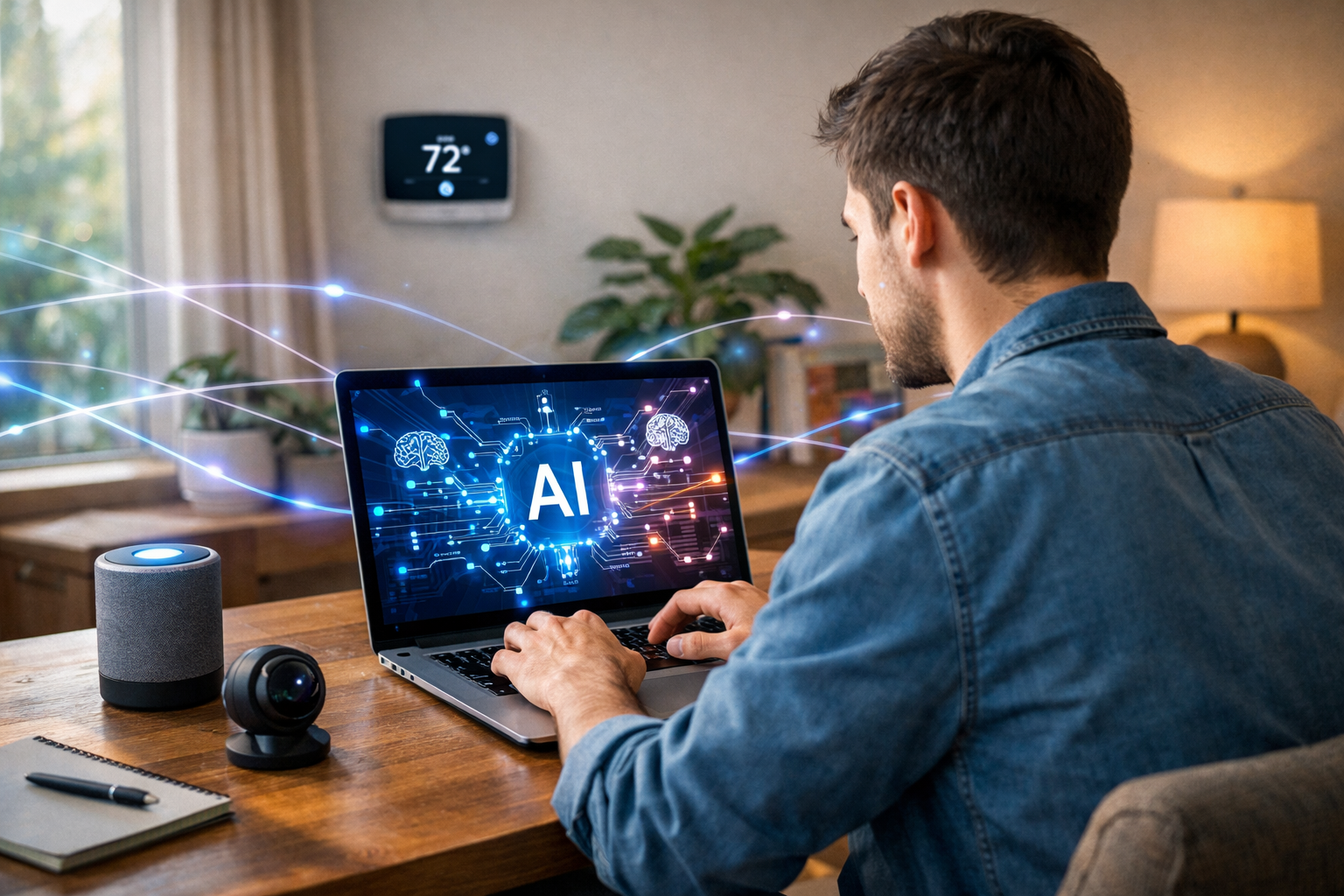
Smart home AI is changing the way we live. In the past, homes were simple. Today, many homes use smart devices that work with AI technology.
Smart home AI means devices in your house can learn your habits and adjust automatically.
For example, AI can understand when you wake up and turn on lights. It can learn your favorite temperature and adjust the air conditioner. It can even alert you if something unusual happens at home.
Below are some ways AI makes homes smarter and easier to manage:
- Smart speakers answer your questions and play music.
- Smart thermostats control room temperature automatically.
- Smart security cameras detect unusual movements.
- Smart refrigerators track food and suggest recipes.
These AI-powered home devices save time, reduce energy waste, and improve safety.
Smart home AI is very helpful for busy families, elderly people, and even small children. It makes life more comfortable and secure.
Personal AI Assistants: Choosing the Right One
Personal AI assistants are becoming very popular. They help with writing, research, planning, and many daily tasks.
Three well-known AI assistants are ChatGPT, Claude, and Gemini. Each has its own features.
Before choosing one, it is good to understand how they help in daily life.
Below is a simple comparison to help beginners:
- ChatGPT
ChatGPT is very popular and easy to use. It helps with writing emails, solving homework problems, generating ideas, and answering questions. Many people use it for daily productivity and learning. - Claude
Claude is known for giving long and detailed answers. It is useful for research, reading large documents, and careful analysis. - Gemini
Gemini works closely with Google services. It is helpful if you use Gmail, Google Docs, and other Google tools often.
When choosing a personal AI assistant, think about your daily needs.
- If you want help with writing and simple tasks, ChatGPT is a good choice.
- If you need deep research support, Claude can help.
- If you use Google tools every day, Gemini may be better.
Personal AI assistants save time and improve productivity. They are like digital helpers that are available 24/7.
AI in Education: Smarter Learning for Students
AI in education is one of the most powerful changes in modern life. Students now have access to personalized learning tools.
In the past, every student learned the same way. Today, AI can adjust lessons according to each student’s level.
For example, if a student is weak in math, AI can give extra practice questions. If a student is strong in science, AI can give advanced topics.
Here are some benefits of AI in education:
- Personalized study plans
- Instant answers to questions
- Language translation support
- Writing and grammar improvement
- Practice quizzes and feedback
AI learning tools are very helpful for students who study at home. They also support teachers by reducing workload.
However, students should use AI responsibly. It should help learning, not replace thinking.
AI in daily life is not only about comfort. It is also about growth and knowledge.
The Psychology of AI: Why People Trust “Thinking” Machines
Many people talk to AI as if it is a real person. Why does this happen?
The psychology of AI explains how humans react to intelligent machines.
When AI gives fast and smart answers, people start trusting it. The human brain likes helpful systems.
There are a few psychological reasons behind this behavior:
- People trust systems that solve problems quickly.
- Human-like language makes AI feel friendly.
- Instant responses create a sense of support.
But it is important to remember that AI does not have emotions. It works based on data and patterns.
Understanding the psychology of AI helps users stay balanced. You can use AI as a tool, not as a replacement for human relationships.
Benefits of AI in Daily Life
AI technology has many benefits for normal people. It saves time and increases comfort.
Below are the main advantages of AI for beginners:
- Faster decision-making
- Better time management
- Personalized recommendations
- Improved safety and security
- Easy access to information
AI in daily life supports both personal and professional tasks. It helps small business owners, students, parents, and employees.
For example, a small business owner can use AI tools for marketing. A student can use AI for homework help. A parent can use smart home AI for security.
Challenges and Risks of AI
While AI has many benefits, it also has some challenges. It is important to understand them clearly.
Some common risks include:
- Data privacy concerns
- Over-dependence on technology
- Wrong or biased information
- Job changes in some industries
AI systems learn from data. If the data is wrong, the results can also be wrong.
That is why users must double-check important information. AI should support human decisions, not replace them fully.
How Beginners Can Start Using AI
If you are new to AI, you may wonder how to begin. Starting is easier than you think.
First, use AI tools that are simple and user-friendly. Many apps are designed especially for beginners.
Here are easy steps to start:
- Try a personal AI assistant for daily questions.
- Use AI writing tools to draft emails.
- Explore smart home devices slowly.
- Use AI learning apps for skill development.
- Always check privacy settings before using new apps.
You do not need technical knowledge to use AI in daily life. Just start small and learn step by step.
Future of AI in Everyday Life
AI technology is growing very fast. In the future, AI may become even more personal and helpful.
Experts believe that AI will improve healthcare, transportation, and communication.
In daily life, AI may:
- Help doctors detect diseases earlier.
- Make cars safer with smart driving systems.
- Improve language translation instantly.
- Provide better mental health support tools.
The future of AI looks promising. But humans will always play an important role in guiding technology.
Conclusion
AI for beginners is not complicated. It is already part of daily life. From smart home AI to personal AI assistants, technology is making tasks easier and faster.
AI in education helps students learn better. Smart devices make homes safe and comfortable. Understanding the psychology of AI helps people use it wisely.
The key is balance. Use AI as a helper, not as a replacement for human thinking. When used correctly, AI can improve productivity, save time, and create new opportunities.
Artificial Intelligence is not the future. It is the present. And now, you are ready to use it confidently in your daily life.
Read More Blog–Anthropic AI: Safe, Ethical, and Human-Centered Artificial Intelligence
Frequently Asked Questions (FAQs)
Before ending this guide, here are some common questions about AI for beginners.
1. Is AI safe to use in daily life?
Yes, AI is generally safe. But users should protect their personal data and check privacy settings.
2. Do I need technical skills to use AI?
No. Most AI tools are made for normal users and are easy to use.
3. Can AI replace human jobs?
AI may change some jobs, but it also creates new opportunities. Humans and AI can work together.
4. How does AI help students?
AI provides personalized learning, instant answers, and study support.
5. Are personal AI assistants free?
Many AI tools offer free versions, but advanced features may require payment.
6. Can AI think like humans?
AI can process data and give smart answers, but it does not have emotions or real understanding.




Comments are closed