Subtotal $0.00




Email : 4
Bone fractures are one of the most common medical injuries worldwide. Every year, millions of people visit hospitals due to accidents, falls, sports injuries, and road incidents. In emergency departments, doctors often rely on X-rays, CT scans, and MRI scans to detect fractures. However, diagnosing fractures is not always easy. Some fractures are very small and difficult to see. In busy hospitals, radiologists review hundreds of images every day, and sometimes small fractures can be missed due to fatigue or heavy workload.
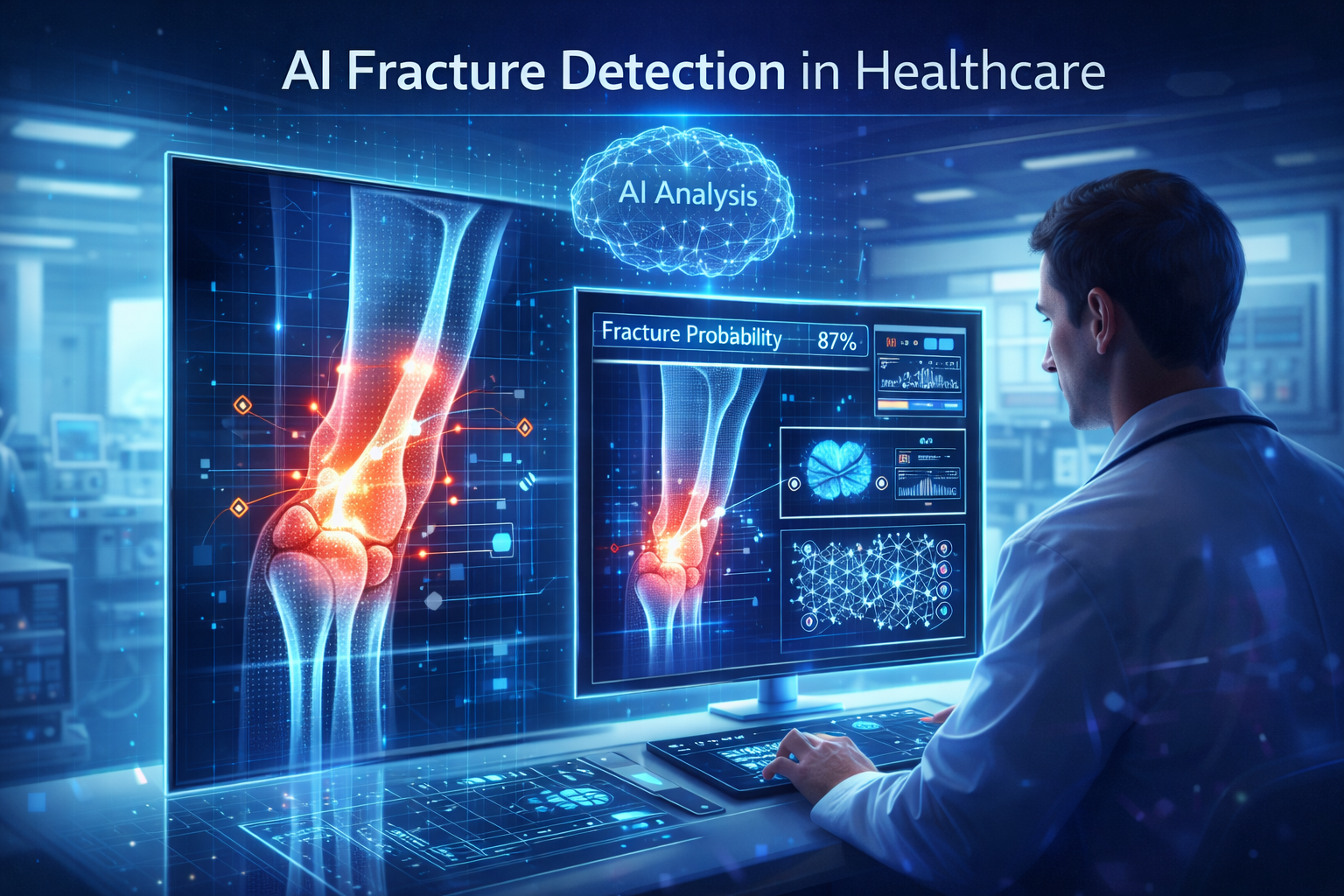
In 2026, AI fracture detection is transforming the way bone injuries are diagnosed. Artificial Intelligence is now helping doctors analyze medical images quickly and accurately. AI systems can detect tiny cracks in bones, highlight suspicious areas, and provide confidence scores. This does not replace doctors. Instead, it supports them in making faster and better decisions.
Understanding AI fracture detection is important for healthcare professionals, hospital administrators, medical students, and even technology innovators. This guide explains everything in simple language. We will cover how AI fracture detection works, technologies used, real-world applications, benefits, challenges, ethical concerns, and the future of AI in bone injury diagnosis.
What is AI Fracture Detection?
AI fracture detection is the use of artificial intelligence to identify bone fractures in medical imaging scans.
These scans include:
- X-rays
- CT scans
- MRI scans
AI systems analyze these images using deep learning algorithms. They compare the image with thousands or even millions of previous fracture cases. If they detect irregular patterns, cracks, or unusual bone alignment, they highlight those areas for doctors.
In simple words, AI fracture detection is like a smart assistant that helps doctors find broken bones more easily.
Why AI Fracture Detection is Important in 2026
Before understanding how it works, it is important to know why this technology matters.
Hospitals face several challenges:
- High patient load
- Limited radiologists
- Human fatigue
- Risk of missed fractures
- Slow reporting time
AI fracture detection helps solve these problems by:
- Reducing diagnosis time
- Increasing detection accuracy
- Supporting doctors in emergency cases
- Improving patient outcomes
This is why AI in healthcare is growing rapidly.
How AI Fracture Detection Works
AI fracture detection follows a structured process. Let us understand it step by step.
Step 1: Image Acquisition
The process begins when a patient undergoes an X-ray or CT scan. The medical imaging device captures detailed images of the affected body part.
Step 2: Data Input into AI System
The digital image is uploaded into an AI-powered software system integrated with hospital systems.
Step 3: Image Preprocessing
The AI system improves image quality by:
- Removing noise
- Adjusting brightness and contrast
- Enhancing bone edges
- Normalizing image size
This ensures the system analyzes clear images.
Step 4: Feature Extraction
The AI model identifies important features such as:
- Bone edges
- Gaps in structure
- Misalignment
- Abnormal shapes
This is done using advanced neural networks.
Step 5: Pattern Recognition
The system compares the scan with large datasets of labeled fracture images. It looks for similar patterns.
If it finds a match, it identifies the likely fracture.
Step 6: Output and Visualization
The AI system:
- Highlights suspicious areas
- Marks fracture lines
- Provides probability score
- Generates preliminary report
Doctors then review the results and make the final diagnosis.
Technologies Used in AI Fracture Detection
AI fracture detection depends on powerful technologies.
Deep Learning
Deep learning models are trained using thousands of medical images.
Major research organizations like:
- Google DeepMind
- IBM
have contributed to medical AI research.
Deep learning helps the system learn from patterns automatically.
Convolutional Neural Networks (CNNs)
CNNs are especially useful for image analysis.
They:
- Detect edges
- Recognize shapes
- Identify patterns
CNNs are widely used in fracture detection systems.
Computer Vision
Computer vision allows AI to interpret visual information.
It helps detect:
- Bone density changes
- Micro fractures
- Abnormal gaps
Machine Learning Algorithms
Machine learning improves accuracy over time.
The more data the system analyzes, the better it becomes.
Real-World Applications of AI Fracture Detection

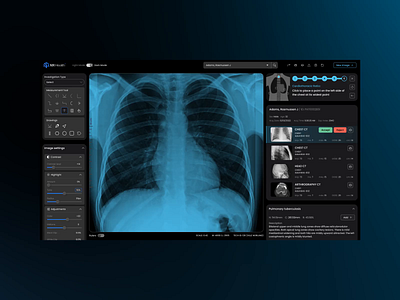
AI fracture detection is used in many real-world situations.
1. Emergency Departments
In emergency rooms, quick diagnosis is very important.
AI helps:
- Detect fractures within seconds
- Reduce waiting time
- Speed up treatment decisions
This is especially helpful during accidents.
2. Rural and Remote Areas
In rural areas, specialist radiologists may not always be available.
AI systems help general doctors detect fractures more accurately.
3. Pediatric Fractures
Children’s bones are different from adult bones.
Small fractures in children are often difficult to detect.
AI improves detection accuracy in pediatric cases.
4. Sports Medicine
Athletes often suffer stress fractures.
These fractures can be very small and hard to identify.
AI helps detect early signs of bone stress.
5. Trauma Centers
Trauma cases often involve multiple injuries.
AI helps prioritize urgent fracture cases quickly.
Benefits of AI Fracture Detection
AI fracture detection provides many advantages.
1. Faster Diagnosis
AI systems analyze scans within seconds.
This reduces waiting time for patients.
2. Improved Accuracy
AI can detect subtle fractures that may be missed by tired radiologists.
3. Reduced Human Error
Fatigue and workload sometimes cause mistakes.
AI provides a second opinion.
4. 24/7 Availability
AI systems work anytime without rest.
5. Support for Radiologists
AI reduces workload and allows doctors to focus on complex cases.
6. Better Patient Outcomes
Early detection means faster treatment.
This reduces complications.
Accuracy of AI Fracture Detection
Studies show AI can achieve high accuracy levels, sometimes comparable to expert radiologists.
However:
- AI is not 100% perfect
- It may produce false positives
- It may miss rare fracture types
Best results are achieved when AI and doctors work together.
Challenges of AI Fracture Detection
Even though AI is powerful, it faces challenges.
1. Data Privacy
Medical data is sensitive.
AI systems must follow strict data protection laws.
2. Need for Large Datasets
AI requires thousands of labeled images to train properly.
3. Regulatory Approval
Medical AI tools must pass strict government approvals before use.
4. Integration Issues
Hospitals must integrate AI systems with existing software.
5. Bias in Data
If training data lacks diversity, AI may not perform well for all populations.
Ethical Considerations
AI in healthcare must follow ethical standards.
Important concerns include:
- Transparency in decision-making
- Accountability for errors
- Patient consent
- Data security
Healthcare AI must be safe and fair.
Is AI Replacing Radiologists?
No.
AI fracture detection does not replace doctors.
Instead, it:
- Supports radiologists
- Provides second opinion
- Improves productivity
Human expertise is still essential.
Cost and Implementation in Hospitals
Implementing AI fracture detection requires:
- Software purchase
- Hardware upgrades
- Staff training
- IT integration
However, long-term benefits often include:
- Reduced operational costs
- Faster patient flow
- Better efficiency
Future of AI Fracture Detection
The future looks very promising.
Possible developments include:
- Real-time fracture detection during scanning
- AI-powered mobile diagnostic apps
- Automated medical report generation
- Multi-condition detection (fracture + tumors + infections)
- Cloud-based AI diagnostic platforms
AI will continue to improve healthcare quality.
Role of AI Fracture Detection in Developing Countries
In developing countries:
- There may be limited specialists
- Healthcare facilities may be overloaded
AI systems can improve access to quality diagnosis.
This can save lives in remote areas.
Integration with Other Medical AI Systems
AI fracture detection may combine with:
- AI for tumor detection
- AI for lung disease diagnosis
- AI for heart condition analysis
This creates a complete AI-powered diagnostic ecosystem.
Frequently Asked Questions (FAQs)
1. What is AI fracture detection?
AI fracture detection uses artificial intelligence to detect broken bones in medical images.
2. Is AI fracture detection accurate?
Yes, it can achieve high accuracy, especially when combined with human expertise.
3. Can AI detect small fractures?
Yes, AI can detect micro fractures that may be difficult for humans to see.
4. Does AI replace radiologists?
No, AI supports radiologists but does not replace them.
5. Is AI fracture detection expensive?
Initial setup can be costly, but long-term benefits include efficiency and improved patient care.
Conclusion
AI fracture detection is transforming healthcare in 2026. It helps doctors diagnose bone injuries faster and more accurately. By using deep learning, computer vision, and neural networks, AI systems analyze medical images and highlight suspicious fracture areas. This reduces human error and improves patient outcomes.
Although AI cannot replace radiologists, it acts as a powerful assistant that enhances medical decision-making. As technology advances, AI fracture detection will become more accessible, affordable, and accurate. Understanding this innovation today prepares us for a smarter and more efficient healthcare future.
Read More Blog–The Best AI Tools for 2026