Subtotal $0.00




Email : 9
Introduction
Artificial Intelligence is rapidly changing the world. From customer service bots to advanced automation systems, AI agents are now helping businesses and individuals perform tasks faster and more efficiently. These intelligent systems can analyze data, make decisions, communicate with users, and even automate complex workflows.
However, as AI agents become more powerful and widely used, an important question arises: Are AI agents safe?
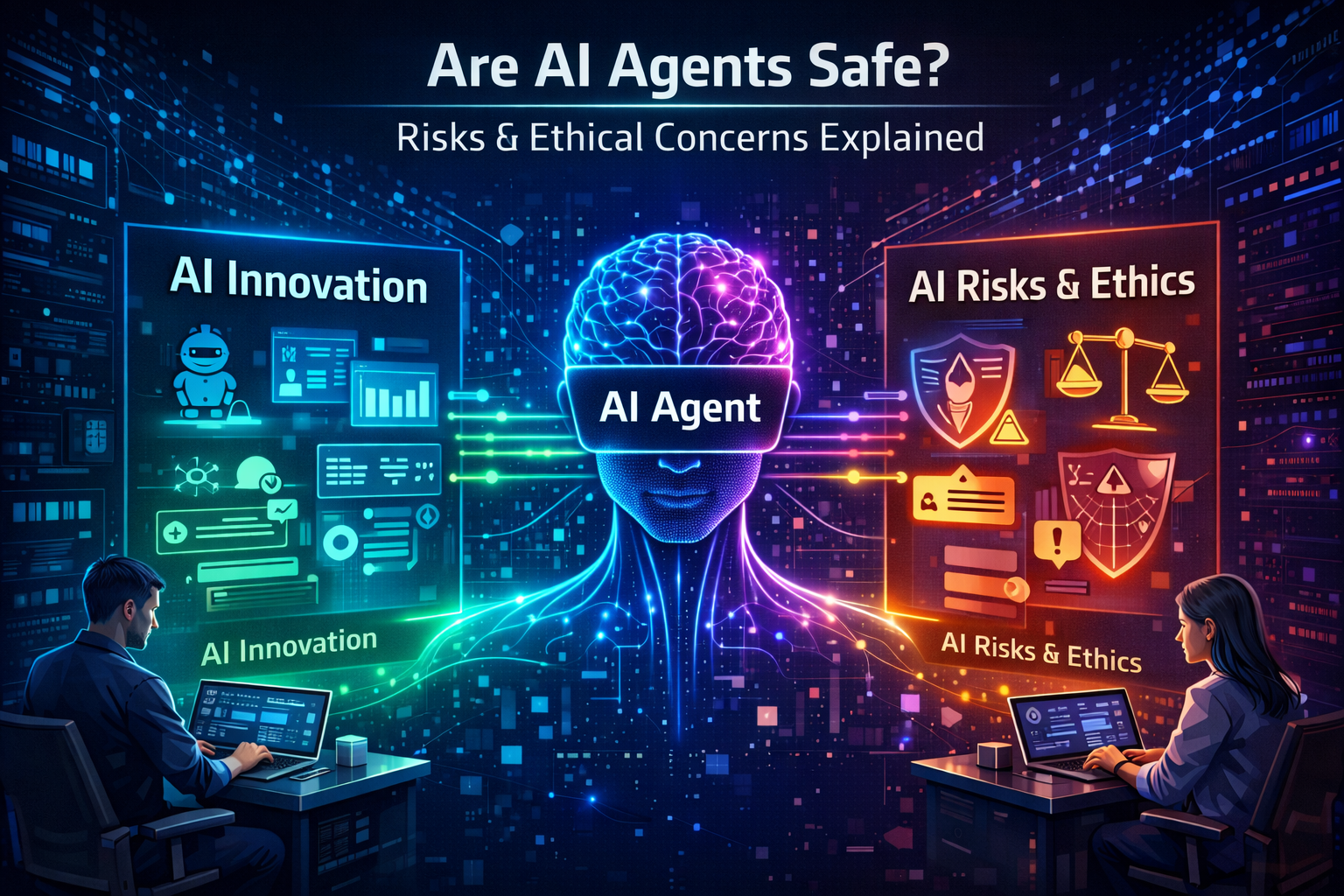
Many people are concerned about issues such as data privacy, security risks, bias in AI decisions, and the ethical implications of machines making important choices. Businesses want to know whether AI systems can be trusted with sensitive information, while individuals worry about how AI might affect jobs and society.
In this comprehensive guide, we will explore the safety of AI agents, potential risks, ethical concerns, and practical ways to use AI responsibly. By the end of this article, you will clearly understand both the benefits and challenges of AI agents.


What Are AI Agents?
Before discussing safety, it is important to understand what AI agents are.
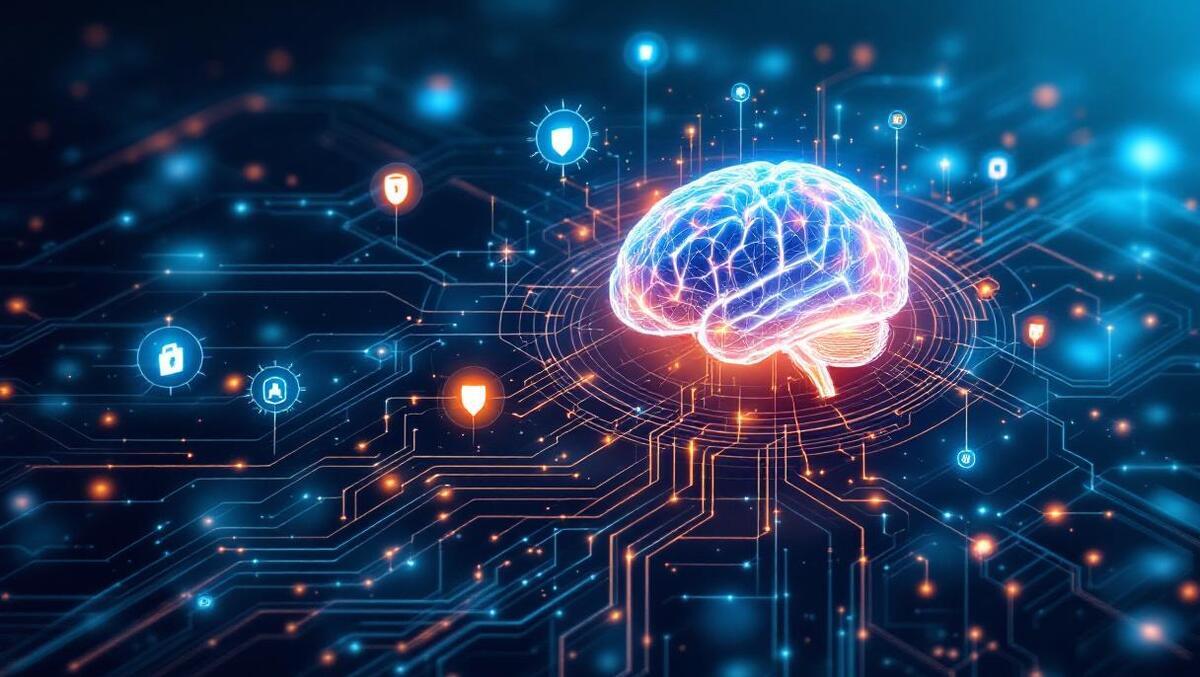
AI agents are intelligent software systems that can perform tasks automatically using artificial intelligence. These systems can analyze information, make decisions, and interact with users or other software systems.
Unlike simple chatbots, AI agents can complete multi-step tasks and solve complex problems.
AI agents are commonly used in areas such as:
- customer support automation
- digital assistants
- business process automation
- marketing automation
- research and data analysis
- financial services
These systems use technologies like machine learning, natural language processing, and data analysis to perform tasks.
Because AI agents can interact with large amounts of information and sometimes make autonomous decisions, safety and ethics become very important topics.
Why AI Agent Safety Is Important
AI agents are becoming more powerful every year. They are now used in banking, healthcare, business operations, education, and even government services.
Because of this widespread use, ensuring the safety of AI agents is extremely important.
There are several reasons why AI safety matters.
1. Protection of Personal Data
AI systems often process sensitive information such as:
- personal data
- financial details
- medical records
- customer information
If AI systems are not secure, this information could be misused.
2. Reliable Decision Making
AI agents sometimes assist in making decisions that affect people’s lives.
For example:
- loan approvals
- medical recommendations
- hiring decisions
If AI systems are biased or inaccurate, they can cause unfair outcomes.
3. Preventing Misuse of AI
AI technology can also be misused for harmful purposes.
Examples include:
- spreading misinformation
- creating deepfakes
- automated cyber attacks
Safety measures are necessary to prevent such misuse.
4. Building Trust in AI Technology
For AI technology to be widely accepted, people must trust it.
Trust can only be built when AI systems are transparent, secure, and ethical.
Main Risks of AI Agents
While AI agents offer many benefits, they also come with potential risks. Understanding these risks helps businesses and individuals use AI responsibly.
Below are some of the major risks associated with AI agents.
1. Data Privacy Risks
AI agents often require access to large amounts of data to function effectively.
This can create privacy concerns.
Sensitive data that AI agents may handle includes:
- personal messages
- customer databases
- payment information
- behavioral data
If proper security measures are not implemented, this information could be exposed or misused.
Possible Privacy Issues
Some common privacy risks include:
- unauthorized data access
- data leaks
- misuse of personal information
- lack of user consent
To reduce these risks, organizations must implement strong data protection policies.
2. Security Vulnerabilities
AI systems can sometimes be targeted by cyber attacks.
Hackers may attempt to manipulate AI systems to gain unauthorized access or cause harm.
Security threats related to AI agents include:
- data breaches
- AI model manipulation
- prompt injection attacks
- malicious automation
For example, attackers may try to trick an AI agent into revealing confidential data.
Businesses must implement strong cybersecurity measures to protect AI systems.
3. Bias and Unfair Decisions
AI systems learn from data. If the data used to train AI models contains biases, the AI system may produce biased results.
Bias in AI can affect many areas.
Examples include:
- hiring decisions
- loan approvals
- law enforcement analysis
- healthcare recommendations
If AI agents are not properly monitored, they may unintentionally discriminate against certain groups.
To address this issue, developers must carefully evaluate training data and monitor AI outcomes.
4. Lack of Transparency
Many AI systems operate as “black boxes.”
This means it is sometimes difficult to understand how the AI reached a particular decision.
This lack of transparency creates challenges such as:
- difficulty explaining AI decisions
- reduced accountability
- challenges in debugging errors
To solve this problem, many experts recommend using explainable AI techniques that help humans understand AI reasoning.
5. Overdependence on AI
As AI systems become more capable, people may rely on them too heavily.
Overdependence on AI can lead to problems such as:
- reduced human oversight
- incorrect decisions being accepted without verification
- loss of critical thinking skills
AI should always be used as a support tool rather than a complete replacement for human judgment.
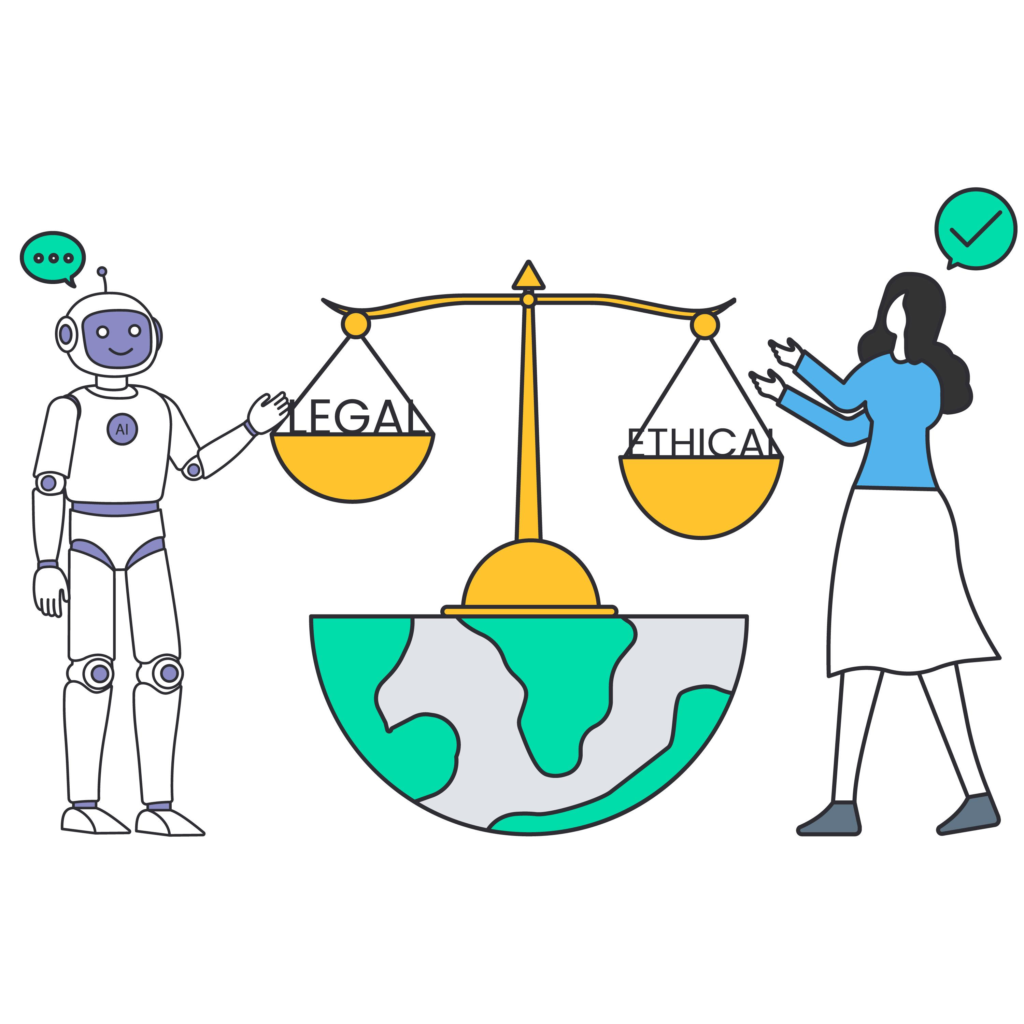
6. Ethical Concerns in AI Agents
AI technology raises several ethical questions.
Some of the most discussed ethical concerns include:
Accountability
When an AI agent makes a mistake, it can be difficult to determine who is responsible.
Possible responsible parties include:
- developers
- companies using the AI
- data providers
Clear accountability frameworks are needed.
Fairness
AI systems must treat all users fairly and avoid discrimination.
Developers must ensure that AI algorithms do not reinforce social biases.
Transparency
Users should know when they are interacting with an AI system.
Transparency helps build trust and ensures ethical use.
Human Control
AI agents should not operate without human oversight in critical situations.
Humans must always have the ability to override AI decisions.
Real-World Examples of AI Risks
Understanding real-world examples helps illustrate why AI safety is important.
Example 1: Biased Hiring Algorithms
Some companies used AI systems to screen job applicants.
However, the AI learned biased patterns from historical data and unfairly favored certain candidates.
Example 2: Deepfake Technology
AI-generated deepfake videos can spread misinformation and damage reputations.
This shows how AI tools can be misused.
Example 3: AI Chatbot Manipulation
Some AI chatbots have been manipulated through malicious prompts to produce harmful or misleading responses.
These examples highlight the need for responsible AI development.
How to Make AI Agents Safer
Despite the risks, AI agents can be used safely when proper precautions are taken.
Below are several strategies for improving AI safety.
1. Strong Data Protection
Organizations must implement strict data security measures.
These measures may include:
- encryption
- access control systems
- secure data storage
- regular security audits
Protecting user data should always be a priority.
2. Regular AI Monitoring
AI systems should be continuously monitored to detect errors or unusual behavior.
Monitoring may involve:
- reviewing AI outputs
- analyzing decision patterns
- identifying bias
Regular monitoring helps maintain system reliability.
3. Human Oversight
AI agents should always operate under human supervision.
Human oversight ensures that:
- AI decisions are reviewed
- errors are corrected quickly
- ethical guidelines are followed
This reduces the risk of harmful outcomes.
4. Ethical AI Guidelines
Many organizations now follow ethical AI frameworks.
These frameworks emphasize:
- fairness
- transparency
- accountability
- privacy protection
Following ethical guidelines helps organizations use AI responsibly.
5. Transparent AI Systems
Explainable AI techniques allow developers and users to understand how AI systems make decisions.
Transparency improves trust and accountability.
Future of AI Safety
AI technology is evolving rapidly, and many organizations are working to improve AI safety.
Future developments may include:
- stronger AI regulations
- improved explainable AI systems
- better bias detection tools
- global ethical AI standards
Governments, researchers, and companies are collaborating to ensure AI is used responsibly.
Conclusion
AI agents have the potential to transform businesses, industries, and everyday life. They can automate tasks, improve efficiency, and provide valuable insights. However, like any powerful technology, AI agents come with risks and ethical challenges.
Issues such as data privacy, security vulnerabilities, bias, and lack of transparency must be carefully managed. Without proper safeguards, AI systems could cause harm or unfair outcomes.
The good news is that these risks can be reduced through responsible development, strong security practices, ethical guidelines, and human oversight. When used correctly, AI agents can be both powerful and safe.
As AI technology continues to evolve, building trustworthy and ethical AI systems will be essential for creating a future where humans and intelligent machines can work together safely and effectively.
FAQs
1. Are AI agents dangerous?
AI agents are not inherently dangerous. However, they can pose risks if they are poorly designed, insecure, or misused.
2. Can AI agents make wrong decisions?
Yes. AI agents can make mistakes, especially if they are trained on biased data or lack sufficient information.
3. How can AI risks be reduced?
AI risks can be reduced through data protection, monitoring systems, ethical guidelines, and human oversight.
4. Are governments regulating AI?
Yes. Many countries are developing regulations to ensure the safe and ethical use of artificial intelligence.
5. Will AI replace human decision making?
AI is designed to assist humans, not replace them entirely. Human judgment remains essential in critical decisions.