Subtotal $0.00



Email : 8
Every founder dreams of building a business that runs smoothly without constant supervision. But in reality, most startups depend heavily on human effort. Customer queries come at midnight. Leads drop off when no one responds quickly. Sales follow-ups get delayed. Tasks pile up. Hiring more staff increases cost. Managing teams takes time.
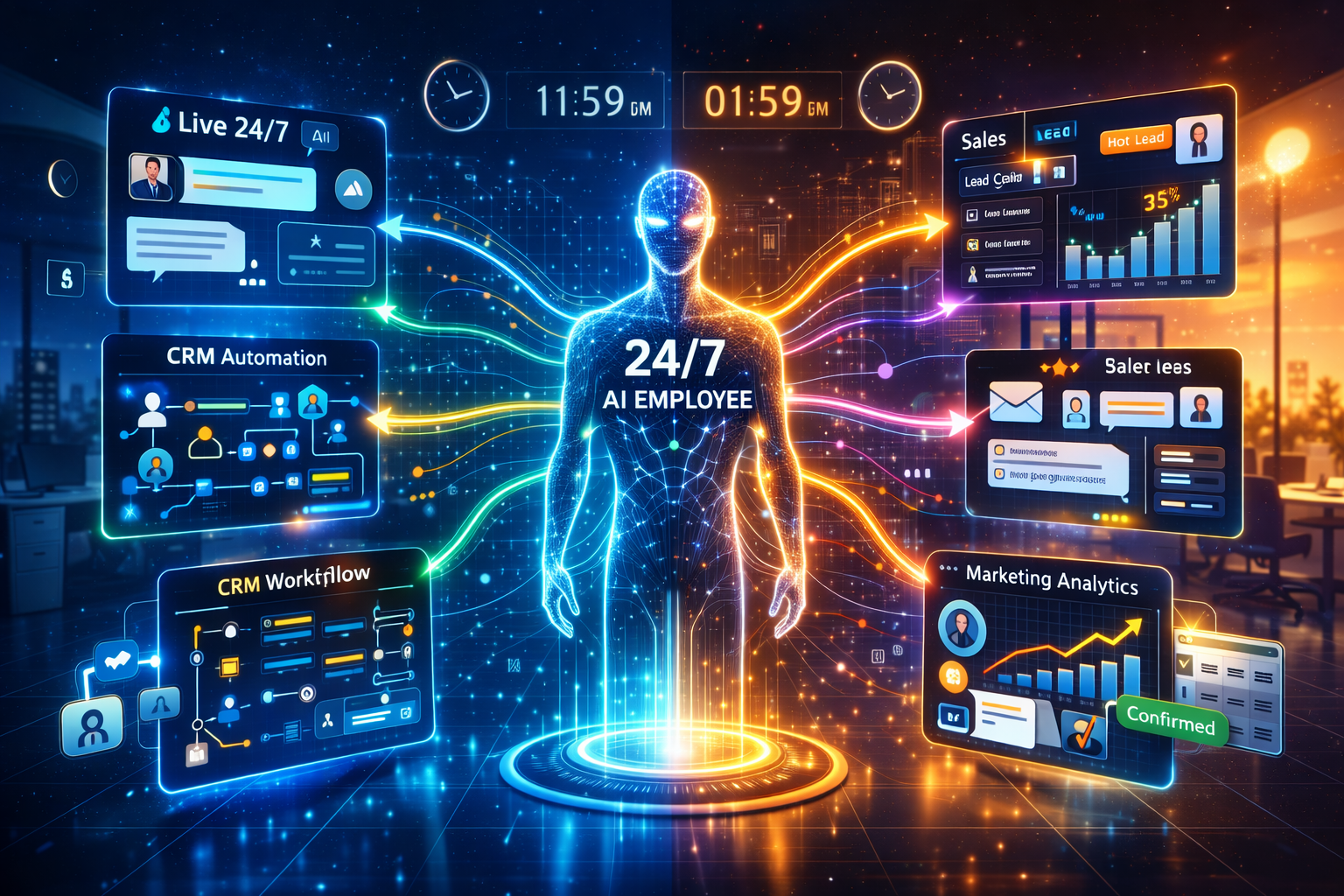
In 2026, there is a powerful solution: building a 24/7 AI employee using AI agents.
AI agents are no longer simple chatbots. They can think, plan, analyze data, take action, and learn from feedback. They can respond to customers, generate leads, schedule meetings, create content, analyze reports, and even manage workflows. For founders, this means one thing: automation at scale without increasing overhead.
In this detailed guide, we will explain step-by-step how founders can build a 24/7 AI employee using AI agents. We will cover architecture, tools, setup process, real-world use cases, benefits, limitations, and best practices. Everything is written in simple language so you can apply it directly to your startup or business.
What Is a 24/7 AI Employee?
A 24/7 AI employee is an AI-powered system that works continuously without breaks. It performs tasks similar to a human employee but is automated using AI agents.
This AI employee can:
- Answer customer queries
- Qualify leads
- Book appointments
- Send follow-up emails
- Analyze business data
- Generate reports
- Create content
- Manage CRM updates
It works day and night, across time zones, without salary, holidays, or burnout.
What Are AI Agents?
AI agents are intelligent systems that:
- Observe inputs
- Process information
- Make decisions
- Take actions
- Learn from outcomes
Modern AI agents are powered by large language models developed by companies like:
- OpenAI
- Anthropic
These agents can integrate with tools, APIs, CRMs, email systems, and databases.
In simple words, AI agents are the brain behind your AI employee.
Why Founders Need a 24/7 AI Employee
Before building one, let us understand why it matters.
Startups face common problems:
- Limited manpower
- Budget constraints
- Delayed responses
- Missed sales opportunities
- Manual repetitive tasks
A 24/7 AI employee helps solve these issues by:
- Automating operations
- Reducing costs
- Improving response speed
- Increasing productivity
- Scaling without hiring
For early-stage founders, this can be a game-changer.
Core Functions of a 24/7 AI Employee
Your AI employee can handle multiple departments.
1. Sales Assistant
AI agent can:
- Capture website leads
- Qualify prospects
- Send proposals
- Schedule calls
- Follow up automatically
2. Customer Support Executive
It can:
- Answer FAQs
- Provide product information
- Resolve simple issues
- Escalate complex problems
- Track customer history
3. Marketing Assistant
AI employee can:
- Generate social media content
- Write blog posts
- Create ad copies
- Analyze campaign performance
- Optimize targeting
4. Operations Manager
AI can:
- Update CRM
- Generate reports
- Monitor KPIs
- Send reminders
- Automate workflows
Architecture of a 24/7 AI Employee


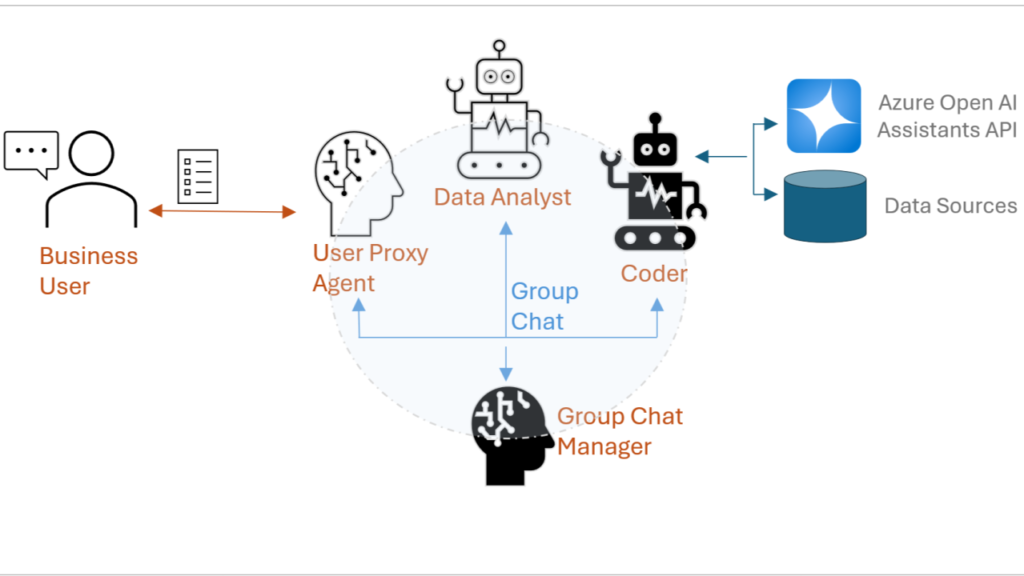
To build a strong AI employee, you need proper architecture.
1. Perception Layer
This layer collects data from:
- Website forms
- Emails
- Social media
- CRM
- Customer chats
2. Memory System
AI stores:
- Customer history
- Conversation logs
- Lead details
- Performance data
3. Reasoning Engine
The AI decides:
- Is this lead qualified?
- Should this issue be escalated?
- Which email to send?
4. Action Layer
AI integrates with tools to:
- Send emails
- Update CRM
- Schedule meetings
- Generate documents
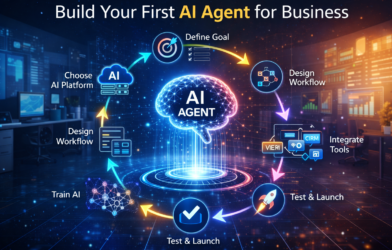
Step-by-Step Guide to Building Your 24/7 AI Employee
Now let us build it practically.
Step 1: Define Clear Objectives
Before starting, define:
- What tasks will AI handle?
- Which department to automate first?
- What results do you expect?
Start small. For example:
Automate lead qualification first.
Step 2: Choose the Right AI Platform
Select an AI model provider like:
- OpenAI
Choose based on:
- Cost
- API support
- Customization
- Security
Step 3: Integrate with Your Tools
Connect AI with:
- CRM software
- Email tools
- Calendar system
- Website chatbot
- Marketing platforms
Popular CRM systems like HubSpot allow API integration.
Step 4: Design Workflows
Create automated workflows such as:
If visitor fills form →
AI qualifies →
If qualified → Book call → Send confirmation → Add to CRM
Mapping workflows clearly is important.
Step 5: Train Your AI Agent
Feed it with:
- Company information
- FAQs
- Sales scripts
- Brand tone
- Product details
This improves personalization.
Step 6: Add Guardrails
AI must follow rules:
- No sharing sensitive data
- Escalate complex cases
- Avoid legal advice
Always include human oversight.
Step 7: Test and Optimize
Launch in beta mode.
Monitor:
- Response accuracy
- Conversion rate
- Customer satisfaction
- Error cases
Improve continuously.
Real-World Example
Imagine you run a digital marketing agency.
Your AI employee:
- Chats with website visitors.
- Asks qualifying questions.
- Scores the lead.
- Books a strategy call.
- Sends reminder email.
- Updates CRM automatically.
All done without human effort.
You only attend booked calls.
Cost Comparison: AI Employee vs Human Employee
Human employee:
- Salary
- Training cost
- Leave
- Limited working hours
AI employee:
- API cost
- Setup cost
- 24/7 availability
- Scalable instantly
AI reduces long-term operational costs.
Benefits for Founders
Building a 24/7 AI employee gives founders:
- More time for strategy
- Reduced stress
- Predictable operations
- Faster scaling
- Higher efficiency
Instead of managing daily tasks, founders focus on growth.
Challenges to Consider
AI is powerful, but there are challenges.
1. Over-Reliance
AI should not replace all human decisions.
2. Data Privacy
Follow data protection laws.
3. Technical Setup
Requires basic technical knowledge or developer support.
4. Quality Control
AI needs continuous monitoring.
Best Practices for Building AI Employees
To get best results:
- Start with one department
- Keep workflows simple
- Regularly review AI performance
- Combine AI + human intelligence
- Continuously train your AI
Future of AI Employees
The future may include:
- Fully autonomous AI teams
- AI CEOs for small businesses
- Emotion-aware AI support agents
- AI-powered voice sales representatives
- Multi-agent business ecosystems
Businesses will rely heavily on AI agents.
Frequently Asked Questions (FAQs)
1. What is a 24/7 AI employee?
It is an AI-powered system that performs business tasks continuously without breaks.
2. Can AI replace human employees?
AI supports employees but does not fully replace human creativity and leadership.
3. Is building an AI employee expensive?
Initial setup requires investment, but long-term savings are significant.
4. What skills are required to build one?
Basic understanding of AI tools, automation platforms, and workflows.
5. Is AI safe for customer interactions?
Yes, when properly trained and monitored.
Conclusion
Building a 24/7 AI employee using AI agents is no longer a futuristic idea. It is a practical strategy for founders in 2026. With the right architecture, tools, and workflows, startups can automate sales, support, marketing, and operations. This reduces cost, increases productivity, and enables rapid scaling.
The most successful founders in the coming years will not just hire employees. They will build intelligent AI employees that work alongside humans. If you want your startup to grow faster without increasing overhead, now is the time to start building your 24/7 AI employee.
Read More Blog–AI Agents vs Chatbots: What’s the Real Difference?