Subtotal $0.00




Email : 14
Introduction
Artificial Intelligence is changing the way software works. Instead of simple programs that only follow fixed instructions, modern applications can think, analyze data, and make decisions. One of the most exciting developments in this field is the rise of AI agents. An AI agent is a smart system that can perform tasks automatically, interact with users, analyze information, and even learn from experience.
Many companies are now using AI agents to automate customer support, generate leads, manage workflows, and improve productivity. The good news is that you do not need to be an expert in artificial intelligence to start building your own AI agent. With Python, one of the most beginner-friendly programming languages, anyone can learn to create simple AI agents.
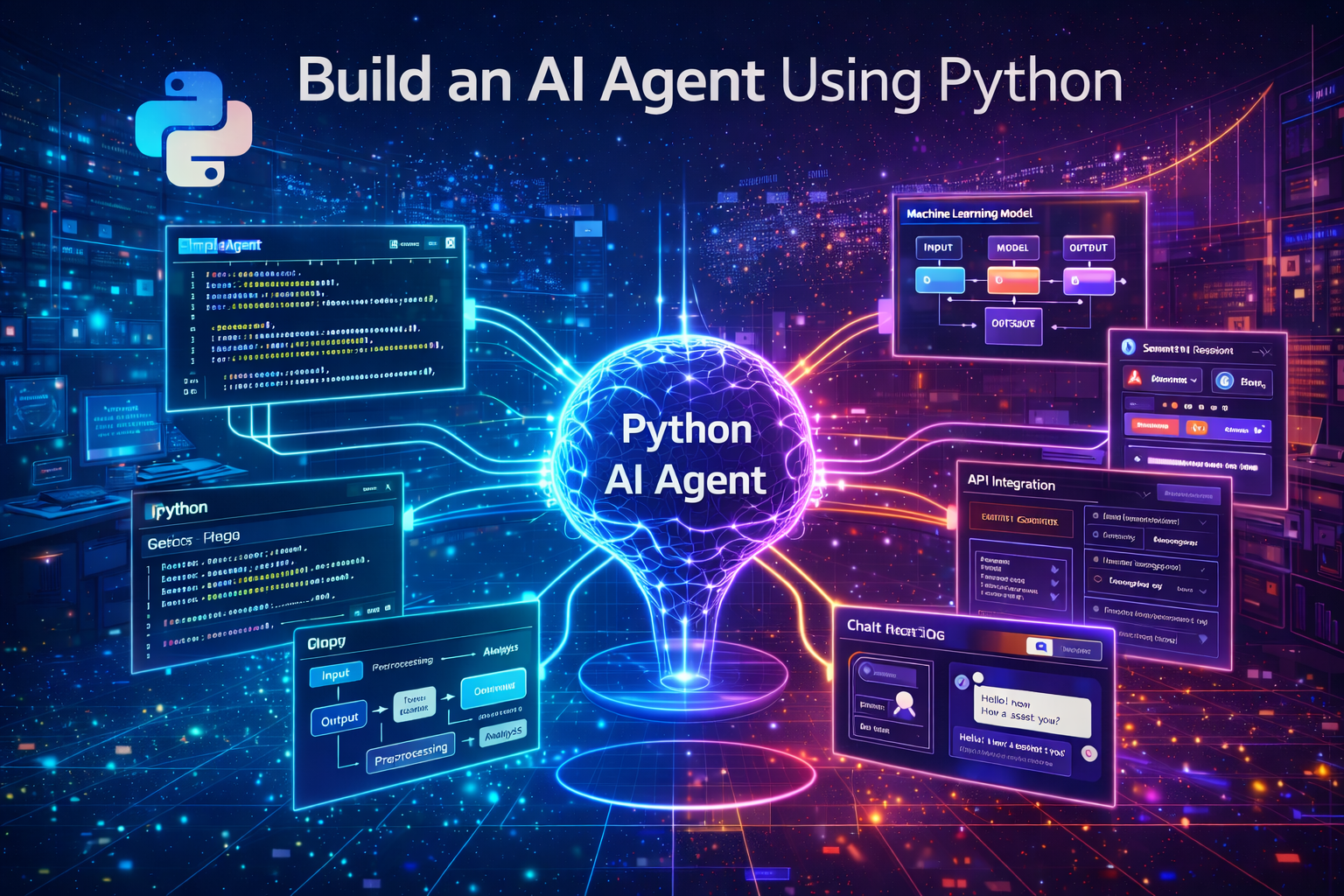
In this beginner tutorial, you will learn how to build an AI agent using Python, the tools you need, how AI agents work, and a step-by-step method to create your first intelligent agent.
What is an AI Agent?
Before learning how to build one, it is important to understand what an AI agent actually is.
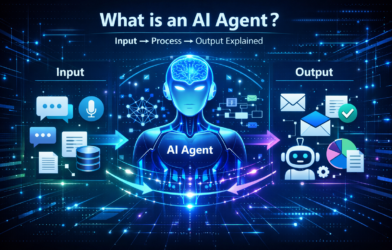
An AI agent is a software program that can observe its environment, process information, and take actions to achieve a goal.
Unlike traditional programs that only follow fixed instructions, AI agents can analyze situations and respond intelligently.
AI agents are used in many applications such as:
Before listing the examples, it is helpful to understand that AI agents are designed to automate tasks that normally require human intelligence.
Examples include:
- virtual assistants
- customer support chatbots
- recommendation systems
- automated trading systems
- smart home assistants
These systems analyze data, make decisions, and perform actions automatically.
Why Python is the Best Language for AI Agents
Python has become the most popular programming language for artificial intelligence development.
The reason is simple. Python is easy to learn, powerful, and supported by a huge ecosystem of AI libraries.
Python simplifies complex tasks such as machine learning, natural language processing, and data analysis.
Important advantages of Python include:
Before listing them, it is important to understand that Python allows developers to build AI applications quickly.
Advantages include:
- simple and readable syntax
- large community support
- powerful AI libraries
- integration with machine learning frameworks
- compatibility with many AI tools
Because of these benefits, most AI engineers prefer Python.
Tools Required to Build an AI Agent
To build an AI agent using Python, several tools and libraries are required.
These tools provide the functionality needed for machine learning, automation, and decision making.
Before listing the tools, it is important to understand that each tool performs a specific role in the AI development process.
Important tools include:
- Python programming language
- AI libraries such as TensorFlow or PyTorch
- Natural language processing tools
- APIs for AI models
- development environments such as VS Code or Jupyter Notebook
These tools help developers create powerful AI agents.
Basic Components of an AI Agent
AI agents operate using a structured architecture. Understanding this architecture is important before building an agent.
An AI agent typically includes several components that allow it to function properly.
Before listing the components, it is important to understand that these elements help the agent observe its environment and perform actions.
Main components include:
- environment
- sensors
- decision system
- action system
- learning system
Each component plays a specific role in the AI agent’s behavior.
Types of AI Agents
AI agents can be classified into several categories based on their complexity and capabilities.
Understanding these types helps developers choose the right approach when building an agent.
Before listing the types, it is important to understand that AI agents can range from simple rule-based systems to advanced learning systems.
Common types include:
- simple reflex agents
- model-based agents
- goal-based agents
- utility-based agents
- learning agents
Each type provides different levels of intelligence and adaptability.
Step-by-Step Guide to Building an AI Agent Using Python
Now let us learn how to create a simple AI agent using Python.
This section provides a beginner-friendly step-by-step tutorial.
Step 1: Install Python
Before building an AI agent, you need to install Python on your computer.
Python can be downloaded from the official Python website.
After installation, verify the installation using the command:
python --version
This confirms that Python is installed correctly.
Step 2: Install Required Libraries
AI agents require certain Python libraries.
These libraries provide tools for machine learning, automation, and natural language processing.
Before listing the libraries, it is important to understand that installing these packages allows your AI agent to perform intelligent tasks.
Common libraries include:
- NumPy for numerical computing
- Pandas for data analysis
- OpenAI API for language models
- Scikit-learn for machine learning
- LangChain for AI agent workflows
You can install these libraries using the command:
pip install numpy pandas scikit-learn openai langchain
Step 3: Create a Simple AI Agent Script
After installing the required libraries, you can create a basic AI agent.
Below is a simple Python example.
class SimpleAgent:    def __init__(self):
        self.name = "AI Assistant"    def respond(self, message):
        if "hello" in message.lower():
            return "Hello! How can I help you?"
        elif "weather" in message.lower():
            return "I can help you check the weather."
        else:
            return "I am learning. Please ask something else."agent = SimpleAgent()while True:
    user_input = input("You: ")
    response = agent.respond(user_input)
    print("Agent:", response)
This code creates a simple conversational AI agent.
Step 4: Add Intelligence Using Machine Learning
A simple rule-based agent is useful for learning, but real AI agents use machine learning.
Machine learning allows agents to analyze data and improve their responses.
Before listing the benefits, it is important to understand that machine learning enables AI agents to learn from experience.
Benefits include:
- improved accuracy
- better decision making
- automated learning from data
- adaptive responses
Libraries such as Scikit-learn and TensorFlow help implement machine learning.
Step 5: Integrate Natural Language Processing
Most AI agents interact with humans through text or voice.
Natural Language Processing (NLP) allows the AI to understand human language.
Before listing NLP capabilities, it is important to understand that NLP helps machines interpret and respond to human communication.
Capabilities include:
- language understanding
- sentiment analysis
- text classification
- conversation generation
Libraries such as spaCy and NLTK are commonly used for NLP.
Step 6: Connect the AI Agent to APIs
Modern AI agents often use APIs to access external services.
APIs allow agents to retrieve real-time information from the internet.
Examples include:
Before listing them, it is important to understand that APIs expand the functionality of AI agents.
Examples include:
- weather APIs
- financial data APIs
- AI language model APIs
- search APIs
This makes the AI agent more useful.
Step 7: Deploy the AI Agent
Once your AI agent is working properly, the next step is deployment.
Deployment allows users to interact with your agent through applications or websites.
Common deployment methods include:
Before listing them, it is important to understand that deployment makes your AI agent accessible to users.
Deployment options include:
- web applications
- chatbots on websites
- mobile applications
- cloud platforms
Platforms such as AWS and Google Cloud are often used for deployment.
Real World Examples of AI Agents Built with Python
AI agents are already used in many industries.
These applications demonstrate the power of AI automation.
Before listing examples, it is important to understand that Python-based AI agents are used in both startups and large enterprises.
Examples include:
- virtual assistants like Siri and Alexa
- customer support chatbots
- AI trading bots
- recommendation engines
- smart home automation systems
These systems automate tasks and improve efficiency.
Benefits of Building AI Agents Using Python
Python provides several advantages for developers building AI agents.
These advantages make development easier and faster.
Before listing them, it is important to understand that Python reduces the complexity of AI development.
Benefits include:
- easy programming syntax
- powerful AI libraries
- large developer community
- cross-platform compatibility
- rapid prototyping capabilities
Because of these benefits, Python is widely used in AI research and development.
Challenges in Building AI Agents
Although AI agents provide many benefits, developers also face certain challenges.
Understanding these challenges helps create better AI systems.
Before listing them, it is important to understand that responsible AI development requires careful planning.
Challenges include:
- data privacy concerns
- integration complexity
- computational resources
- maintaining accuracy
Addressing these challenges improves the reliability of AI systems.
Future of AI Agents
AI agents will continue evolving in the coming years.
Many experts believe AI agents will become digital employees that assist humans in many tasks.
Future innovations may include:
Before listing them, it is important to understand that AI agents will become more autonomous and intelligent.
Future developments include:
- multi-agent collaboration systems
- autonomous decision-making systems
- AI-powered digital assistants
- advanced automation systems
These innovations will transform businesses and technology.
Conclusion
Building an AI agent using Python is an exciting and valuable skill for developers, entrepreneurs, and technology enthusiasts. AI agents are becoming an essential part of modern applications because they can automate tasks, analyze data, and interact intelligently with users.
In this beginner tutorial, we explored what AI agents are, why Python is the best programming language for AI development, and how to build a simple AI agent step by step. We also discussed tools, libraries, real-world examples, and the future of AI agent technology.
With the right tools and practice, anyone can start building intelligent AI systems using Python. As artificial intelligence continues to grow, learning how to build AI agents will become an important skill for the future.
Read More Blog–Best Platforms to Build AI Agents in 2026
FAQs
1. What is an AI agent in Python?
An AI agent in Python is a program that can observe data, make decisions, and perform actions automatically.
2. Is Python good for AI development?
Yes. Python is widely used for AI development because it is easy to learn and has powerful libraries.
3. Which libraries are used to build AI agents?
Common libraries include NumPy, Scikit-learn, TensorFlow, PyTorch, and LangChain.
4. Can beginners build AI agents?
Yes. Beginners can start with simple rule-based agents and gradually add machine learning capabilities.
5. What are AI agents used for?
AI agents are used for chatbots, automation systems, recommendation engines, and intelligent assistants.