


Artificial Intelligence is becoming part of our daily life. We use AI assistants for chatting, searching, writing, and even managing business tasks. But many people do not think about one important thing — data privacy. Every time you use an AI assistant, you share information. This may include personal data, business details, or sensitive information.
In 2026, data privacy is one of the biggest concerns in the AI world. Governments are making new rules, and users are becoming more aware. If you are a startup founder, business owner, or even a normal user, understanding AI assistant data privacy policies is very important.
In this guide, you will learn everything in simple language. We will explain how AI assistants use data, risks, laws, and how you can protect your information safely.
What Is AI Assistant Data Privacy?
Before going deeper, it is important to understand the basic meaning.
AI assistant data privacy refers to how your data is collected, stored, used, and protected when you interact with AI systems.
When you use an AI assistant, it may collect:
Your messages
Search queries
Personal details
Business data
Behavior patterns
Data privacy ensures that this information is handled safely and responsibly.
Why Data Privacy Is Important in AI Assistants
AI assistants are powerful tools, but they depend on data.
Without proper privacy policies, your data can be misused.
Data privacy is important because:
It protects personal information
It prevents data misuse
It builds user trust
It ensures legal compliance
It protects businesses from risks
In simple words, without data privacy, AI cannot be trusted.
How AI Assistants Collect Data
To understand AI data privacy, you must know how data is collected.
AI assistants collect data in multiple ways.
Types of Data Collection
AI systems gather information from different sources.
User input data
Device data
Usage behavior
Location data
Third-party integrations
For example, when you type a question, the AI stores that input to process and improve responses.
How AI Assistants Use Data
After collecting data, AI assistants use it for different purposes.
Common Uses of Data
AI systems use data to improve performance and user experience.
Improve responses
Train AI models
Personalize results
Automate tasks
Analyze trends
For example, if you ask similar questions repeatedly, the AI may provide faster and better answers.
Types of Data in AI Privacy
Not all data is the same. Some data is more sensitive.
Categories of Data
Understanding data types helps in better protection.
Personal data
Sensitive data
Business data
Public data
Sensitive data includes financial details, passwords, or confidential business information.
AI Data Privacy Risks
AI assistants are helpful, but they also have risks.
Common Risks in AI Privacy
Without proper security, data can be exposed.
Data leaks
Unauthorized access
Data misuse
Bias in data
Over-collection of data
These risks can affect both individuals and businesses.
AI Assistant Data Privacy Laws (2026)
Governments are creating strict rules to protect data.
Major Data Privacy Regulations
Different countries have their own laws.
GDPR (Europe)
CCPA (California)
DPDP Act (India)
These laws ensure that companies handle data responsibly.
They focus on:
User consent
Data protection
Transparency
User rights
Key Principles of AI Data Privacy Policies
Every AI system should follow some basic privacy principles.
Core Principles
These principles ensure safe data handling.
Transparency
User consent
Data minimization
Security
Accountability
Companies must clearly explain how they use data.
AI Assistant Data Security Measures
To protect data, AI systems use security measures.
Common Security Practices
Strong security reduces risks.
Encryption
Access control
Secure storage
Regular audits
Monitoring systems
These methods help prevent data breaches.
How Businesses Should Handle AI Data Privacy
If you are using AI in your business, you must follow proper policies.
Best Practices for Businesses
Businesses must protect customer data.
Create clear privacy policies
Use secure tools
Limit data collection
Train employees
Follow legal rules
This builds trust with customers.
AI Privacy Challenges for Startups
Startups face unique challenges in data privacy.
Common Challenges
Limited budget
Lack of expertise
Rapid scaling
Complex regulations
Despite challenges, startups must prioritize privacy.
How to Protect Your Data While Using AI Assistants
Users must also take responsibility.
Simple Safety Tips
You can protect your data by following these steps.
Avoid sharing sensitive information
Use trusted platforms
Read privacy policies
Enable security settings
Monitor data usage
Small steps can reduce big risks.
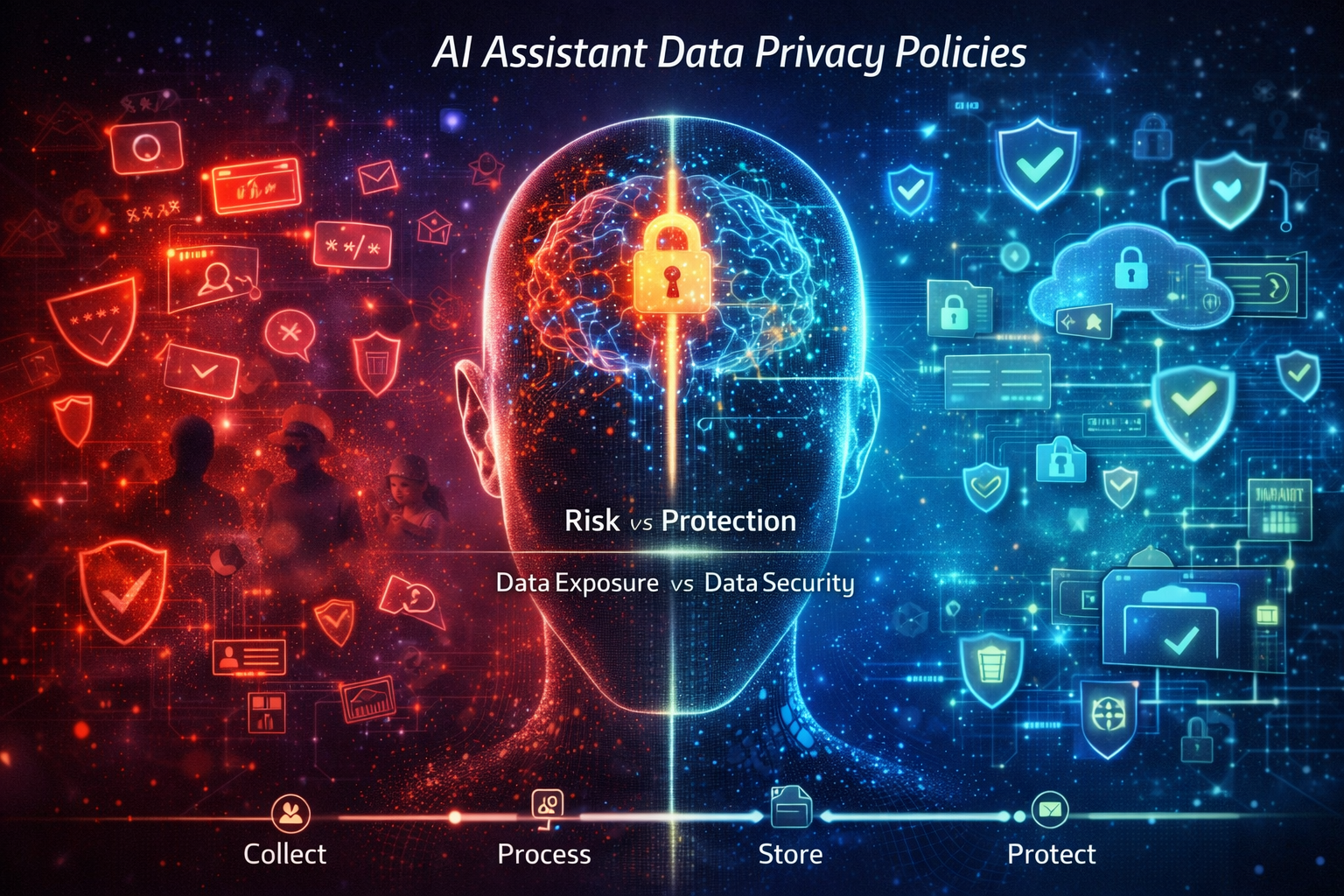
AI Data Privacy vs Data Security
Many people confuse privacy and security.
Data privacy is about how data is used.
Data security is about protecting data from threats.
Both are important.
Ethical Concerns in AI Data Privacy
AI is not just about technology. It also involves ethics.
Key Ethical Issues
Bias in AI
Lack of transparency
Misuse of data
Surveillance concerns
Ethical AI ensures fairness and trust.
Future of AI Data Privacy (2026 and Beyond)
AI is evolving, and so are privacy rules.
Future Trends
Stronger regulations
Better encryption
AI-driven security
User-controlled data
Transparent AI systems
Data privacy will become a major competitive advantage.
Why Data Privacy Matters for Startup Founders
Startup founders must understand privacy.
Business Impact
Build customer trust
Avoid legal penalties
Improve brand reputation
Ensure long-term growth
Privacy is not a cost. It is an investment.
Common Mistakes to Avoid
Many people make mistakes in handling AI data.
Mistakes to Avoid
Ignoring privacy policies
Sharing sensitive data
Using untrusted tools
Not updating security
Over-collecting data
Avoiding these mistakes can save you from problems.
How to Create an AI Data Privacy Policy
If you are building an AI product, you need a policy.
Steps to Create Policy
Define data collection
Explain data usage
Mention user rights
Add security measures
Ensure legal compliance
Keep the policy simple and transparent.
Conclusion
AI assistant data privacy policies are very important in 2026. As AI becomes part of daily life, protecting data becomes a priority.
Understanding how AI collects and uses data helps you stay safe. Businesses must follow privacy rules to build trust. Users must also be careful while sharing information.
The future of AI depends on trust. And trust depends on data privacy.
If you use AI wisely and follow proper policies, you can enjoy its benefits without risks.
Read More Blog–AI Agents for Lead Generation: Step-by-Step Setup
Frequently Asked Questions (FAQs)
1. What is AI assistant data privacy?
It is the process of protecting user data when interacting with AI systems.
2. Is AI safe for personal data?
Yes, if proper security and privacy measures are followed.
3. What data do AI assistants collect?
They collect user inputs, behavior, and sometimes personal data.
4. How can I protect my data?
Avoid sharing sensitive information and use trusted platforms.
5. Are there laws for AI data privacy?
Yes, laws like GDPR, CCPA, and DPDP Act regulate data usage.
6. Can AI misuse data?
Yes, if not properly controlled.
7. Why is data privacy important?
It protects users, builds trust, and ensures legal compliance.