

Introduction
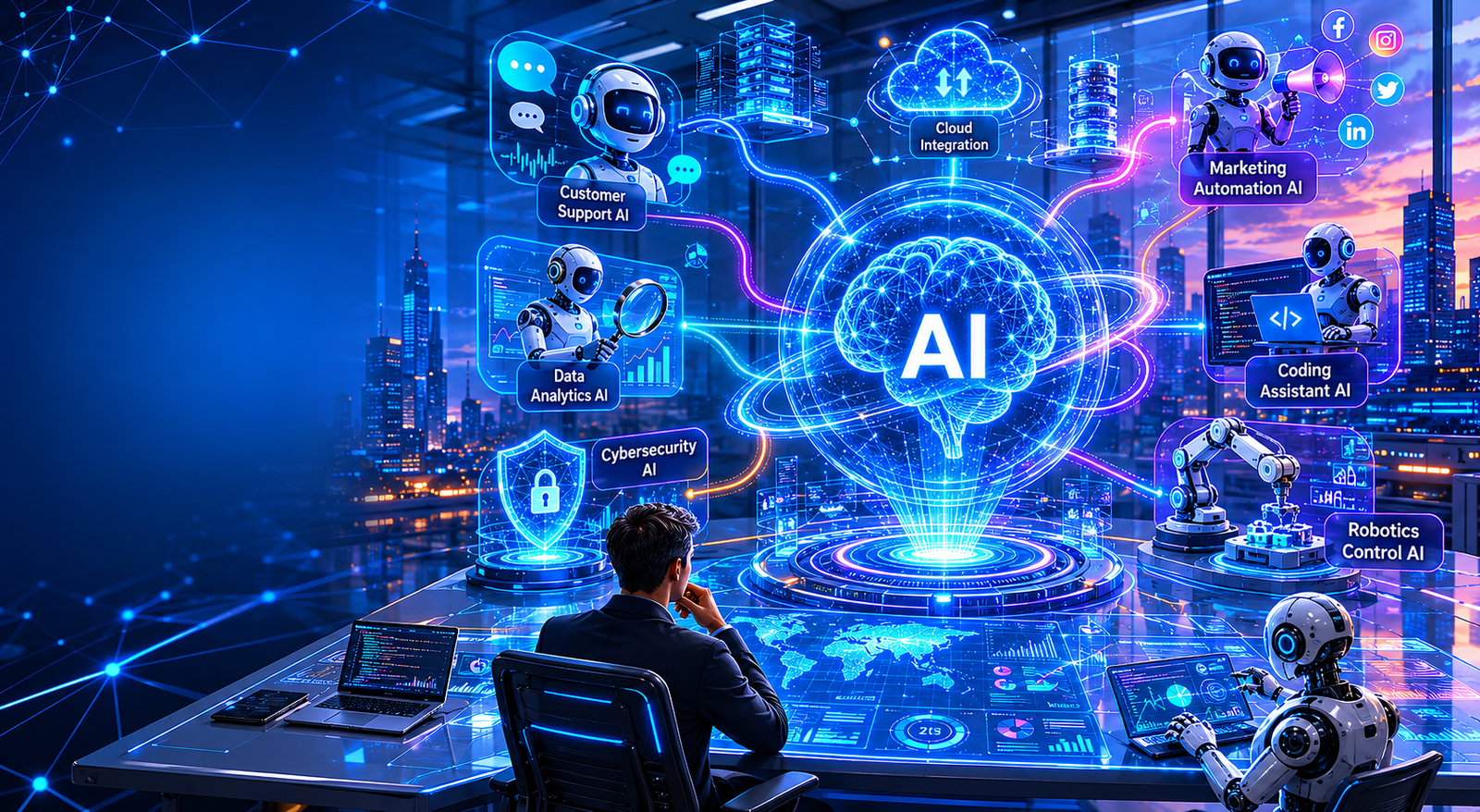
Artificial Intelligence is changing the way businesses work. In 2026, AI is no longer just a chatbot or a simple automation tool. Companies are now using multiple AI agents together to complete tasks, manage workflows, make decisions, analyze data, and improve customer experience. This new system is called AI Agent Orchestration. It helps different AI agents communicate and work together like a smart digital team.
Many businesses, startups, marketers, developers, and even normal users want to understand how AI agent orchestration works because it can save time, reduce costs, and increase productivity. From customer support and sales automation to healthcare and finance, AI orchestration is becoming an important part of modern technology.
This article will explain everything about AI Agent Orchestration in 2026 in very simple language. You will learn how it works, why it matters, what tools are used, its benefits, challenges, future trends, and real-world examples.
What is AI Agent Orchestration?
AI Agent Orchestration is the process of managing multiple AI agents together so they can work as one intelligent system. Each AI agent performs a specific task, and the orchestration system controls how they communicate, share information, and complete workflows.
In simple words, it is like managing a team of digital employees where every AI agent has its own responsibility.
For example:
- One AI agent collects customer data
- Another AI agent analyzes the data
- A third AI agent creates reports
- Another AI agent sends personalized emails
The orchestration platform connects all these AI agents and makes sure they work smoothly together.
Why AI Agent Orchestration is Important in 2026
AI systems are becoming more advanced every year. Businesses now use many AI tools at the same time. Without orchestration, these systems can become confusing and disconnected.
AI Agent Orchestration helps companies:
- Automate complex workflows
- Improve decision-making
- Reduce human effort
- Increase operational speed
- Connect multiple AI systems
- Create smarter business automation
In 2026, companies are focusing more on intelligent automation instead of basic automation. That is why AI orchestration is becoming a major technology trend.
How AI Agent Orchestration Works
AI orchestration works through coordination between different AI agents and systems. An orchestration layer manages all activities and ensures tasks are completed in the correct order.
The process usually includes:
1. Task Assignment
The orchestration system assigns tasks to different AI agents based on their abilities.
Example:
- Writing agent creates content
- Analytics agent studies data
- Automation agent performs actions
2. Communication Between Agents
AI agents share information with each other in real time.
For example:
A customer support AI agent may share customer details with a sales AI agent.
3. Workflow Management
The orchestration system controls workflow steps and ensures everything happens correctly.
4. Monitoring and Optimization
The system continuously checks performance and improves workflow efficiency.
Main Components of AI Agent Orchestration
Understanding the main components makes AI orchestration easier to understand.
AI Agents
These are intelligent systems designed for specific tasks.
Examples include:
- Chatbots
- Writing assistants
- Data analysis tools
- Coding agents
- Customer support agents
Orchestration Platform
This platform manages communication and workflow between AI agents.
Data Layer
The data layer stores and transfers information between systems.
APIs and Integrations
APIs connect AI agents with business software and external platforms.
Decision Engine
This system helps AI agents make smart decisions based on rules and data.
Types of AI Agents Used in 2026
AI technology is growing rapidly, and many types of AI agents are now used in businesses.
Conversational AI Agents
These agents interact with users through text or voice.
Examples:
- AI chatbots
- Virtual assistants
- Customer support bots
Analytical AI Agents
These agents study data and generate insights.
Examples:
- Market analysis tools
- Financial prediction systems
- Business intelligence agents
Creative AI Agents
Creative agents generate content, designs, videos, and marketing materials.
Examples:
- AI writing tools
- AI image generators
- Video creation tools
Automation AI Agents
These agents automate repetitive tasks.
Examples:
- Email automation
- CRM updates
- Workflow management
Coding AI Agents
These AI agents help developers create and debug software.
Examples:
- AI code assistants
- Software testing agents
- DevOps automation systems
Benefits of AI Agent Orchestration
AI orchestration offers many advantages for businesses and organizations.
Improved Productivity
AI agents can complete tasks faster than humans. When multiple agents work together, productivity increases significantly.
Better Workflow Automation
Complex workflows can run automatically without constant human supervision.
Faster Decision-Making
AI systems analyze large amounts of data quickly and provide insights in real time.
Reduced Operational Costs
Automation reduces the need for repetitive manual work, saving money.
Scalability
Businesses can scale operations without hiring large teams.
Enhanced Customer Experience
AI agents provide faster responses and personalized support.
Real-Time Data Processing
AI systems can monitor and process data instantly.
Increased Accuracy
AI reduces human errors in repetitive and analytical tasks.
AI Agent Orchestration Use Cases in 2026
AI orchestration is being used across many industries.
Healthcare
Healthcare organizations use AI orchestration for:
- Patient monitoring
- Medical diagnosis
- Appointment scheduling
- Drug research
- Medical data analysis
AI agents work together to improve healthcare efficiency and patient care.
Finance
Banks and financial companies use AI orchestration for:
- Fraud detection
- Financial forecasting
- Customer support
- Risk analysis
- Automated trading
E-commerce
Online stores use AI orchestration for:
- Product recommendations
- Inventory management
- Customer support
- Personalized marketing
- Order tracking
Digital Marketing
Marketing agencies use AI orchestration for:
- SEO optimization
- Social media automation
- AI content generation
- Customer targeting
- Campaign analysis
Manufacturing
Factories use AI orchestration for:
- Predictive maintenance
- Supply chain management
- Robotics coordination
- Quality control
Education
Educational platforms use AI agents for:
- Personalized learning
- Student performance analysis
- AI tutoring
- Automated grading
AI Agent Orchestration vs Traditional Automation
Traditional automation follows fixed rules and processes. AI orchestration is more intelligent and adaptive.
Traditional Automation
Traditional automation:
- Works on predefined rules
- Cannot easily adapt
- Has limited decision-making ability
AI Agent Orchestration
AI orchestration:
- Learns from data
- Makes decisions dynamically
- Adapts to new situations
- Handles complex workflows
This makes AI orchestration far more powerful in 2026.
Popular AI Agent Orchestration Tools in 2026
Many companies are building orchestration platforms.
LangChain
LangChain helps developers create AI workflows using large language models.
AutoGen
AutoGen allows multiple AI agents to collaborate on tasks.
CrewAI
CrewAI focuses on team-based AI agent collaboration.
Microsoft Semantic Kernel
This platform helps businesses integrate AI into applications and workflows.
OpenAI Agent Systems
Advanced OpenAI systems allow multi-agent collaboration and automation.
Zapier AI
Zapier combines automation with AI-driven workflows.
AI Agent Architecture in 2026
Modern AI orchestration systems use advanced architectures.
Multi-Agent Systems
Multiple AI agents collaborate on tasks.
Centralized Architecture
One orchestration platform controls all agents.
Distributed Architecture
AI agents work independently but communicate with each other.
Hybrid Architecture
This combines centralized and distributed systems.
Role of Large Language Models in AI Orchestration
Large Language Models are very important in modern orchestration systems.
These models help AI agents:
- Understand language
- Generate responses
- Analyze data
- Perform reasoning
- Complete tasks intelligently
Popular LLMs in 2026 include advanced AI systems capable of handling multi-step workflows and autonomous decision-making.
AI Orchestration in Business Automation
Businesses are moving from simple automation to intelligent orchestration.
Sales Automation
AI agents can:
- Generate leads
- Qualify customers
- Send emails
- Schedule meetings
- Analyze customer behavior
Customer Support
AI orchestration improves support systems by combining:
- Chatbots
- Knowledge systems
- CRM integration
- Sentiment analysis
Human Resources
HR teams use AI orchestration for:
- Resume screening
- Employee onboarding
- Performance analysis
- Training management
Security Challenges in AI Agent Orchestration
AI orchestration also creates security challenges.
Data Privacy Risks
AI systems process large amounts of personal and business data.
Unauthorized Access
Hackers may try to control AI agents.
AI Hallucinations
Some AI agents may generate incorrect information.
Workflow Manipulation
Poorly designed systems can create automation errors.
How Businesses Can Improve AI Security
Businesses should follow security best practices.
Use Strong Access Controls
Only authorized users should manage AI systems.
Encrypt Sensitive Data
Data encryption improves privacy and security.
Monitor AI Activities
Continuous monitoring helps identify unusual behavior.
Human Oversight
Humans should review critical AI decisions.
AI Agent Orchestration and Cloud Computing
Cloud technology plays a major role in orchestration systems.
Cloud platforms provide:
- Scalability
- Data storage
- Processing power
- Real-time connectivity
Major cloud providers support AI orchestration with advanced infrastructure.
AI Agent Orchestration for Startups
Startups are rapidly adopting AI orchestration because it reduces operational costs and increases efficiency.
Why Startups Use AI Orchestration
Startups benefit from:
- Faster growth
- Small team efficiency
- Automated workflows
- Reduced expenses
- Better customer service
Common Startup Applications
Startups use AI orchestration for:
- Marketing automation
- Customer onboarding
- Sales pipelines
- Data analytics
- AI-powered websites
Future Trends in AI Agent Orchestration
AI orchestration will continue evolving in the coming years.
Autonomous AI Teams
AI agents will operate like independent digital employees.
Hyperautomation
Businesses will automate entire operations instead of single tasks.
AI-to-AI Communication
AI systems will communicate directly without human involvement.
Personalized AI Ecosystems
Users will have personal AI ecosystems that manage daily tasks.
Industry-Specific AI Agents
Specialized AI agents will be created for healthcare, law, finance, education, and other industries.
Ethical Concerns Around AI Orchestration
AI orchestration creates ethical questions that society must address.
Job Displacement
Automation may replace some traditional jobs.
Bias in AI Systems
AI systems may produce biased results if trained on biased data.
Privacy Concerns
AI systems collect large amounts of user data.
Lack of Transparency
Some AI decisions are difficult to understand.
How Companies Can Use AI Responsibly
Responsible AI usage is very important.
Businesses should:
- Maintain transparency
- Protect user privacy
- Use ethical AI policies
- Include human supervision
- Reduce AI bias
AI Agent Orchestration and the Future of Work
AI orchestration is changing how people work.
Instead of replacing humans completely, AI often supports workers and improves productivity.
Future workplaces may include:
- Human-AI collaboration
- AI-assisted decision-making
- Automated business operations
- Digital AI assistants
Employees will focus more on creativity and strategy while AI handles repetitive tasks.
Skills Needed for AI Agent Orchestration in 2026
Many professionals want to learn orchestration skills.
Important skills include:
AI Fundamentals
Understanding how AI systems work.
Prompt Engineering
Creating effective prompts for AI agents.
Workflow Automation
Designing automated systems and workflows.
API Integration
Connecting AI systems with applications.
Cloud Computing
Managing cloud-based infrastructure.
Data Analysis
Understanding and analyzing data.
How to Start Learning AI Agent Orchestration
Beginners can start with simple steps.
Learn Basic AI Concepts
Understand machine learning, AI agents, and automation.
Practice with AI Tools
Use AI orchestration platforms and automation software.
Build Small Projects
Create simple AI workflows.
Learn Programming
Python is commonly used in AI development.
Study Real-World Use Cases
Analyze how businesses use AI orchestration.
Challenges of AI Agent Orchestration
Despite its advantages, orchestration also has limitations.
High Implementation Cost
Advanced systems may require significant investment.
Complex Integration
Connecting multiple systems can be difficult.
Technical Knowledge Requirement
Organizations need skilled professionals.
AI Reliability Issues
AI systems may sometimes fail or behave unexpectedly.
How Small Businesses Can Use AI Orchestration
Small businesses can also benefit from AI.
Customer Support Automation
AI chatbots can handle customer queries.
Marketing Automation
AI tools can manage emails and social media.
Business Analytics
AI systems can provide sales insights.
Appointment Scheduling
AI assistants can manage bookings automatically.
AI Agent Orchestration in Smart Cities
Smart cities use orchestration systems for:
- Traffic management
- Energy optimization
- Public safety
- Waste management
- Smart transportation
AI agents help cities operate more efficiently.
Difference Between AI Agents and AI Orchestration
Many people confuse these terms.
AI Agent
An AI agent performs a specific task.
AI Orchestration
AI orchestration manages multiple AI agents together.
In simple words:
AI agents are workers, while orchestration is the manager.
Why AI Agent Orchestration Will Dominate 2026
AI systems are becoming more connected and intelligent. Businesses now need coordinated AI systems instead of isolated tools.
AI orchestration helps companies:
- Improve efficiency
- Reduce costs
- Increase innovation
- Deliver better customer experiences
- Scale operations faster
Because of these benefits, AI orchestration is expected to become one of the most important technology trends in 2026.
Conclusion
AI Agent Orchestration in 2026 is transforming businesses, industries, and digital workflows. Instead of using single AI tools separately, organizations are now creating intelligent ecosystems where multiple AI agents work together. This technology improves automation, productivity, customer experience, and business growth.
From healthcare and finance to marketing and startups, AI orchestration is helping organizations manage complex tasks more efficiently. While there are challenges related to security, privacy, and ethics, the future of AI orchestration looks extremely powerful.
As AI technology continues to evolve, businesses and professionals who learn AI orchestration early will have a major advantage in the future digital economy. Whether you are a startup owner, marketer, developer, or business leader, understanding AI Agent Orchestration can help you stay ahead in 2026 and beyond.
Read More Blogs–AI Startup Edge
FAQs
1. What is AI Agent Orchestration?
AI Agent Orchestration is the process of managing multiple AI agents together so they can perform tasks collaboratively and automate workflows.
2. Why is AI Agent Orchestration important in 2026?
It is important because businesses now use multiple AI systems, and orchestration helps them work efficiently together.
3. What are AI agents?
AI agents are intelligent systems designed to perform specific tasks such as customer support, data analysis, or automation.
4. Which industries use AI Agent Orchestration?
Industries including healthcare, finance, education, manufacturing, marketing, and e-commerce use AI orchestration.
5. What are the benefits of AI orchestration?
Benefits include automation, faster workflows, reduced costs, better customer experience, and improved productivity.
6. Is AI Agent Orchestration safe?
It can be safe when businesses use proper security measures, encryption, monitoring, and human oversight.
7. What tools are used for AI orchestration?
Popular tools include LangChain, CrewAI, AutoGen, Zapier AI, and Microsoft Semantic Kernel.
8. Can startups use AI orchestration?
Yes, startups can use AI orchestration to automate operations, reduce expenses, and grow faster.
9. What skills are needed to learn AI orchestration?
Important skills include AI basics, workflow automation, prompt engineering, cloud computing, and API integration.
10. What is the future of AI Agent Orchestration?
The future includes autonomous AI teams, hyperautomation, smarter workflows, and advanced human-AI collaboration.