



Introduction
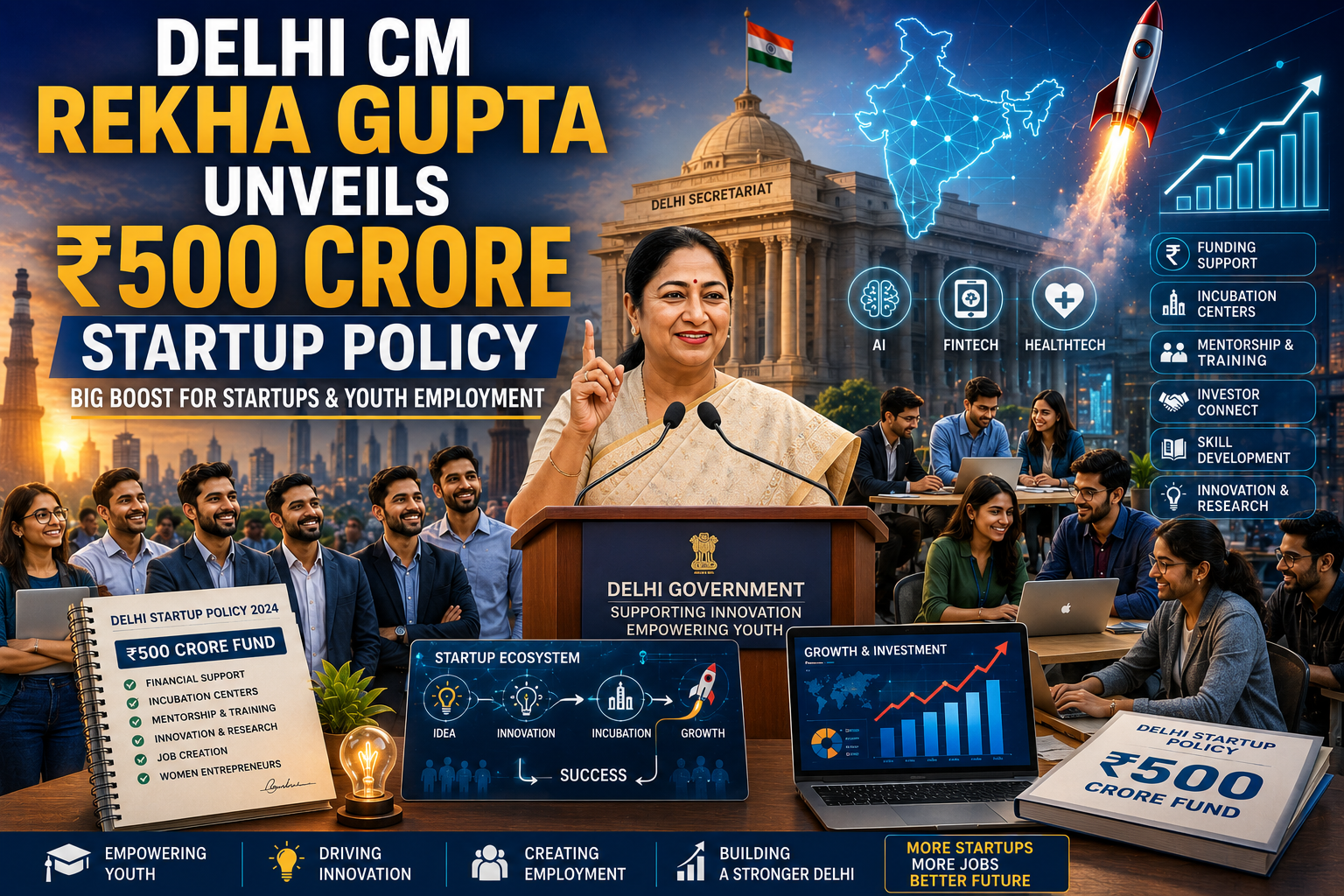
Delhi has taken a major step toward becoming one of India’s biggest startup hubs. The Delhi Chief Minister has announced a Rs 500 crore Startup Policy that aims to support new businesses, encourage innovation, and create thousands of jobs for young people. This new policy is expected to help students, entrepreneurs, women founders, and technology startups by providing financial support, mentorship, incubation, and easier access to government resources.
India has already become one of the world’s largest startup ecosystems, and Delhi is home to many successful startups. However, many young entrepreneurs still face challenges such as lack of funding, mentorship, office space, and market access. The new Delhi Startup Policy is designed to solve these problems and help startups grow faster.
In this article, you will learn everything about the Delhi CM unveils Rs 500 crore Startup Policy, including its objectives, benefits, eligibility, features, expected impact on employment, opportunities for startups, and what it means for the future of Delhi’s economy.
What Is the Delhi Startup Policy?
The Delhi Rs 500 crore Startup Policy is a government initiative created to promote innovation, entrepreneurship, and employment in the national capital. The government has allocated Rs 500 crore to support startups through financial assistance, incubation centers, mentorship programs, research grants, and skill development.
The policy aims to encourage more young people to start their own businesses instead of only looking for traditional jobs. It also focuses on strengthening Delhi’s startup ecosystem by connecting entrepreneurs with investors, universities, research institutions, and industry experts.
The policy supports startups working in different sectors including:
- Artificial Intelligence (AI)
- Healthcare
- Education Technology (EdTech)
- Financial Technology (FinTech)
- Green Energy
- Agriculture Technology
- Robotics
- Electric Vehicles
- Cybersecurity
- Deep Technology
- Software Development
- Manufacturing
- Biotechnology
Why Was the Delhi Startup Policy Introduced?
The government believes startups are one of the biggest sources of future employment. Young entrepreneurs create new products, solve real-world problems, and generate jobs for others.
The main reasons behind launching this policy include:
- Promoting entrepreneurship among youth.
- Creating more employment opportunities.
- Supporting innovation and research.
- Attracting private investment.
- Helping startups scale globally.
- Improving Delhi’s business environment.
- Encouraging women entrepreneurs.
- Building a technology-driven economy.
Key Highlights of the Delhi Startup Policy
The new startup policy includes several important initiatives that aim to support businesses from the idea stage to growth stage.
Some of the major highlights include:
- Rs 500 crore dedicated startup fund.
- Financial assistance for eligible startups.
- Support for incubation centers.
- Mentorship from industry experts.
- Startup networking opportunities.
- Skill development programs.
- Focus on student entrepreneurs.
- Women startup promotion.
- Innovation grants.
- Investor connections.
- Startup competitions.
- Government partnerships.
- Research and development support.
- Employment generation initiatives.
Major Objectives of the Delhi Startup Policy
The policy has been designed with long-term economic growth in mind.
Its major objectives include:
- Increase startup formation in Delhi.
- Encourage innovation.
- Generate employment.
- Support technology development.
- Attract venture capital investment.
- Build global startups from Delhi.
- Encourage university-based startups.
- Promote digital transformation.
- Improve ease of doing business.
- Support sustainable businesses.
How Will the Delhi Startup Policy Fund Be Used?
The allocated budget will help startups at different stages of growth.
The government plans to use the fund in several ways.
Startup Funding
Early-stage startups often struggle to raise capital. The policy will provide financial support that can help founders develop products, hire employees, and launch their businesses.
Incubation Support
More incubation centers will be developed in colleges, universities, and innovation hubs.
These centers will offer:
- Office space
- Business guidance
- Technical support
- Networking opportunities
- Product development assistance
Mentorship Programs
Experienced entrepreneurs and industry experts will guide startups in areas like:
- Business planning
- Marketing
- Product development
- Legal compliance
- Investment readiness
- Global expansion
Skill Development
The government also plans to organize training programs that teach entrepreneurs:
- Business management
- Financial planning
- Digital marketing
- Technology development
- Startup scaling
- Leadership skills
Benefits for Young Entrepreneurs
Young entrepreneurs are expected to benefit the most from this policy.
Some of the biggest benefits include:
- Easier access to funding.
- Better mentorship.
- Lower startup costs.
- Faster business growth.
- Investor connections.
- Market access.
- Government support.
- Innovation encouragement.
- Business networking.
- Startup ecosystem support.
Benefits for Students
Students often have innovative ideas but limited financial resources.
The policy aims to help them by offering:
- College incubation centers.
- Startup competitions.
- Innovation grants.
- Entrepreneurship workshops.
- Industry mentorship.
- Internship opportunities.
- Research funding.
Benefits for Women Entrepreneurs
The Delhi government has also emphasized women-led startups.
Women founders may receive additional support through:
- Special mentorship.
- Funding opportunities.
- Networking events.
- Business training.
- Leadership development.
- Women-focused startup programs.
How Will This Policy Create Jobs?
One of the biggest goals of the policy is employment generation.
When startups grow, they need employees in many different fields.
This includes:
- Software developers
- Data analysts
- Sales executives
- Marketing professionals
- Designers
- HR professionals
- Finance experts
- Customer support staff
- Product managers
- Engineers
As more startups succeed, thousands of direct and indirect jobs can be created.
Impact on Delhi’s Economy
The startup policy is expected to strengthen Delhi’s economy in multiple ways.
Potential benefits include:
- Higher investments.
- Better innovation.
- Increased exports.
- More technology companies.
- Better research.
- Higher tax revenue.
- Skilled workforce development.
- Improved global competitiveness.
Opportunities for Investors
Investors also benefit when governments support startups.
The policy may increase investor confidence because startups receive institutional support.
Potential investment opportunities include:
- AI startups
- HealthTech
- FinTech
- Green technology
- SaaS companies
- DeepTech
- Climate technology
- Education startups
Industries Expected to Benefit Most
Several industries may experience rapid growth.
These sectors include:
Artificial Intelligence
AI startups are expected to receive strong support due to growing demand across industries.
Healthcare
Digital healthcare platforms, diagnostics, and medical technologies can benefit significantly.
Education Technology
Online learning platforms and educational software startups are likely to grow.
Electric Vehicles
EV charging, battery technology, and mobility startups may receive encouragement.
Green Energy
Clean energy startups support India’s sustainability goals.
Agriculture Technology
AgriTech startups developing smart farming solutions can also benefit.
How This Policy Supports Innovation
Innovation is one of the biggest drivers of economic growth.
The Delhi Startup Policy encourages innovation by:
- Funding research.
- Supporting patents.
- Encouraging university collaborations.
- Promoting emerging technologies.
- Helping prototype development.
- Supporting commercialization.
Challenges That Still Remain
Although the policy is promising, startups may still face challenges.
Some common challenges include:
- High competition.
- Market uncertainty.
- Customer acquisition.
- Regulatory compliance.
- Talent hiring.
- Scaling operations.
- International competition.
The government and private sector will need to work together to solve these issues.
How Entrepreneurs Can Prepare
Entrepreneurs should begin preparing early to take advantage of future opportunities under the policy.
Important steps include:
- Develop a clear business idea.
- Create a business plan.
- Build a strong team.
- Validate the product.
- Learn financial management.
- Improve digital skills.
- Register the startup.
- Network with investors.
- Join incubation programs.
- Stay updated with government announcements.
Why the Delhi Startup Policy Matters for India’s Startup Ecosystem
Delhi is already one of India’s leading startup destinations.
A successful implementation of this policy could:
- Inspire other states.
- Increase startup investments.
- Strengthen India’s innovation ecosystem.
- Encourage more youth entrepreneurship.
- Improve India’s global startup ranking.
- Create long-term employment.
- Boost economic development.
Future Expectations
Experts believe the policy could transform Delhi into one of Asia’s leading startup ecosystems if implemented effectively.
Possible future outcomes include:
- More unicorn startups.
- Higher startup investments.
- Better innovation infrastructure.
- Increased exports.
- Global startup partnerships.
- Higher employment.
- Stronger digital economy.
- Better research commercialization.
Conclusion
The Delhi CM unveils Rs 500 crore Startup Policy marks an important milestone for entrepreneurship in India. By investing heavily in startups, innovation, skill development, incubation, and employment generation, the Delhi government is creating an environment where young entrepreneurs can turn their ideas into successful businesses.
The policy has the potential to create thousands of jobs, attract private investment, encourage research, and strengthen Delhi’s position as one of India’s leading startup hubs. While the success of the initiative will depend on effective implementation and transparent execution, it provides a strong foundation for innovation-led economic growth.
For aspiring entrepreneurs, students, women founders, and technology innovators, this policy represents a valuable opportunity to build scalable businesses, contribute to the economy, and shape the future of India’s startup ecosystem.
Read More Blogs-AI Startup Edge
Frequently Asked Questions (FAQs)
1. What is the Delhi Rs 500 crore Startup Policy?
The Delhi Rs 500 crore Startup Policy is a government initiative that supports startups through funding, incubation, mentorship, innovation programs, and employment generation.
2. Who announced the Delhi Startup Policy?
The policy was announced by the Delhi Chief Minister to promote entrepreneurship and create job opportunities for young people.
3. What is the main objective of the policy?
The main objective is to encourage startups, support innovation, generate employment, and strengthen Delhi’s startup ecosystem.
4. Who can benefit from this policy?
Students, entrepreneurs, women founders, researchers, technology startups, innovators, and early-stage businesses can benefit from the policy.
5. Which sectors are expected to benefit the most?
Artificial Intelligence, HealthTech, FinTech, EdTech, Green Energy, Electric Vehicles, Biotechnology, Cybersecurity, AgriTech, and DeepTech startups are expected to benefit.
6. How will the policy help create jobs?
As startups receive funding and grow, they will hire professionals across technology, marketing, operations, finance, design, and customer support, creating direct and indirect employment.
7. Will the policy support women entrepreneurs?
Yes. The policy includes initiatives aimed at encouraging women-led startups through mentorship, networking, business development, and access to funding opportunities.
8. Why is this policy important for India’s startup ecosystem?
The policy strengthens innovation, attracts investment, supports entrepreneurs, creates jobs, and helps position Delhi as a leading startup and technology hub in India.