


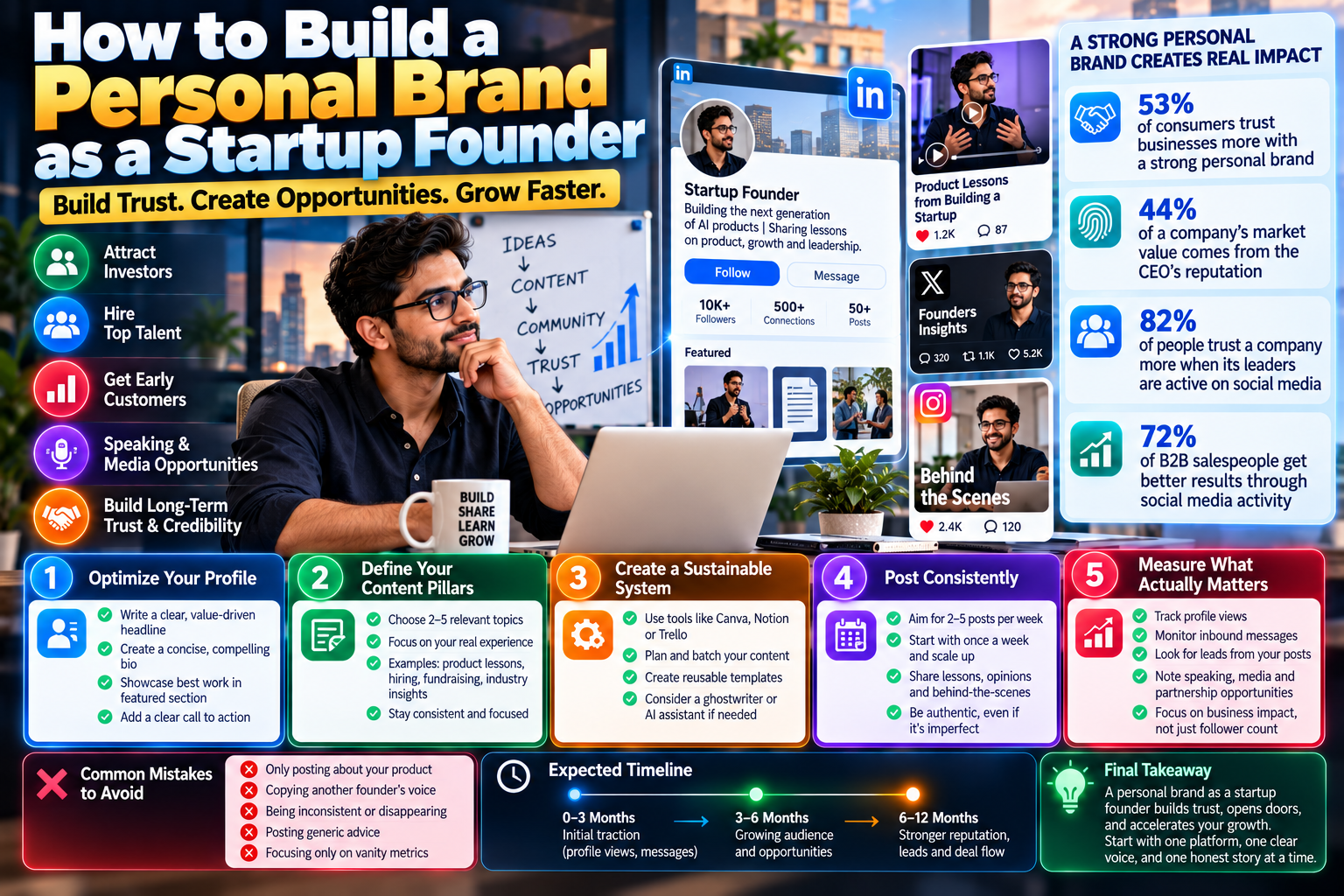
Investors and customers rarely buy from a logo first. They buy from a person. Specifically, 53% of consumers say they trust businesses more when a strong, visible personal brand stands behind them. For a startup founder, that trust often arrives before the product even ships. This guide walks through how to build a personal brand as a startup founder, step by step, without turning it into a second full-time job.
What It Means to Build a Personal Brand as a Startup Founder
A personal brand as a startup founder is simply a consistent, recognizable point of view tied to your name instead of your company’s logo. It shows up in what you post, what you say in interviews, and how people describe you when you’re not in the room. Unlike company marketing, it travels with you even if the startup pivots or shuts down.
Why a Personal Brand as a Startup Founder Matters More Than Ever
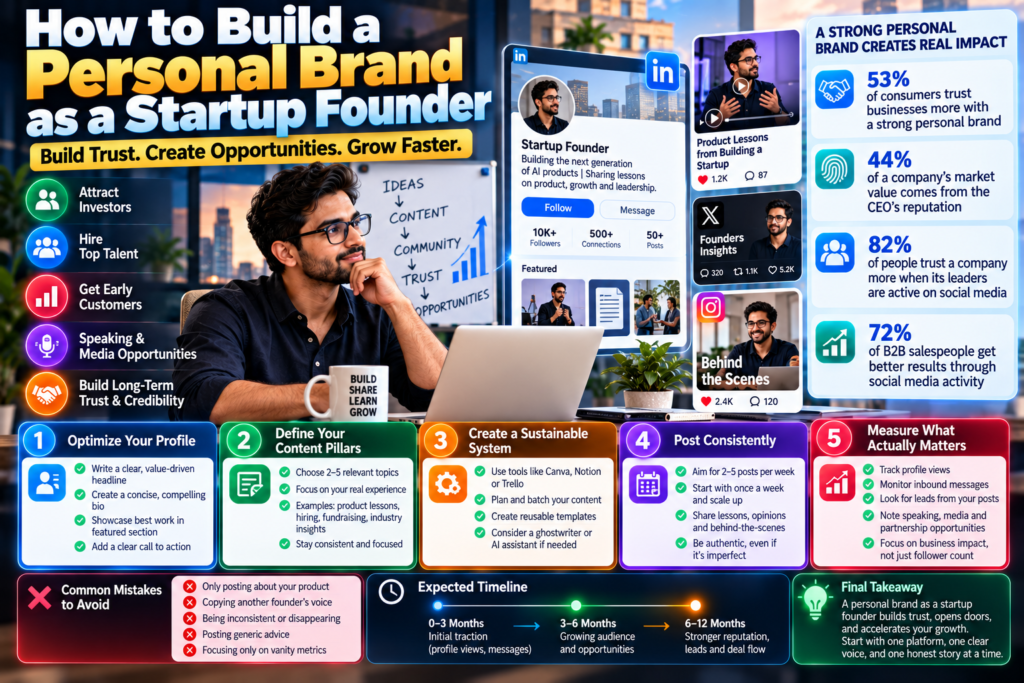
The numbers are hard to ignore. Executives estimate that 44% of a company’s market value traces directly back to the CEO’s reputation. Meanwhile, 82% of people say they trust a company more when its senior leaders are active on social media. For a founder, that visibility compounds. It helps with hiring, fundraising, and closing early customers, often all at once.
B2B sales back this up too. Specifically, 72% of B2B salespeople report that social media activity improves their performance. Over half close deals directly through social channels. Founders who show up consistently online aren’t just building an audience. Instead, they’re building a sales channel that costs nothing but time.
Optimize Your Profile Before You Post Anything
A personal brand starts with the basics, not the content calendar. First, rewrite your headline around who you help and what you deliver, not just your job title. Next, write a short bio that states who you are, what you do, and how you help, with a clear call to action. Finally, use the featured section to highlight your best work: a launch post, a case study, a strong testimonial. Someone visiting your profile cold should understand your value within ten seconds.
Define Your Content Pillars
Pick two to five topics and stick to them. These should reflect your actual experience and point of view, not generic advice anyone could post. For a startup founder, that often means product lessons, hiring mistakes, fundraising experience, or the specific problem your company solves. Notably, a narrow, consistent focus builds recognition faster than posting about everything that crosses your mind.
Build a System You Can Actually Sustain
Inconsistent posting kills more personal brands than bad content does. Set up a simple system instead. Use a tool like Canva for quick visual templates. Plan topics a few weeks out in Notion or Trello. Batch-write several posts in one sitting rather than starting from zero every day. If time is genuinely short, a ghostwriter or an AI drafting assistant can keep the output steady while you focus on running the company.
Post Consistently, Even When It’s Imperfect
Research suggests posting two to five times per week is the sweet spot for growth. However, that pace isn’t realistic for every founder from day one. Instead, start with once a week and build from there. A short, honest post published on schedule beats a polished post that never ships. For more on pairing this with broader growth tactics, see our guide to the best startup marketing strategies.
Measure What Actually Matters
Vanity metrics like follower count feel good but rarely pay the bills. Track profile views and inbound messages instead. Watch for leads that mention a specific post, and note any speaking or press opportunities that come from your visibility. Over time, these numbers tell you whether your personal brand is actually moving the business forward, not just your ego.
Common Mistakes When Building a Personal Brand as a Startup Founder
Over-promoting the product is the most common mistake. Nobody follows a founder who only posts launch announcements. Instead, mix in lessons, opinions, and behind-the-scenes detail alongside the occasional product update.
Copying another founder’s voice is the second mistake. Borrowed opinions read as hollow, and audiences notice fast. As a result, the founders who stand out are the ones willing to state an actual point of view, even an unpopular one.
Disappearing for weeks is the third mistake. A personal brand compounds through repetition. Gaps reset the momentum every time, so a slower, steady pace beats an intense burst followed by silence.
Frequently Asked Questions
How long does it take to build a personal brand as a startup founder?
Most founders see early traction, profile views and inbound messages, within two to three months of consistent posting. However, real reputation and inbound deal flow usually take six months to a year of steady, recognizable output.
Should a founder hire a ghostwriter for their personal brand?
It depends on time, not budget alone. A ghostwriter can maintain consistency when a founder is heads-down on the business. That said, the founder should still supply the real opinions and stories. Otherwise, the content reads as generic and the trust-building effect disappears.
Building a personal brand as a startup founder won’t replace a good product or a working business model. What it does is remove friction. Investors recognize the name, candidates apply because they already trust the mission, and customers buy a little faster because a real person stands behind the pitch. Start with one platform, one consistent voice, and one honest story at a time.