


Introduction
Artificial Intelligence is changing faster than ever before. What seemed impossible a few years ago is becoming a reality in 2026. AI can now write content, create videos, build software, analyze medical reports, automate business operations, and even make decisions with very little human involvement. Businesses, students, professionals, startups, and governments are investing heavily in AI because it has become one of the most powerful technologies in the world.
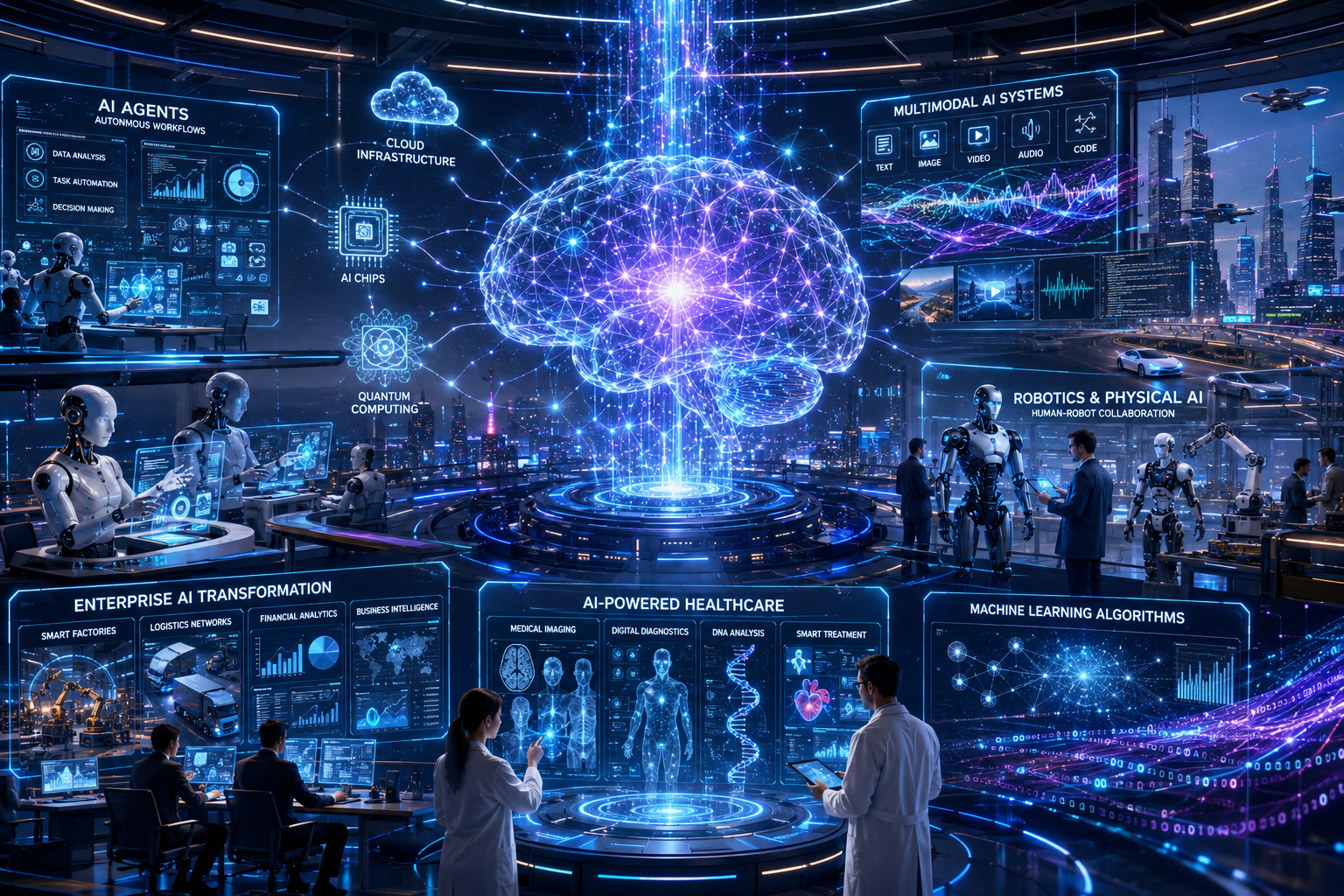
The year 2026 is particularly important because AI is moving beyond simple chatbots and becoming a complete digital workforce. Advanced AI agents, autonomous systems, multimodal AI models, robotics, and enterprise automation are transforming industries at a rapid pace. Companies that adopt AI early are gaining significant competitive advantages, while those that ignore it risk falling behind.
In this comprehensive guide, you will learn about the biggest AI developments in 2026, how they impact businesses and individuals, emerging trends, opportunities, challenges, and what the future of artificial intelligence may look like in the coming years.
What Are AI Developments?
AI developments refer to the latest advancements, innovations, technologies, and breakthroughs in artificial intelligence. These developments include improvements in machine learning, large language models, AI agents, robotics, automation systems, computer vision, and decision-making capabilities.
The primary goal of AI development is to create systems that can perform tasks traditionally requiring human intelligence.
These tasks include:
- Understanding language
- Recognizing images
- Solving problems
- Making decisions
- Learning from data
- Creating content
- Automating workflows
In 2026, AI has become more capable, reliable, and accessible than ever before.
Why AI Developments 2026 Matter
The latest AI innovations are impacting almost every sector of society.
These developments matter because they help:
- Improve productivity
- Reduce operational costs
- Increase business efficiency
- Enhance customer experiences
- Accelerate innovation
- Support scientific research
- Create new job opportunities
- Solve complex global challenges
Organizations worldwide are adopting AI to stay competitive in a rapidly changing market.
Major AI Developments in 2026
1. Rise of Autonomous AI Agents
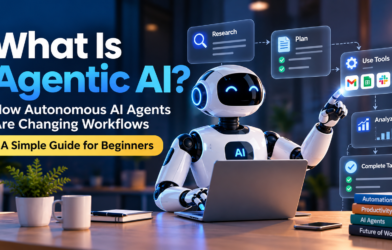
One of the biggest developments in 2026 is the rise of AI agents.
Unlike traditional chatbots, AI agents can perform complete tasks independently. They can plan, reason, execute actions, and achieve goals with minimal human supervision.
AI agents can:
- Schedule meetings
- Conduct research
- Analyze data
- Write reports
- Manage projects
- Handle customer support
- Create marketing campaigns
- Build software applications
Many businesses are now deploying AI agents as digital employees.
Benefits of AI Agents
- 24/7 operation
- Reduced labor costs
- Faster decision-making
- Improved productivity
- Scalable operations
AI agents are becoming a major part of enterprise digital transformation.
2. Multimodal AI Becomes Mainstream
Traditional AI systems primarily worked with text.
In 2026, multimodal AI can understand and generate multiple types of content simultaneously.
These include:
- Text
- Images
- Video
- Audio
- Documents
- Code
Multimodal AI models can analyze an image, answer questions about it, generate related content, and even create videos from simple prompts.
This capability is revolutionizing industries such as education, healthcare, marketing, and entertainment.
3. AI-Powered Software Development
AI coding assistants have become significantly more advanced in 2026.
Developers can now create applications faster using AI-powered tools.
Modern AI systems can:
- Write code
- Debug software
- Generate documentation
- Test applications
- Suggest improvements
- Optimize performance
Many startups are building products with smaller teams because AI handles much of the development process.
Benefits for Businesses
- Faster product launches
- Reduced development costs
- Higher software quality
- Increased innovation speed
4. Enterprise AI Transformation
Large organizations are integrating AI into nearly every business function.
Enterprise AI is helping companies automate repetitive tasks and improve decision-making.
Applications include:
- Human resources
- Finance
- Customer support
- Sales
- Marketing
- Operations
- Supply chain management
Companies using AI are experiencing improved efficiency and profitability.
5. AI Search Engines and Knowledge Systems
Search technology has evolved significantly.
Instead of simply showing links, AI-powered search engines now provide comprehensive answers and actionable insights.
Modern AI search platforms can:
- Summarize information
- Compare options
- Conduct research
- Generate reports
- Provide recommendations
This is changing how people access and consume information online.
Generative AI Advancements in 2026
Generative AI remains one of the fastest-growing areas of artificial intelligence.
Modern generative AI can create:
- Articles
- Images
- Videos
- Music
- Presentations
- Marketing materials
- Software code
Content creation that once required days can now be completed in minutes.
Key Improvements
- Better accuracy
- Improved reasoning
- Reduced hallucinations
- Higher-quality outputs
- Faster processing
- Enhanced personalization
Businesses are increasingly using generative AI to scale content production.
AI in Healthcare
Healthcare is one of the biggest beneficiaries of AI developments in 2026.
AI systems assist doctors by analyzing large amounts of medical data.
Applications include:
- Disease detection
- Medical imaging
- Drug discovery
- Patient monitoring
- Personalized treatment
- Clinical decision support
Benefits of AI in Healthcare
- Faster diagnosis
- Improved treatment outcomes
- Reduced healthcare costs
- Better patient care
- Enhanced research capabilities
AI is helping healthcare providers deliver more efficient and accurate services.
AI in Education
Educational institutions are rapidly adopting AI technologies.
AI-powered learning systems provide personalized education experiences.
Key applications include:
- Adaptive learning
- Virtual tutors
- Automated grading
- Student performance analysis
- Content creation
- Language learning
Students receive customized learning paths based on their strengths and weaknesses.
AI in Finance
Financial institutions are using AI to improve operations and customer services.
AI applications in finance include:
- Fraud detection
- Risk assessment
- Investment analysis
- Customer support
- Financial forecasting
- Compliance monitoring
AI helps banks and financial organizations make better decisions faster.
AI in Manufacturing
Manufacturing companies are leveraging AI to increase productivity and reduce costs.
AI-powered systems can:
- Monitor equipment
- Predict failures
- Optimize production
- Improve quality control
- Reduce waste
- Enhance supply chains
Smart factories are becoming increasingly common worldwide.
Robotics and Physical AI
Robotics has experienced significant growth due to AI advancements.
Modern robots can:
- Understand instructions
- Navigate environments
- Manipulate objects
- Learn from experience
- Work alongside humans
Industries adopting AI-powered robotics include:
- Manufacturing
- Logistics
- Healthcare
- Agriculture
- Retail
Physical AI is expected to become a major economic driver over the next decade.
AI and Cybersecurity
Cybersecurity threats continue to evolve.
AI is playing a critical role in protecting organizations from cyberattacks.
AI cybersecurity systems can:
- Detect threats
- Monitor networks
- Identify vulnerabilities
- Respond automatically
- Prevent fraud
As cyber risks grow, AI-powered security solutions are becoming essential.
AI Startups Leading Innovation
Thousands of AI startups are emerging globally.
These startups focus on:
- AI agents
- Healthcare AI
- Enterprise automation
- Robotics
- Generative AI
- Education technology
- Financial technology
Investors continue to pour billions of dollars into AI innovation.
Why AI Startups Are Growing
- Strong market demand
- Improved AI infrastructure
- Cloud computing availability
- Lower development costs
- Increased investment
AI startups are driving much of the innovation seen in 2026.
AI Infrastructure Developments
Behind every advanced AI model is powerful infrastructure.
AI infrastructure includes:
- Data centers
- GPUs
- AI chips
- Cloud platforms
- Networking systems
Major technology companies continue investing heavily in AI infrastructure to support growing demand.
Importance of AI Infrastructure
- Faster model training
- Better performance
- Improved scalability
- Lower operating costs
Infrastructure remains a critical component of AI growth.
AI and the Future of Work
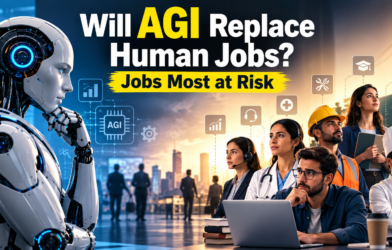
Many people worry that AI will replace jobs.
The reality is more complex.
AI is changing jobs rather than eliminating all of them.
Workers increasingly collaborate with AI systems to improve productivity.
New opportunities are emerging in:
- AI management
- Prompt engineering
- AI consulting
- AI training
- Data analysis
- AI governance
Professionals who learn AI skills will have significant advantages in the future workforce.
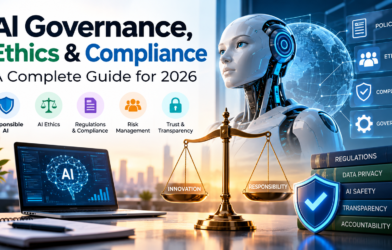
AI Regulation and Governance
As AI becomes more powerful, governments are introducing regulations to ensure responsible use.
AI governance focuses on:
- Safety
- Transparency
- Privacy
- Fairness
- Accountability
- Security
Organizations are implementing AI policies to comply with evolving regulations.
Responsible AI development is becoming a priority worldwide.
Challenges Facing AI in 2026
Despite impressive progress, AI still faces several challenges.
These challenges include:
- Data privacy concerns
- Bias in AI models
- Security risks
- Regulatory compliance
- High infrastructure costs
- Ethical issues
- Misinformation
Addressing these challenges is essential for sustainable AI growth.
AI Trends to Watch Beyond 2026
The future of AI looks extremely promising.
Several emerging trends are expected to shape the next phase of AI development.
These trends include:
- Fully autonomous AI agents
- Advanced robotics
- AI scientists
- Personalized AI assistants
- Real-time multimodal AI
- AI-powered operating systems
- Human-AI collaboration platforms
These innovations could redefine how people work and interact with technology.
How Businesses Can Prepare for AI Developments
Organizations should take proactive steps to benefit from AI advancements.
Businesses can prepare by:
1. Identifying Automation Opportunities
Evaluate repetitive processes that AI can automate.
2. Investing in AI Training
Educate employees about AI technologies and applications.
3. Implementing AI Tools
Start with practical use cases that deliver measurable value.
4. Building AI Strategies
Develop long-term AI adoption plans aligned with business goals.
5. Prioritizing Responsible AI
Ensure ethical, transparent, and secure AI implementation.
Organizations that prepare today will be better positioned for future success.
The Future of Artificial Intelligence
Artificial intelligence is moving toward greater autonomy, intelligence, and usefulness.
Future AI systems may:
- Perform complex reasoning
- Solve scientific problems
- Accelerate innovation
- Improve healthcare outcomes
- Enhance education
- Support sustainable development
AI is likely to become a fundamental part of daily life and business operations.
The organizations and individuals that embrace AI responsibly will benefit the most from these developments.
Conclusion
AI developments in 2026 represent one of the most significant technological transformations in history. From autonomous AI agents and multimodal systems to advanced robotics and enterprise automation, artificial intelligence is reshaping industries across the globe. Businesses are becoming more productive, healthcare is becoming smarter, education is becoming personalized, and innovation is accelerating at an unprecedented pace.
While challenges such as regulation, privacy, and ethical concerns remain important, the overall impact of AI continues to be overwhelmingly positive. The future belongs to organizations and individuals who understand, adopt, and leverage AI effectively.
As AI technology continues to evolve, staying informed about the latest trends, innovations, and opportunities will be essential for success. Whether you are a business owner, student, professional, or entrepreneur, understanding AI developments in 2026 can help you prepare for the future and take advantage of one of the most transformative technologies ever created.
Read More blogs– Ai Startup Edge
FAQs
1. What are the biggest AI developments in 2026?
The biggest AI developments include autonomous AI agents, multimodal AI, advanced robotics, enterprise AI automation, and generative AI innovations.
2. How are AI agents different from chatbots?
AI agents can plan, reason, and complete tasks independently, while traditional chatbots mainly respond to user questions.
3. Which industries are benefiting most from AI?
Healthcare, finance, education, manufacturing, cybersecurity, retail, and logistics are among the industries benefiting the most.
4. Will AI replace human jobs?
AI will automate some tasks, but it will also create new roles and opportunities that require human oversight and creativity.
5. What is multimodal AI?
Multimodal AI can understand and generate different types of content, including text, images, audio, video, and code.
6. Why is AI important for businesses?
AI helps businesses improve productivity, reduce costs, automate processes, enhance customer experiences, and make better decisions.
7. What are the main challenges of AI?
The main challenges include privacy concerns, security risks, bias, regulatory compliance, ethical issues, and infrastructure costs.
8. How can small businesses use AI in 2026?
Small businesses can use AI for customer support, content creation, marketing automation, data analysis, and operational efficiency.
9. What skills are important in the AI era?
AI literacy, data analysis, prompt engineering, AI management, critical thinking, and problem-solving skills are increasingly valuable.
10. What is the future of AI after 2026?
The future includes more autonomous AI systems, advanced robotics, AI-powered assistants, scientific discovery tools, and deeper human-AI collaboration.