



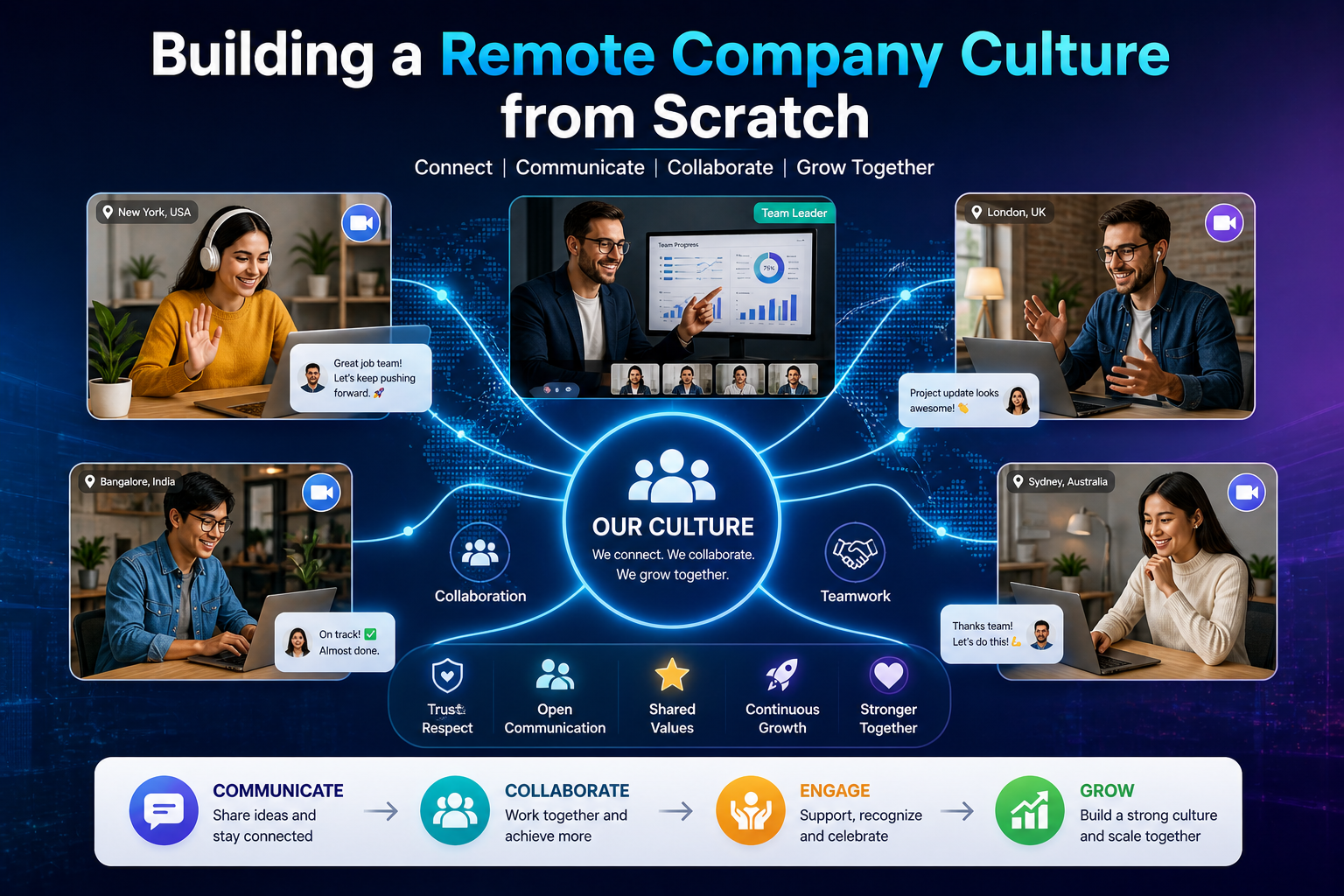
Introduction
Remote work is no longer the future. It is the present. Many startups and companies are now building fully remote teams. While this gives flexibility and access to global talent, it also creates a big challenge — how do you build a strong company culture when your team is not in one office?
In traditional offices, culture builds naturally through daily interaction. But in remote teams, you must build it intentionally. If you ignore this, your team may feel disconnected, unmotivated, and less productive.
If you are a founder, manager, or entrepreneur, this guide is very important for you. In this article, you will learn how to build a strong remote company culture from scratch in very simple language. From communication to engagement, from tools to leadership, everything is explained step by step to help you build a happy and productive remote team.
What Is Remote Company Culture?
Before going deeper, let us understand the meaning.
Remote company culture is the way your team works, communicates, and behaves in a remote environment.
It includes:
Communication style
Work habits
Values and beliefs
Team relationships
Leadership approach
It defines how your remote team feels and works together.
Why Remote Culture Is Important
Many people think remote work is only about tools and tasks.
But culture is more important.
Importance of Remote Culture
A strong culture helps your team.
Stay connected
Feel motivated
Work efficiently
Build trust
Stay engaged
Without culture, remote teams struggle.
Challenges in Building Remote Culture
Building culture remotely is not easy.
Common Challenges
Lack of communication
Feeling of isolation
Time zone differences
Low engagement
Misunderstanding
These challenges must be solved.
Key Elements of Remote Company Culture
To build culture, you need the right elements.
Core Elements
Clear communication
Strong values
Trust
Transparency
Team engagement
These elements form the foundation.
Step 1: Define Your Company Values
Values are the base of culture.
Why Values Matter
They guide behavior and decisions.
What You Should Do
Define your mission
Define your vision
Define your values
Share them clearly
Your values should be simple and clear.
Step 2: Build Strong Communication System
Communication is the most important part.
Why Communication Matters
It keeps everyone connected.
What You Should Do
Use clear communication channels
Encourage open discussion
Share updates regularly
Communication should be consistent.
Step 3: Use the Right Tools
Tools help manage remote teams.
Important Tools
Communication tools
Project management tools
Video conferencing tools
Collaboration tools
Choose tools that are easy to use.
Step 4: Create Clear Work Processes
Processes help teams stay organized.
What You Should Do
Define roles
Set clear expectations
Create workflows
Document processes
This reduces confusion.
Step 5: Build Trust in Team
Trust is very important in remote teams.
Why Trust Matters
You cannot control everything remotely.
What You Should Do
Avoid micromanagement
Give freedom
Trust your team
Trust increases productivity.
Step 6: Focus on Employee Engagement
Engagement keeps your team active.
What You Should Do
Organize virtual meetings
Celebrate achievements
Encourage participation
Small actions build strong engagement.
Step 7: Encourage Team Collaboration
Collaboration builds relationships.
What You Should Do
Use group projects
Encourage teamwork
Create shared goals
This strengthens connections.
Step 8: Create a Positive Work Environment
Environment matters even in remote work.
What You Should Do
Promote work-life balance
Avoid overwork
Support employees
A healthy environment improves performance.
Step 9: Provide Regular Feedback
Feedback helps improvement.
What You Should Do
Give positive feedback
Provide suggestions
Ask for feedback
This builds growth.
Step 10: Strong Leadership
Leaders define culture.
Role of Leadership
Leaders must guide and support.
What You Should Do
Be transparent
Communicate clearly
Support team
Leadership shapes culture.
Remote Onboarding Process
Onboarding is the first step for new employees.
Why It Matters
First impression is important.
What You Should Do
Welcome new employees
Explain culture
Provide training
This helps integration.
Remote Team Building Activities
Activities help build relationships.
Ideas
Virtual games
Online events
Team challenges
Casual meetings
These make work fun.
Work-Life Balance in Remote Teams
Balance is important.
Why It Matters
Overwork reduces productivity.
What You Should Do
Set working hours
Encourage breaks
Avoid burnout
Healthy team performs better.
Time Zone Management
Remote teams work across time zones.
What You Should Do
Set common working hours
Use async communication
Plan meetings properly
This improves coordination.
Measuring Remote Culture
You must track culture health.
Metrics
Employee satisfaction
Engagement level
Retention rate
Productivity
These show culture strength.
Common Mistakes in Remote Culture
Avoid these mistakes.
Mistakes
Poor communication
Micromanagement
Ignoring feedback
No clear values
Lack of engagement
These can damage culture.
Benefits of Strong Remote Culture
A strong culture gives many benefits.
Benefits
Higher productivity
Better retention
Stronger teamwork
Improved performance
Faster growth
Culture becomes a strength.
Future of Remote Work Culture (2026)
Remote work is evolving.
Trends
Hybrid work models
AI tools for teams
Global teams
Flexible work
Culture will become more digital.
Why Founders Must Focus on Culture
Founders build the base.
Impact
Your actions define culture.
If you:
Communicate clearly
Support team
Follow values
Then culture becomes strong.
Practical Tips for Building Remote Culture
Here are simple tips.
Tips
Start with values
Communicate regularly
Use simple tools
Encourage engagement
Listen to team
Small steps create big impact.
Conclusion
Building a remote company culture from scratch is not easy, but it is possible. You must be intentional and consistent. Culture does not happen automatically in remote teams.
By focusing on communication, trust, engagement, and leadership, you can build a strong and successful remote culture. This will help your team stay motivated and your business grow.
Start early, stay consistent, and build a culture that supports your vision.
Frequently Asked Questions (FAQs)
1. What is remote company culture?
It is the work environment and behavior of a remote team.
2. Why is remote culture important?
It keeps teams connected and productive.
3. How can I improve remote team engagement?
Through communication, activities, and feedback.
4. What tools are useful for remote teams?
Communication and project management tools.
5. How do I build trust in remote teams?
Avoid micromanagement and give responsibility.
6. What is the biggest challenge?
Lack of communication and isolation.
7. Can remote teams be successful?
Yes, with strong culture and leadership.