


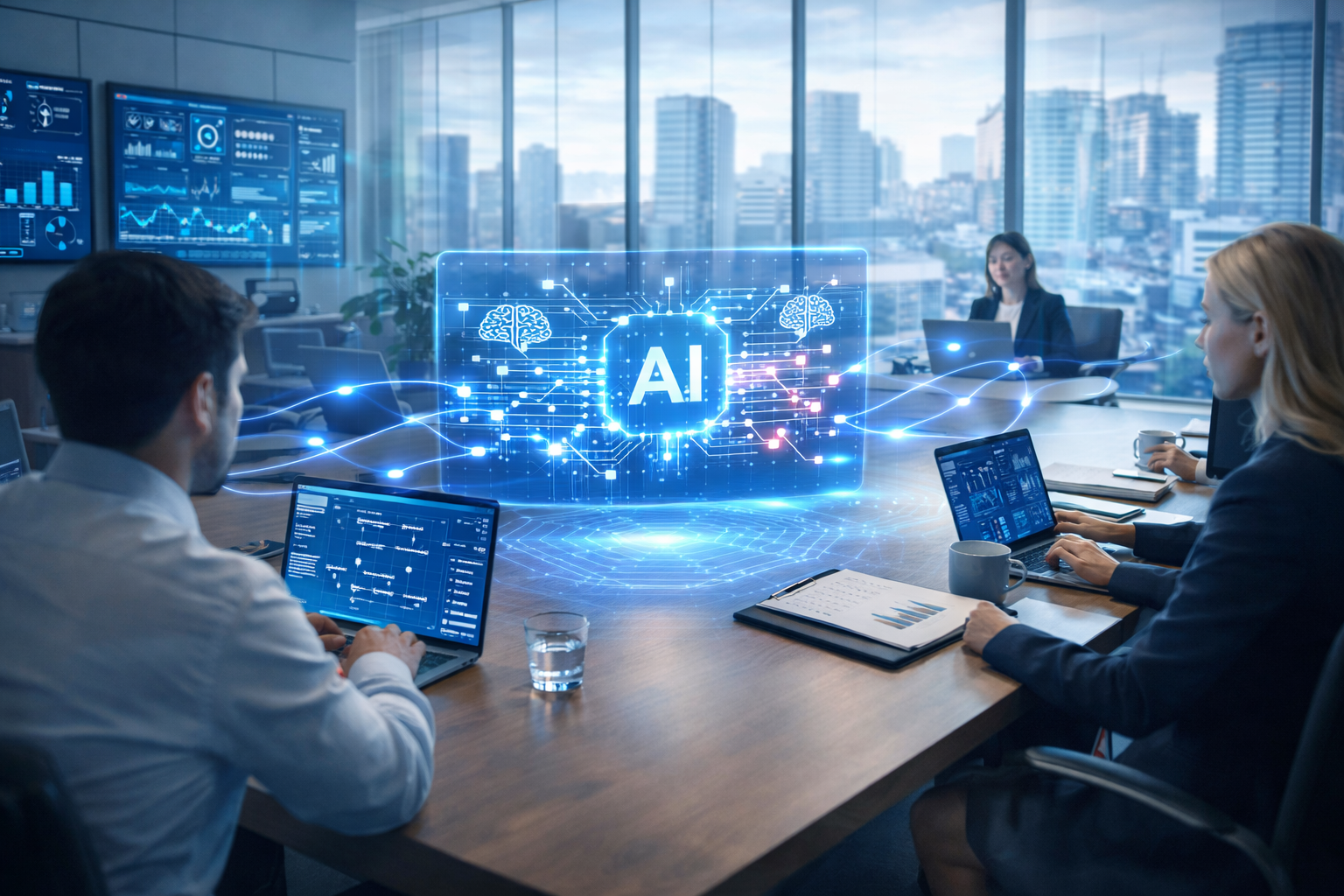
Artificial Intelligence is no longer just a tech trend. It is changing how businesses work every day. From small startups to large enterprises, AI in business is helping companies save time, reduce costs, and improve results. Many professionals want to understand how AI workplace transformation works and how they can use it in their own company.
This article is important for business owners, managers, HR professionals, marketers, and employees who want to stay competitive. AI automation tools are now part of marketing, recruitment, customer service, and operations. In 2026, agentic AI systems are expected to become even more powerful.
In this guide, you will learn how AI transforms workplaces, how small businesses can benefit, how ethical AI helps recruitment, and how AI in marketing increases conversions. Everything is explained in simple language so you can apply it easily.
What Is AI Workplace Transformation?
Before exploring specific areas, it is important to understand what AI workplace transformation means.
AI workplace transformation refers to using artificial intelligence to improve business processes, decision-making, and employee productivity. It does not replace humans. Instead, it supports them.
AI systems analyze data, automate repetitive tasks, and provide insights. This helps teams focus on strategic work instead of routine tasks.
Below are common areas where AI in business creates change:
- Workflow automation
- Customer service chatbots
- Data analysis and reporting
- Marketing personalization
- Hiring and recruitment screening
Companies that adopt AI early often gain competitive advantage.
Agentic AI in 2026: Scaling AI Impact in Enterprises
Agentic AI is the next stage of artificial intelligence. It does not only respond to instructions. It can plan, make decisions, and take actions to complete tasks.
In 2026, agentic AI is expected to become more common in enterprises. These AI systems will manage complex workflows across departments.
Before implementing agentic AI, companies must prepare properly.
Below are key steps to scale AI impact in an enterprise:
- Define Clear Business Goals
Companies must identify where AI can create value. For example, improving supply chain efficiency or customer response time. - Improve Data Quality
AI systems depend on data. Clean and organized data leads to better results. - Train Employees
AI adoption requires training. Employees should understand how to work with AI tools. - Start with Pilot Projects
Begin with small AI projects. Test results and improve before scaling. - Ensure Ethical AI Use
Companies must protect customer data and avoid biased decisions.
Agentic AI in 2026 will likely manage tasks such as automated reporting, scheduling, predictive maintenance, and customer support routing.
Enterprises that plan early will benefit the most.
AI for Small Businesses: Building a Professional Website
AI is not only for large companies. AI for small businesses is becoming more affordable and accessible.
One powerful use of AI is website building. Many AI website builders can create professional websites in minutes.
Before using an AI website builder, business owners should understand its advantages.
Below are the main benefits of AI website builders:
- Automatic design suggestions
- SEO optimization features
- Content generation support
- Mobile-friendly layouts
- Fast setup process
AI tools ask simple questions about your business. Then they generate layout, text, and images. This saves money on hiring expensive developers.
For example, a local bakery can create an online store quickly using AI. The system can suggest product descriptions and improve search visibility.
AI for small businesses helps entrepreneurs compete with larger brands.
The Future of Recruitment: Ethical AI in Hiring
AI in recruitment is growing fast. Many companies use AI to screen resumes and shortlist candidates.
However, fairness and transparency are very important. Ethical AI frameworks help ensure equal opportunity.
Before implementing AI in hiring, companies must understand the risks.
Below are important principles for ethical AI in recruitment:
- Remove Bias from Data
If past hiring data was biased, AI may repeat those patterns. - Ensure Transparency
Candidates should know when AI tools are used. - Combine Human Review
AI should assist recruiters, not fully replace them. - Protect Candidate Data
Personal information must remain secure.
AI in recruitment can save time by scanning thousands of resumes quickly. It can also match skills more accurately than manual screening.
The future of recruitment will combine human judgment and AI efficiency.
AI in Marketing: Personalization and Higher Conversions
AI in marketing is one of the most successful business applications.
Today’s customers expect personalized experiences. AI-powered marketing tools analyze user behavior and provide targeted recommendations.
Before using AI marketing tools, businesses should understand how personalization works.
Below are key AI marketing applications:
- Product recommendations in e-commerce
- Email campaign automation
- Customer behavior analysis
- Chatbots for instant support
- Predictive sales forecasting
For example, AI analyzes what products customers view and suggests similar items. This increases e-commerce conversion rates.
AI also helps marketers understand which advertisements perform best.
Businesses that use AI-driven personalization often see better engagement and higher revenue.
Benefits of AI Automation Tools in the Workplace
AI automation tools reduce repetitive work. This improves employee productivity and job satisfaction.
Instead of spending hours on data entry, employees can focus on creative and strategic tasks.
Below are the main benefits of AI automation in business:
- Faster workflow management
- Reduced operational costs
- Improved accuracy
- Better decision-making with data insights
- Enhanced customer experience
AI workplace transformation does not remove the human role. It enhances it.
Challenges of AI in Business
Although AI offers many benefits, companies must also understand its challenges.
AI adoption requires investment and planning.
Below are common challenges:
- High initial setup cost
- Data privacy concerns
- Need for employee training
- Integration with existing systems
- Ethical and legal compliance
Businesses must create a clear AI strategy to avoid problems.
How to Create an AI Strategy for Your Business
To successfully implement AI, companies need a strong plan.
Before starting, leadership should evaluate company goals and digital readiness.
Below are steps to build an AI strategy:
- Identify Problems AI Can Solve
Focus on areas like marketing automation or customer support. - Assess Technology Infrastructure
Check if current systems can integrate AI tools. - Choose the Right AI Tools
Different tools serve different purposes. - Monitor Performance
Measure results using key performance indicators (KPIs). - Adjust and Improve
AI systems improve over time with feedback.
A clear AI strategy ensures long-term success.
The Future of AI Workplace Transformation
The future of AI in business looks promising. In the coming years, more companies will use agentic AI systems.
We may see AI assistants that manage entire departments. Predictive analytics will improve decision-making. Automated systems will handle routine tasks.
However, human creativity, empathy, and leadership will remain important. AI will support professionals, not replace them.
Businesses that embrace AI workplace transformation today will be leaders tomorrow.
Conclusion
AI in business is transforming workplaces across industries. From agentic AI in 2026 to AI-powered marketing and recruitment tools, companies now have powerful solutions to improve efficiency and growth.
Small businesses can build professional websites with AI. Enterprises can scale automation across departments. HR teams can use ethical AI frameworks for fair hiring.
The key to success is balance. Combine human intelligence with artificial intelligence. Plan carefully, train employees, and focus on ethical use.
AI workplace transformation is not just about technology. It is about smarter work, better decisions, and sustainable growth.
Read More Blog–How Anthropic Uses Plugins to Power Claude AI
Frequently Asked Questions (FAQs)
Before ending, here are answers to common questions about AI in business.
1. What is AI workplace transformation?
It means using AI tools to improve workflows, productivity, and decision-making in businesses.
2. What is agentic AI?
Agentic AI can plan and take actions independently to complete tasks.
3. Is AI expensive for small businesses?
Many AI tools are affordable and offer subscription plans for small companies.
4. Can AI replace HR professionals?
No. AI supports HR by screening data, but final decisions require human judgment.
5. How does AI improve marketing results?
AI analyzes customer behavior and provides personalized recommendations, which increase conversion rates.
6. Is AI safe for business data?
It can be safe if companies follow strong cybersecurity and ethical practices.



Comments are closed