


Introduction
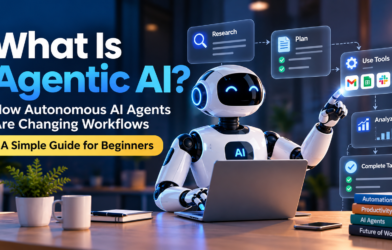
Technology is changing faster than ever before. Businesses are constantly searching for ways to improve productivity, reduce costs, and make better decisions. Artificial Intelligence (AI) has already transformed many industries, but a new evolution is now taking place. This evolution is called Agentic AI Transformation.
Unlike traditional AI systems that simply respond to commands, agentic AI can plan, reason, make decisions, and complete tasks with minimal human involvement. These intelligent AI agents can work independently, solve complex problems, and adapt to changing situations. As a result, organizations can automate entire workflows instead of automating only individual tasks.
Understanding agentic AI transformation is important because it will influence how businesses operate, compete, and grow in the coming years. Whether you are a business owner, manager, employee, or technology enthusiast, learning about agentic AI can help you stay ahead of the curve and prepare for the future of work and innovation.
What is Agentic AI Transformation?
Agentic AI transformation refers to the process of integrating autonomous AI agents into business operations, workflows, and decision-making systems to create intelligent and self-directed processes.
Traditional AI systems generally perform a single task based on predefined instructions. Agentic AI goes beyond this by acting more like a digital worker that can understand goals, create plans, take actions, and learn from outcomes.
An AI agent can:
- Understand objectives
- Analyze information
- Make decisions
- Execute tasks
- Monitor results
- Adjust actions when needed
This ability makes agentic AI significantly more powerful than traditional automation tools.
Understanding Agentic AI
Before exploring transformation strategies, it is important to understand what makes agentic AI different.
Agentic AI is built around the concept of autonomous agents. These agents are designed to perform tasks independently while working toward specific goals.
The core capabilities of agentic AI include:
Goal-Oriented Behavior
Agentic AI focuses on achieving objectives rather than simply following commands.
For example, instead of asking an AI to send emails one by one, you can instruct it to increase customer engagement. The AI can then develop strategies, write emails, analyze responses, and optimize future communications.
Reasoning and Planning
Agentic AI can break large objectives into smaller steps.
This allows it to create action plans and solve complex problems without requiring constant human guidance.
Autonomous Execution
After creating a plan, the AI can execute tasks independently.
This reduces the need for human intervention and improves operational efficiency.
Continuous Learning
Agentic AI systems can learn from feedback and outcomes.
This enables ongoing improvement and smarter decision-making over time.
Why Agentic AI Transformation Matters
Businesses are facing increasing pressure to improve efficiency while managing rising costs and growing customer expectations.
Agentic AI transformation helps organizations address these challenges.
The main reasons why agentic AI transformation matters include:
Improved Productivity
AI agents can handle repetitive and time-consuming work.
Employees can focus on higher-value activities that require creativity and strategic thinking.
Faster Decision-Making
Agentic AI can analyze large amounts of data quickly.
This enables businesses to make informed decisions in real time.
Cost Reduction
Automating complex workflows reduces labor costs and operational expenses.
Organizations can achieve more with fewer resources.
Better Customer Experience
AI agents can provide personalized support and faster responses.
This leads to higher customer satisfaction and loyalty.
Competitive Advantage
Companies that adopt agentic AI early can innovate faster and outperform competitors.
Key Components of Agentic AI Transformation
Successful agentic AI transformation depends on several important elements.
AI Agents
AI agents are the foundation of agentic systems.
They are responsible for planning, reasoning, and executing tasks.
Data Infrastructure
High-quality data is essential for effective AI performance.
Organizations need accurate, accessible, and secure data.
Automation Systems
AI agents must connect with business applications and workflows.
This allows them to take meaningful actions.
Machine Learning Models
Advanced machine learning models help AI agents understand information and make decisions.
Governance Framework
Businesses need clear policies to ensure AI is used responsibly and ethically.
Agentic AI vs Traditional AI
Many people confuse agentic AI with traditional AI.
Understanding the differences is important.
| Traditional AI | Agentic AI |
|---|---|
| Executes commands | Pursues goals |
| Limited autonomy | High autonomy |
| Task-focused | Outcome-focused |
| Requires frequent guidance | Works independently |
| Reactive behavior | Proactive behavior |
| Limited planning | Advanced planning |
Agentic AI represents the next stage of AI evolution because it can act rather than simply respond.
How Agentic AI Transformation Works
The transformation process follows several stages.
Step 1: Define Business Objectives
Organizations first identify goals they want to achieve.
Examples include:
- Improving customer support
- Reducing operational costs
- Increasing sales
- Optimizing supply chains
Step 2: Identify Automation Opportunities
Businesses analyze workflows to identify areas where AI agents can create value.
Step 3: Build AI Infrastructure
Organizations establish the technology environment needed for AI deployment.
This includes:
- Data systems
- Cloud platforms
- AI models
- Security frameworks
Step 4: Deploy AI Agents
AI agents are integrated into existing business processes.
Step 5: Monitor Performance
Businesses track results and evaluate AI effectiveness.
Step 6: Optimize and Scale
Successful implementations are expanded across departments and functions.
Benefits of Agentic AI Transformation
The benefits of agentic AI transformation extend across every industry.
Increased Operational Efficiency
AI agents can perform tasks continuously without fatigue.
This significantly improves productivity.
Enhanced Innovation
Employees gain more time for innovation and strategic projects.
Better Resource Utilization
Organizations can allocate resources more effectively.
Higher Accuracy
AI systems reduce human errors and improve consistency.
Scalability
Businesses can scale operations without proportional increases in workforce costs.
Improved Customer Service
AI agents provide personalized interactions and faster response times.
Data-Driven Decisions
Real-time analytics support smarter business decisions.
Agentic AI Transformation Across Industries
Many industries are already exploring agentic AI solutions.
Healthcare
In healthcare, agentic AI can:
- Schedule appointments
- Analyze patient records
- Assist diagnosis
- Monitor treatments
This improves patient outcomes and operational efficiency.
Financial Services
Banks and financial institutions use AI agents for:
- Fraud detection
- Risk assessment
- Customer support
- Investment analysis
Retail
Retail companies use agentic AI for:
- Inventory management
- Customer recommendations
- Demand forecasting
- Personalized marketing
Manufacturing
Manufacturers benefit from:
- Predictive maintenance
- Production optimization
- Supply chain management
- Quality control
Education
Educational institutions can use AI agents to:
- Personalize learning
- Automate administration
- Support students
- Improve engagement
Agentic AI Transformation in Customer Service
Customer service is one of the most promising applications of agentic AI.
Traditional chatbots often struggle with complex interactions.
Agentic AI agents can:
- Understand customer intent
- Solve problems independently
- Escalate issues when necessary
- Learn from previous interactions
Benefits include:
- Faster response times
- Reduced support costs
- Higher customer satisfaction
- Better service quality
Role of Agentic AI in Digital Transformation
Digital transformation focuses on using technology to improve business processes.
Agentic AI accelerates digital transformation by enabling intelligent automation.
Organizations can:
- Automate end-to-end workflows
- Improve decision-making
- Enhance customer experiences
- Increase operational agility
This creates a more adaptive and competitive business environment.
Challenges of Agentic AI Transformation
Although the benefits are significant, businesses may face several challenges.
Data Quality Issues
Poor data can reduce AI performance.
Organizations must maintain clean and accurate datasets.
Integration Complexity
Connecting AI systems with existing infrastructure can be difficult.
Security Concerns
AI systems require strong cybersecurity measures.
Ethical Considerations
Businesses must ensure AI decisions are fair and transparent.
Employee Resistance
Some employees may fear job displacement.
Organizations should focus on reskilling and collaboration.
Regulatory Compliance
Companies must comply with industry regulations and privacy requirements.
Best Practices for Successful Agentic AI Transformation
Organizations can increase success by following proven strategies.
Start Small
Begin with pilot projects before expanding implementation.
Define Clear Goals
Establish measurable objectives and success metrics.
Invest in Data Quality
Strong data foundations improve AI performance.
Focus on Human-AI Collaboration
AI should support employees rather than replace them completely.
Create Governance Policies
Establish guidelines for responsible AI use.
Train Employees
Provide education and training to help teams adapt.
Measure Performance
Continuously evaluate results and optimize systems.
Building an Agentic AI Transformation Strategy
A structured strategy is essential for long-term success.
Assess Current Readiness
Evaluate technology, data, processes, and workforce capabilities.
Identify Priority Areas
Focus on high-impact opportunities first.
Develop an Implementation Roadmap
Create a step-by-step plan for deployment.
Establish Governance
Define responsibilities and accountability.
Monitor Results
Track key performance indicators regularly.
Scale Gradually
Expand successful initiatives across the organization.
Future Trends in Agentic AI Transformation
Agentic AI is still evolving rapidly.
Several trends will shape its future.
Multi-Agent Systems
Multiple AI agents will collaborate to solve complex problems.
Autonomous Enterprises
Organizations will increasingly automate entire business functions.
Hyper-Personalization
AI agents will deliver highly personalized customer experiences.
Advanced Decision Intelligence
Businesses will rely more heavily on AI-driven strategic decisions.
Human-AI Partnerships
Humans and AI agents will work together more closely.
Industry-Specific AI Agents
Specialized AI agents will emerge for healthcare, finance, manufacturing, and other sectors.
How Small Businesses Can Benefit from Agentic AI Transformation
Agentic AI is not only for large enterprises.
Small businesses can also gain significant advantages.
Examples include:
- Automated marketing campaigns
- Customer support automation
- Appointment scheduling
- Sales assistance
- Financial management
These applications help small businesses compete more effectively.
Common Myths About Agentic AI Transformation
Many misconceptions exist about agentic AI.
Myth 1: AI Will Replace All Jobs
AI is more likely to transform jobs than eliminate them completely.
Myth 2: Only Large Companies Can Use Agentic AI
Many affordable AI solutions are available for businesses of all sizes.
Myth 3: AI Requires No Human Oversight
Human supervision remains important for governance and quality control.
Myth 4: AI Is Too Complex
Modern AI platforms make implementation easier than ever.
Myth 5: Agentic AI Is Just Another Chatbot
Agentic AI is far more advanced and capable than traditional chatbots.
Measuring the Success of Agentic AI Transformation
Organizations should track performance using clear metrics.
Important measurements include:
- Productivity improvements
- Cost savings
- Customer satisfaction
- Process efficiency
- Revenue growth
- Employee engagement
- Decision-making speed
Regular evaluation ensures continuous improvement.
Conclusion
Agentic AI transformation is becoming one of the most important developments in modern business. Unlike traditional automation, agentic AI can think, plan, decide, and act independently to achieve specific goals. This capability enables organizations to automate entire workflows, improve customer experiences, reduce costs, and accelerate innovation.
Businesses that embrace agentic AI transformation today will be better positioned to compete in the future. While challenges such as data quality, security, and governance must be addressed, the potential benefits far outweigh the risks. By starting with clear goals, investing in quality data, and focusing on human-AI collaboration, organizations can unlock the full power of agentic AI.
As technology continues to evolve, agentic AI will become a key driver of digital transformation, helping businesses become smarter, faster, and more efficient than ever before.
Read More Blog–Ai Startup Edge
FAQs
1. What is agentic AI transformation?
Agentic AI transformation is the process of integrating autonomous AI agents into business operations to automate decision-making, planning, and task execution.
2. How is agentic AI different from traditional AI?
Traditional AI follows predefined instructions, while agentic AI can independently plan, reason, make decisions, and pursue goals.
3. What are the main benefits of agentic AI transformation?
The main benefits include increased productivity, cost reduction, faster decision-making, better customer experiences, and improved operational efficiency.
4. Which industries can benefit from agentic AI?
Healthcare, finance, retail, manufacturing, education, logistics, and many other industries can benefit from agentic AI transformation.
5. Is agentic AI suitable for small businesses?
Yes. Small businesses can use agentic AI for customer support, marketing automation, scheduling, sales assistance, and operational management.
6. What challenges are associated with agentic AI transformation?
Common challenges include data quality issues, integration complexity, security concerns, ethical considerations, and employee adoption.
7. Does agentic AI replace human workers?
No. Agentic AI is designed to support and enhance human capabilities rather than completely replace workers.
8. How can a company start its agentic AI transformation journey?
Companies should assess readiness, define objectives, identify automation opportunities, build infrastructure, deploy AI agents, and continuously monitor results.
9. What is the future of agentic AI transformation?
The future includes autonomous enterprises, multi-agent systems, advanced decision intelligence, and stronger human-AI collaboration.
10. Why is agentic AI transformation important today?
It helps businesses improve efficiency, stay competitive, reduce costs, enhance customer experiences, and prepare for the future of intelligent automation.