



Introduction
Starting a business is exciting. You have an idea, a vision, and the motivation to build something great. But many new founders ignore one important part in the beginning — legal basics. This is one of the biggest mistakes that can create serious problems later. From company registration to contracts, from taxes to compliance, legal steps are not optional. They are necessary.
If you skip legal work, you may face penalties, disputes, or even business closure. That is why every founder must understand the legal checklist before growing the business.
In this article, you will learn everything in very simple language. We will cover all legal steps you need to follow as a new founder. From registration to intellectual property, from agreements to compliance, this guide will solve all your doubts and help you build a strong and safe business foundation.
What Is a Legal Checklist for Startups?
Before going deeper, let us understand the meaning.
A legal checklist is a list of all legal steps and requirements needed to start and run a business.
It helps you:
Stay compliant
Avoid penalties
Protect your business
Build trust
It is like a safety guide for your startup.
Why Legal Compliance Is Important
Many founders focus only on growth and ignore legal aspects.
This is risky.
Importance of Legal Compliance
Legal compliance protects your business in many ways.
It avoids legal trouble
It builds credibility
It protects founders
It helps in funding
It ensures smooth operations
Without legal compliance, your business is not safe.
Step 1: Choose the Right Business Structure
Your business structure defines how your company works legally.
Common Business Structures
You must choose one based on your goals.
Private Limited Company
Limited Liability Partnership (LLP)
Partnership Firm
Sole Proprietorship
Each structure has different rules.
What You Should Consider
Before choosing structure, think about:
Liability
Tax benefits
Funding needs
Ownership control
This decision impacts your future.
Step 2: Register Your Business
After choosing structure, you must register your company.
Why Registration Matters
Registration gives your business legal identity.
It allows you to:
Open bank account
Raise funding
Sign contracts
Operate legally
Registration Process
You need to:
Choose company name
Submit documents
Apply online
Get certificate
After registration, your business becomes official.
Step 3: Get PAN, TAN, and Bank Account
After registration, financial setup is required.
Financial Essentials
You must apply for:
PAN (Permanent Account Number)
TAN (Tax Deduction Account Number)
Business bank account
These are required for tax and transactions.
Step 4: Register for GST
GST registration is important for many businesses.
When GST Is Required
You need GST if:
Turnover crosses limit
You sell across states
You run e-commerce business
Benefits of GST
It allows legal billing
It builds trust
It helps in tax compliance
Step 5: Get Necessary Licenses
Different businesses need different licenses.
Types of Licenses
Depending on your business, you may need:
Trade license
Food license (FSSAI)
Shops and establishment license
Import/export license
Check requirements based on your industry.
Step 6: Create Founder Agreement
If you have co-founders, this is very important.
What Is Founder Agreement
It is a legal document between founders.
Why It Matters
It prevents future disputes.
What to Include
Roles and responsibilities
Equity distribution
Decision-making rules
Exit terms
Clear agreement avoids confusion.
Step 7: Create Legal Contracts
Contracts are essential in business.
Types of Contracts
You need contracts for:
Employees
Clients
Vendors
Partners
Why Contracts Matter
They define terms clearly and protect you legally.
Step 8: Protect Intellectual Property
Your ideas and brand are valuable.
Types of IP Protection
You can protect:
Brand name (Trademark)
Product design (Design)
Technology (Patent)
Content (Copyright)
Why IP Is Important
It prevents copying
It builds brand value
It attracts investors
Step 9: Employment and HR Compliance
If you hire employees, follow legal rules.
HR Requirements
You must:
Create employment contracts
Follow labor laws
Provide salary structure
Maintain records
Why It Matters
It protects both employer and employees.
Step 10: Maintain Accounting and Tax Compliance
Financial compliance is very important.
What You Should Do
Maintain records
File tax returns
Pay taxes on time
Hire accountant if needed
Benefits
Avoid penalties
Build credibility
Track business performance
Step 11: Data Privacy and Security
In today’s digital world, data is very important.
What You Should Do
Protect customer data
Follow privacy laws
Use secure systems
Why It Matters
It builds trust and avoids legal issues.
Step 12: Understand Startup India Benefits
Government support can help startups.
Benefits Available
Tax exemption
Funding support
Legal support
Networking
Register on Startup India portal to access these benefits.
Step 13: Compliance Calendar
You must track all deadlines.
What to Track
GST filing
Income tax filing
Annual returns
Company filings
Missing deadlines leads to penalties.
Step 14: Legal Audit
Regular check is important.
Why Audit Matters
It helps identify risks.
What You Should Do
Review documents
Check compliance
Update agreements
This keeps your business safe.
Common Legal Mistakes Founders Make
Many founders ignore important steps.
Mistakes
No agreements
Improper registration
Ignoring taxes
Not protecting IP
Skipping compliance
These mistakes can cause big problems.
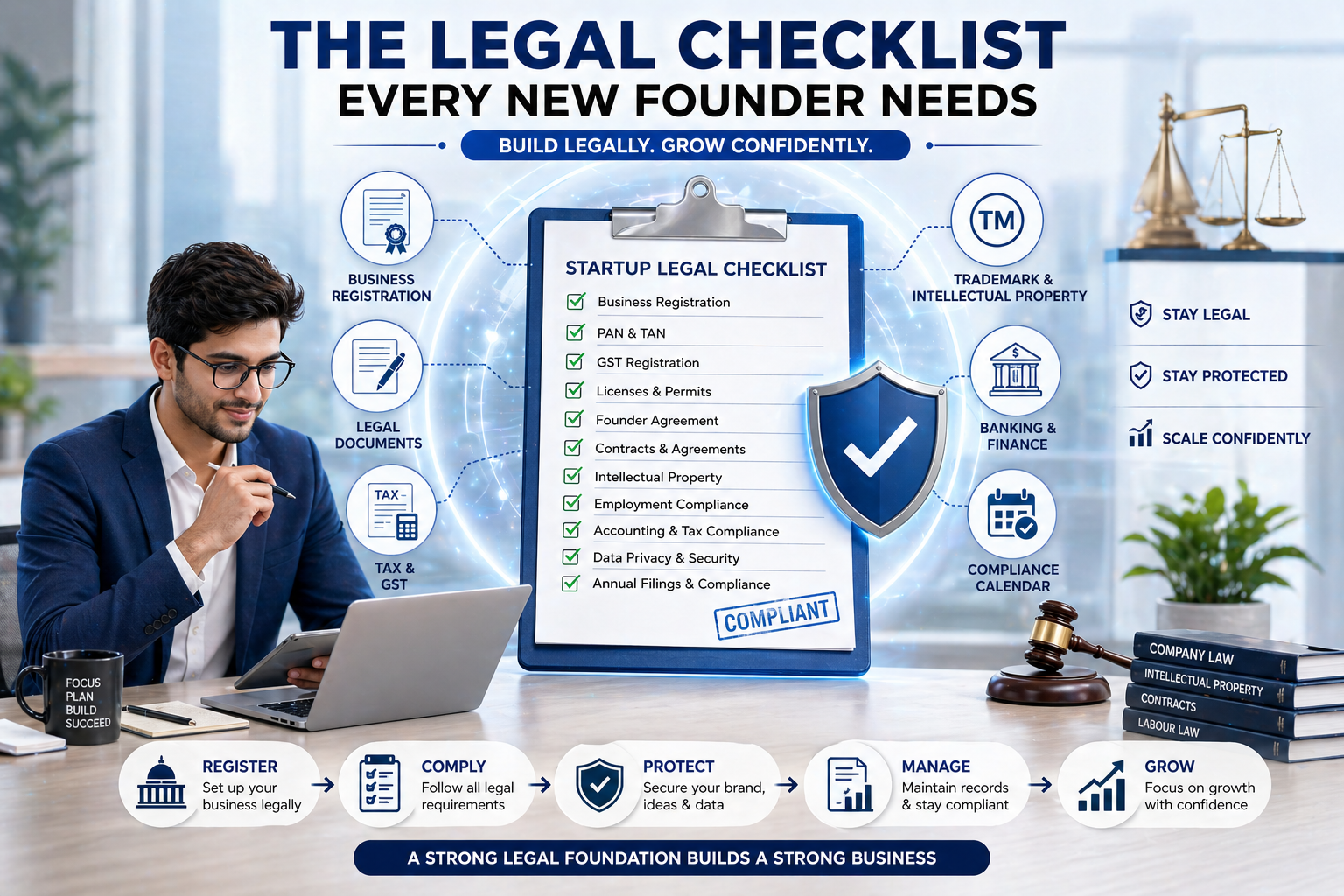
Legal Checklist Summary
Now let us summarize everything.
Complete Checklist
Choose business structure
Register company
Get PAN and TAN
Open bank account
Register GST
Get licenses
Create founder agreement
Draft contracts
Protect IP
Follow HR laws
Maintain accounts
Ensure data privacy
Track compliance
Do legal audit
This is your full checklist.
Benefits of Following Legal Checklist
Following legal steps gives many advantages.
Key Benefits
Safe business operations
Better investor trust
Smooth growth
Reduced risk
Long-term success
Legal strength supports business growth.
Challenges in Legal Process
Some founders face difficulties.
Challenges
Complex laws
Documentation
Cost
Time
But these can be managed with guidance.
Tips for New Founders
Here are simple tips.
Practical Tips
Start legal work early
Do not ignore compliance
Take expert advice
Keep documents organized
Review regularly
These steps make your journey easier.
Future of Startup Legal System
Legal systems are improving.
Future Trends
Digital registration
Faster approvals
Simplified compliance
AI-based legal tools
This will help founders in future.
Why Legal Foundation Is Important for Growth
Legal strength is not just for safety.
It supports growth.
Impact
Helps in funding
Builds brand trust
Supports scaling
Reduces risks
Strong legal base leads to strong business.
Conclusion
The legal checklist is one of the most important parts of starting a business. Many founders ignore it, but it plays a key role in long-term success.
If you follow all legal steps from the beginning, you can avoid problems and focus on growth. It may feel complex, but it is necessary.
Start simple, stay compliant, and build your business on a strong legal foundation.
This is how successful startups grow.
Read More Blog-Ai Startup. Edge
Frequently Asked Questions (FAQs)
1. Why is legal checklist important for startups?
It helps avoid legal issues and ensures smooth operations.
2. What is the first legal step?
Choosing the right business structure.
3. Is GST required for all startups?
No, it depends on turnover and business type.
4. What is founder agreement?
It is a legal document between co-founders.
5. How can I protect my startup idea?
Through trademarks, patents, and copyrights.
6. Do I need a lawyer?
Not always, but expert advice helps.
7. What happens if I ignore compliance?
You may face penalties or legal issues.