



Introduction
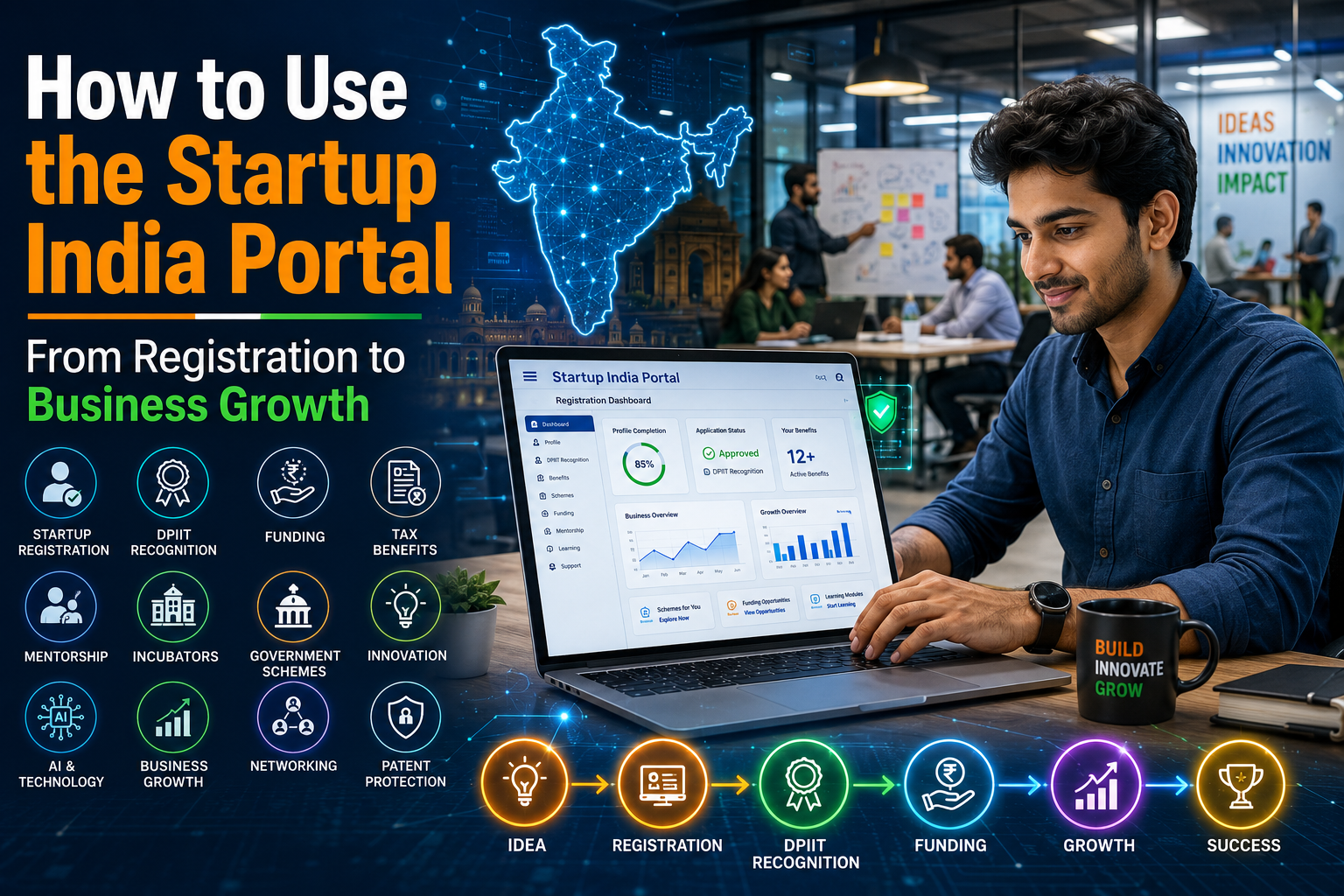
Starting a business in India has become much easier than ever before, thanks to the Startup India Portal. Whether you are a student with an innovative idea, a first-time entrepreneur, or an experienced business owner, the Startup India Portal provides everything you need to build and grow your startup. From online registration and DPIIT recognition to funding support, tax benefits, mentorship, networking opportunities, and government schemes, the portal brings all startup-related services under one platform.
Many entrepreneurs miss valuable opportunities simply because they do not know how to use the Startup India Portal correctly. This guide explains every step in very simple language, making it easy for anyone to understand. By the end of this article, you will know how to register your startup, apply for DPIIT recognition, access government benefits, explore funding options, participate in startup programs, and use the platform to grow your business successfully. If you want to build a successful startup in India, this guide is an excellent place to begin.
What is the Startup India Portal?
Specifically, the Startup India Portal is an online platform launched by the Government of India under the Startup India initiative. It helps entrepreneurs start, manage, and grow innovative businesses.
The portal provides multiple services in one place, including: testing
- Startup registration
- DPIIT recognition
- Learning resources
- Government schemes
- Funding opportunities
- Mentor connections
- Startup events
- Innovation programs
- Intellectual Property (IP) support
- Networking opportunities
Instead of visiting multiple government offices, entrepreneurs can complete many important processes online.
Why Should You Register on the Startup India Portal?
As a result, registering on the Startup India Portal gives startups access to several government benefits.
In particular, some major advantages include:
- DPIIT Recognition
- Tax exemption opportunities
- Easier compliance
- Intellectual Property support
- Government tenders
- Startup networking
- Funding opportunities
- Learning modules
- Accelerator programs
- Incubator access
Even if your startup is in its early stage, registration can provide long-term advantages.
Who Can Register?
However, not every business qualifies as a startup under Startup India.
Generally, your business should meet these conditions:
- Registered as a Private Limited Company
- Limited Liability Partnership (LLP)
- Registered Partnership Firm
- Less than 10 years old
- Annual turnover below the prescribed government limit
- Working on innovation, technology, products, or services
- Not formed by splitting an existing business
Therefore, meeting these conditions increases your chances of receiving DPIIT Recognition.
Documents Required Before Registration
Before starting registration, keep your documents ready.
For example, these usually include:
- PAN Card
- Aadhaar Card
- Company Incorporation Certificate
- Business Address
- Company PAN
- Director Details
- Email ID
- Mobile Number
- Business Description
- Website (if available)
- Logo (optional)
Consequently, keeping documents ready makes the registration process faster.
Step-by-Step Guide to Register on the Startup India Portal
Overall, the registration process is completely online and straightforward.
Step 1: Visit the Startup India Portal
First, open the official Startup India Portal in your web browser.
Next, select the option to create a new account.
Step 2: Create Your Account
Fill in your details such as:
- Full Name
- Email Address
- Mobile Number
- Password
Then, verify your email using the OTP or verification link.
Step 3: Login to Your Dashboard
After successful registration, log in using your credentials.
Once logged in, the dashboard provides access to all startup services.
Step 4: Complete Your Startup Profile
Additionally, provide complete business information.
Specifically, this includes:
- Startup Name
- Business Type
- Industry
- Sector
- Address
- Founders
- Business Stage
- Website
- Social Links
As a result, complete information helps improve your startup profile.
Step 5: Apply for DPIIT Recognition
Indeed, this is one of the most important steps.
In particular, you will need to submit:
- Company details
- Innovation description
- Business model
- Incorporation certificate
- Supporting documents
Once approved, your startup receives DPIIT Recognition.
What is DPIIT Recognition?
Specifically, DPIIT Recognition is official recognition by the Department for Promotion of Industry and Internal Trade.
In other words, it proves that your business qualifies as an eligible startup under Startup India.
As a result, this recognition opens the door to numerous government benefits.
Benefits of DPIIT Recognition
Overall, DPIIT-recognised startups enjoy many exclusive advantages.
For example, these include:
- Tax benefits
- Easier compliance
- Intellectual Property support
- Self-certification
- Government procurement opportunities
- Access to funding
- Faster patent examination
- Networking events
- Incubation support
Many investors also prefer startups with DPIIT Recognition.
How to Apply for Tax Benefits
For example, eligible startups may apply for tax exemptions through the Startup India Portal.
Generally, you need:
- DPIIT Recognition
- Required certificates
- Financial information
- Business documents
Consequently, tax benefits can significantly reduce operating costs during the early years.
Intellectual Property Support
In addition, protecting your ideas is extremely important.
Additionally, the Startup India Portal supports startups by providing benefits related to:
- Patent filing
- Trademark registration
- Copyright protection
- Design registration
Some startups may also receive fee rebates and faster processing.
Funding Opportunities
Indeed, one of the biggest challenges for startups is raising money.
The Startup India Portal connects entrepreneurs with funding opportunities such as:
- Government funds
- Angel Investors
- Venture Capital Firms
- Incubators
- Accelerators
- Seed Funding Programs
As a result, these opportunities help startups scale faster.
Startup India Seed Fund Scheme
Specifically, the Startup India Seed Fund Scheme supported innovative startups during their early stages.
For example, funding may be used for:
- Product development
- Market validation
- Prototype creation
- Commercialisation
- Business expansion
The scheme closed to new applications on May 31, 2026. Startups looking for funding today should instead look at the Fund of Funds for Startups or the Credit Guarantee Scheme for Startups, both of which remain active through the Startup India Portal.
Learning Resources Available
The Startup India Portal also acts as an educational platform.
For instance, entrepreneurs can access learning materials on:
- Business planning
- Legal compliance
- Marketing
- Digital business
- Finance
- Investment
- Fundraising
- Intellectual Property
- Technology
In turn, learning continuously helps founders make better business decisions.
Startup India Hub
Additionally, the Startup India Hub connects entrepreneurs with India’s startup ecosystem.
For example, here you can find:
- Mentors
- Investors
- Incubators
- Accelerators
- Industry experts
- Government departments
As a result, this network helps startups solve challenges more efficiently.
Government Schemes Available
Furthermore, the Startup India Portal provides access to several government initiatives.
In particular, these may include support for:
- Women entrepreneurs
- MSMEs
- Manufacturing startups
- Technology startups
- AgriTech
- HealthTech
- FinTech
- EdTech
- Rural innovation
Notably, different schemes are available based on eligibility.
How to Find Mentors
Notably, mentorship plays an important role in startup success.
For example, the portal helps founders connect with:
- Industry experts
- Successful entrepreneurs
- Startup mentors
- Investors
- Business advisors
For instance, experienced mentors can help avoid common startup mistakes.
Startup India Events
Additionally, the portal regularly announces startup events.
For example, these include:
- Pitch competitions
- Webinars
- Workshops
- Hackathons
- Innovation challenges
- Investor meets
- Startup expos
Additionally, participating in these events increases visibility and networking opportunities.
Government Procurement Benefits
Furthermore, recognised startups receive easier access to government procurement.
For example, this may include:
- Reduced eligibility requirements
- Tender participation
- Government contracts
- Public sector opportunities
As a result, winning government contracts can significantly increase business growth.
How to Update Startup Information
Additionally, business information changes over time.
Specifically, the Startup India Portal allows you to update:
- Company address
- Founders
- Website
- Contact details
- Business description
- Industry category
Therefore, keeping your profile updated ensures accurate records.
Tips to Get DPIIT Recognition Faster
Many applications are delayed because of incomplete information.
To begin, follow these best practices:
- Submit accurate information
- Upload clear documents
- Explain your innovation properly
- Avoid incorrect details
- Verify company information
- Keep incorporation documents ready
In addition, proper documentation improves approval chances.
Common Registration Mistakes
Unfortunately, many startups make avoidable errors during registration.
For example, some common mistakes include:
- Wrong business details
- Incomplete profile
- Incorrect documents
- Missing innovation description
- Invalid email address
- Poor business explanation
Double-check every detail before submission.
How the Startup India Portal Supports Business Growth
In fact, the Startup India Portal is much more than a registration website.
Specifically, it supports growth through:
- Business learning
- Funding access
- Investor connections
- Networking
- Innovation programs
- Government schemes
- Startup recognition
- Mentorship
- Tax support
- Intellectual Property assistance
Overall, using all available resources can greatly improve your startup’s chances of success.
Best Practices for Startup Success
However, registration alone does not guarantee success.
Successful founders also focus on:
- Solving real customer problems
- Building quality products
- Understanding the market
- Managing finances
- Marketing consistently
- Listening to customers
- Improving continuously
- Building strong teams
- Using technology wisely
- Learning from failures
In short, combining these practices with Startup India benefits creates a strong foundation for growth.
Conclusion
The Startup India Portal is one of the most valuable resources available for Indian entrepreneurs. It simplifies startup registration, offers DPIIT recognition, connects founders with mentors and investors, provides access to funding opportunities, supports intellectual property protection, and helps startups benefit from government schemes. Whether you are launching your first company or scaling an existing business, using the Startup India Portal effectively can save time, reduce costs, and open new opportunities. Complete your registration carefully, maintain an updated profile, explore every available feature, and actively participate in the Startup India ecosystem. With the right planning and consistent effort, the Startup India Portal can become a powerful partner in your entrepreneurial journey.
Frequently Asked Questions (FAQs)
1. What is the Startup India Portal?
In summary, the Startup India Portal is an online platform by the Government of India that helps entrepreneurs register startups, obtain DPIIT recognition, access funding, mentorship, and government schemes.
2. Is Startup India registration free?
Creating an account on the Startup India Portal is free. Some additional services, such as patent filing or professional assistance, may involve separate fees.
3. Who is eligible for Startup India registration?
Generally, Private Limited Companies, LLPs, and Registered Partnership Firms that meet the government’s startup eligibility criteria can register.
4. What is DPIIT Recognition?
Simply put, DPIIT Recognition is official recognition from the Department for Promotion of Industry and Internal Trade that makes eligible startups qualified for various government benefits.
5. Can a sole proprietorship register under Startup India?
No. Sole proprietorships are generally not eligible for DPIIT Recognition under the Startup India scheme.
6. What documents are required for Startup India registration?
Typically, common documents include the Incorporation Certificate, PAN, business details, founder information, and a description of the innovative business.
7. Does Startup India provide funding?
The Startup India Portal does not directly fund every startup, but it connects eligible businesses with government funding schemes, incubators, investors, and programs such as the Fund of Funds for Startups.
8. How long does Startup India registration take?
The timeline depends on document verification and application review. Correct and complete applications are generally processed more quickly.
9. Can existing businesses apply?
Specifically, eligible businesses that meet the Startup India criteria, including age, turnover, and innovation requirements, can apply.
10. Is Startup India beneficial for small startups?
Yes. In fact, even early-stage startups can benefit from mentorship, networking, government schemes, learning resources, investor connections, and business support available through the Startup India Portal.