


Every AI agent you’ve used runs on a simple formula: Agent = Model + Harness. The model gets most of the attention. However, the harness is what actually turns a language model into something that can take real action. Specifically, it’s the scaffolding around the model: tools, memory, execution, guardrails, and observability. This guide breaks down what an agent harness is, what it’s made of, and why the term is suddenly everywhere in 2026.
What an Agent Harness Actually Is
An agent harness is the software wrapped around a language model. It handles tools, memory, state, execution, and guardrails. On its own, a model can only generate text. Meanwhile, a harness gives it somewhere to run and a way to call tools. It also adds rules that keep the model from doing something unsafe. Without one, there’s no agent, just a chatbot that can’t act on anything.
The Core Components of a Harness
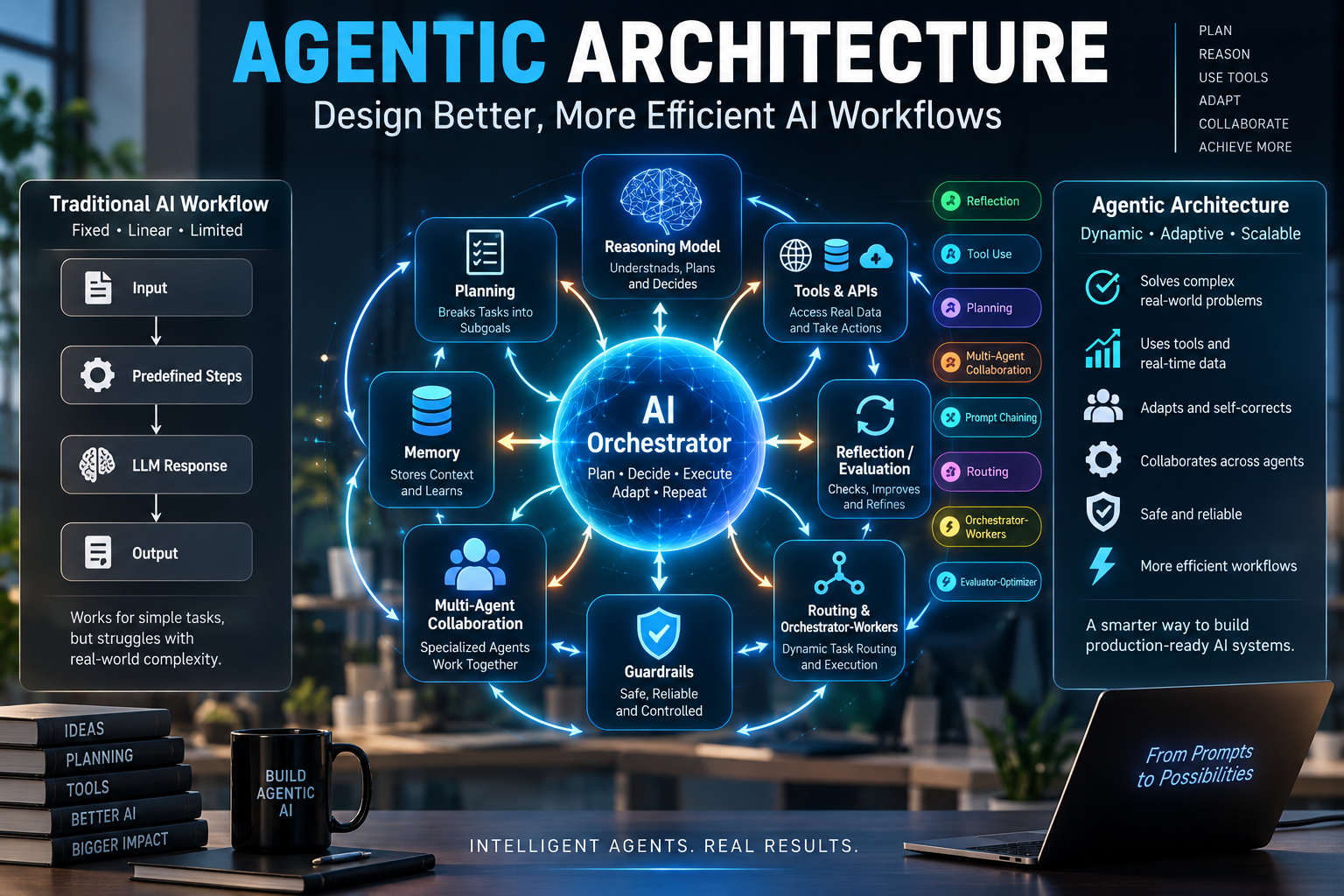
Most agent harnesses share the same building blocks. System prompts set the ground rules before the agent does anything. Tools give it hands: web search, file access, database queries, and code execution. Notably, the Model Context Protocol, or MCP, has quickly become the standard way to wire these in.
Memory and state let an agent remember, both within a session and across sessions. In addition, the execution environment is the actual runtime, often an isolated sandbox, where actions physically happen.
Orchestration breaks a large goal into smaller steps. Sometimes it spins up subagents for individual pieces. Finally, guardrails and observability round it out: permission controls, approval steps, and tracing so a human can see what happened and step in if needed.
Harness vs Framework vs Runtime
These terms get used interchangeably, but they’re not the same thing. A framework provides building blocks for writing agent code. Examples include early LangChain, CrewAI, and Google’s Agent Development Kit. A runtime, on the other hand, handles the unglamorous parts: state persistence, retries, and recovering from failures mid-task. LangGraph and Temporal fall into this category. The harness sits a level above both, arriving with more decisions already made about tools, planning, and context. As a result, teams spend less time wiring infrastructure and more time on actual agent behavior. For a deeper look at building the underlying pieces yourself, see our practical guide to building AI agents from scratch.
Why Agent Harnesses Matter More in 2026
Benchmarks quietly stopped telling the full story. Top models score similarly on static tests. However, their real performance splits apart on long, complex tasks involving fifty or a hundred tool calls in sequence. Traditional benchmarks simply don’t measure how a model behaves after its fiftieth tool call.
Infrastructure closes that gap. For example, one detailed analysis of agent harnesses in 2026 found that LangChain improved its coding agent from the top 30 to the top 5 on Terminal-Bench 2.0 without touching the underlying model at all. The harness did the work.
Think of it like a car. The model is the engine. The harness is everything else: the wheels, the steering, the brakes, and the dashboard. Specifically, a well-built harness makes a mid-tier model production-ready. A poorly built one makes even a frontier model unreliable on long-running work.
Examples of Agent Harnesses Worth Knowing
Several major players now ship their own harness. LangChain’s Deep Agents adds planning, a virtual filesystem, and sandbox integration. Anthropic’s Agent SDK bundles a built-in loop with bash execution, file operations, and MCP support. Meanwhile, OpenAI’s Agents SDK includes sandboxed execution and memory compaction. Google’s Agent Development Kit focuses on multi-agent orchestration and evaluation tools. Microsoft’s Agent Framework leans into Azure integration with Python and .NET support. CrewAI, for its part, favors role-based multi-agent orchestration with declarative configuration.
How to Choose an Agent Harness for Your Project
Not every project needs the same harness. First, consider how long your agent’s tasks actually run. A single-turn chatbot needs far less scaffolding than an agent completing a multi-hour coding task. Second, check what the harness already handles versus what you’d build yourself. Memory, retries, and tool integrations are expensive to build from scratch. Finally, weigh vendor lock-in against speed. A harness with more opinions gets you moving faster. However, it can also make switching models or providers harder later.
Common Mistakes When Working With Agent Harnesses
Skipping verification is the most common mistake. Without a way to check whether a step actually succeeded, an agent can declare victory too early and move on with broken work. Instead, build in explicit checks after every meaningful action.
Ignoring context management is the second mistake. Long tasks fill up a model’s context window fast. A harness without compaction or pruning slows down and gets confused. As a result, teams that skip this step see agents that work fine for ten steps and fall apart by step fifty.
Treating the harness as an afterthought is the third mistake. Founders often pick a model first and bolt on tooling later. However, the harness decisions, memory, guardrails, and orchestration, usually matter more to reliability than which model sits underneath.
Frequently Asked Questions
Is an agent harness the same as an AI framework?
Not quite. A framework gives you building blocks for writing agent code yourself. A harness arrives with more decisions already made: tools, planning, and context management are pre-configured. Many harnesses are built on top of a framework or runtime underneath.
Do I need to build my own agent harness?
Usually not. Several production-ready harnesses already exist, including Anthropic’s Agent SDK, OpenAI’s Agents SDK, and LangChain’s Deep Agents. Building your own only makes sense once you have specific requirements those options don’t cover.
Picking a model is only half the decision. The harness around it determines whether an agent finishes a long task or quietly falls apart on tool call thirty. As agents take on longer, higher-stakes work, the harness is becoming the more important architectural choice for any team building on top of AI.