


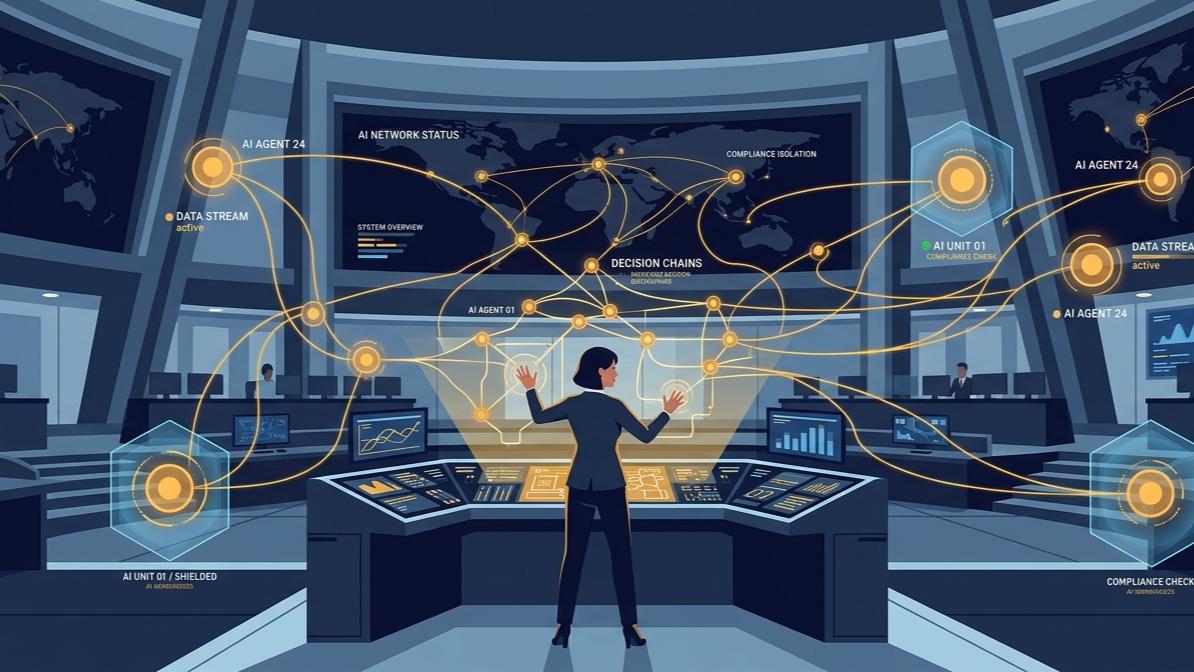
Artificial intelligence is moving beyond simple chatbots and content-generation tools. Today, AI systems are becoming more independent. They can understand goals, make decisions, use digital tools, complete tasks and work with other AI systems. These technologies are known as Agentic AI.
However, as AI agents become more powerful, an important question arises: Who controls their decisions, and how can we make sure they work safely?
The World Economic Forum (WEF) is helping bring attention to this challenge through discussions and research on responsible AI governance. Governing Agentic AI is becoming an important topic for governments, businesses, technology developers and everyday users.
This guide explains what governing Agentic AI means, why it matters, what risks it creates and how organisations can develop safe and responsible AI systems. It also explores practical governance principles that can help businesses benefit from AI without losing human control.
1. What Is Agentic AI?
Agentic AI is a type of artificial intelligence that can understand a goal, create a plan and take actions to complete a task. Unlike traditional AI tools that mainly answer questions or generate content, AI agents can perform multiple steps with limited human instructions.
For example, a traditional AI chatbot can explain how to book a flight. An AI agent may be able to compare flights, check available dates, prepare a booking and complete approved steps using connected tools.
Agentic AI can work with different applications, databases, websites and business software. Some advanced systems can also communicate with other AI agents to complete larger tasks.
Common examples include:
- Customer service agents: Answer customer questions and manage support requests.
- Research agents: Collect information, compare sources and prepare reports.
- Business agents: Manage workflows, organise information and support business decisions.
- Coding agents: Write, test and improve software code.
- Personal assistants: Help users manage emails, schedules and everyday digital activities.
These capabilities can save time and improve productivity. However, they also create new challenges because an AI agent can make mistakes while taking real actions.
This is why governing Agentic AI is becoming an important topic for technology companies, governments and businesses.
2. Why Is the World Economic Forum Discussing Agentic AI Governance?
The World Economic Forum (WEF) brings together business leaders, governments, researchers and technology experts to discuss important global challenges.
AI governance is one of the important areas of discussion because artificial intelligence is becoming part of everyday business operations and public services.
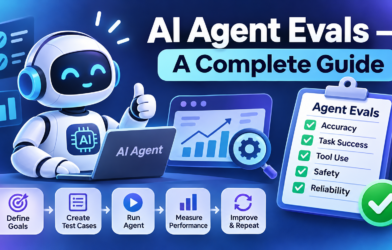
In November 2025, the World Economic Forum published a white paper titled AI Agents in Action: Foundations for Evaluation and Governance, developed in collaboration with Capgemini.
The publication discussed how organisations can evaluate AI agents, understand their capabilities, identify risks and establish suitable governance systems.
In November 2026, the WEF also published Governing Agentic AI: Managing Systemic Risk for Trusted Adoption. This work examines how large-scale delegation to AI agents can affect organisations, individuals and wider systems.
The central concern is simple: AI agents should become more capable without making people lose control over important decisions.
The WEF’s work highlights several important areas:
- Responsible development and deployment of AI agents.
- Clear rules for AI decision-making.
- Human responsibility and supervision.
- Security and risk management.
- Transparency and accountability.
- Cooperation between businesses, governments and technology providers.
These discussions are important because AI governance should develop at the same speed as AI technology.
3. Why Does Agentic AI Need Strong Governance?
Traditional software usually follows instructions written by developers. Agentic AI is different because it can decide which steps to take to achieve a given goal.
This flexibility makes AI agents useful, but it also creates risks.
Imagine a company gives an AI agent permission to manage customer refunds. If the agent misunderstands a policy, it could approve incorrect refunds or affect the company’s financial records.
Without proper governance, even a small mistake could create a bigger problem.
Here are the main reasons why AI governance is necessary.
3.1 Preventing Unauthorised Actions
AI agents may have access to emails, financial systems, customer databases and other business applications.
If an agent receives excessive permissions, it may perform actions that were never intended by the organisation.
Businesses should define exactly what an AI agent can and cannot do.
3.2 Protecting Sensitive Information
AI agents may process personal information, business documents, financial records and confidential data.
Strong data protection policies are necessary to prevent information leaks, unauthorised access and misuse.
3.3 Maintaining Human Control
AI agents should not automatically receive complete decision-making authority.
Important decisions involving money, legal matters, employment or personal information may require human approval.
3.4 Improving Reliability
AI systems can produce incorrect information or misunderstand instructions.
Regular testing and monitoring can help identify problems before they affect customers or business operations.
3.5 Building Public Trust
People are more likely to trust AI technology when they understand how it works, what information it uses and who is responsible for its actions.
Governance creates the foundation for this trust.
4. Major Risks of Agentic AI
Agentic AI introduces risks that are different from those of ordinary AI chatbots. These risks become more important when agents have access to external tools and operate across multiple systems.
The following are some major challenges.
4.1 Incorrect Decision-Making
AI agents can misunderstand instructions, use incorrect information or choose unsuitable actions.
For example, an AI agent managing an online store could provide an incorrect discount or update an order incorrectly.
Businesses need testing procedures and approval systems to reduce these mistakes.
4.2 Cybersecurity Threats
AI agents interact with websites, emails, documents and external applications. These sources may contain malicious instructions.
One example is prompt injection. This happens when harmful instructions are placed inside content that an AI agent reads. The instructions may attempt to change the agent’s behaviour.
Security controls should protect agents from unauthorised instructions and unsafe tool usage.
4.3 Data Privacy Problems
An AI agent connected to several platforms may access more information than necessary.
For example, a customer support agent may need access to order details but should not automatically receive access to a customer’s complete financial records.
Organisations should follow data minimisation and access-control principles.
4.4 Loss of Human Oversight
People may become too dependent on AI agents, especially when the systems perform well for a long time.
This can lead to automation bias, where people accept AI recommendations without properly checking them.
Human oversight is particularly important for high-impact decisions.
4.5 Lack of Accountability
When an AI agent makes a mistake, it may be difficult to identify who is responsible.
The developer, business owner, software provider and person who authorised the action may all have different responsibilities.
Organisations must define accountability before deploying AI agents.
4.6 Risks in Multi-Agent Systems
A multi-agent system contains several AI agents working together.
One agent may collect information, another may analyse it, and a third may perform an action.
Although this approach can improve productivity, mistakes can spread between agents. A wrong instruction from one agent may affect the entire workflow.
Therefore, every agent should have defined responsibilities, permissions and monitoring.
5. Key Principles for Governing Agentic AI
Responsible AI governance requires a combination of technical security, organisational policies and human supervision.
The following principles provide a practical foundation for organisations.
5.1 Transparency
Organisations should explain when AI agents are being used and what responsibilities they have.
Users should be able to understand whether they are interacting with an AI agent or a human employee.
Businesses should also maintain records of important AI decisions and actions.
5.2 Accountability
Every AI agent should have a responsible owner.
An organisation must identify who manages the system, approves its permissions, monitors its performance and handles problems.
AI agents should not become an excuse for avoiding human responsibility.
5.3 Human Oversight
Human involvement should increase when the consequences of an action become more serious.
For example, an AI agent may automatically organise emails, but transferring money or approving a major financial transaction should require appropriate authorisation.
5.4 Security by Design
Security should be included during the development of an AI agent rather than added after deployment.
This includes secure authentication, permission management, data protection and regular security testing.
5.5 Continuous Monitoring
AI agents may behave differently when their tools, instructions or operating environments change.
Organisations should continuously monitor their activities and evaluate whether they are still working correctly.
5.6 Risk-Based Governance
Not every AI agent needs the same level of control.
A simple research assistant has different risks from an agent that can access financial accounts or healthcare records.
Governance should match the agent’s capabilities and the possible impact of its actions.
6. How Businesses Can Implement Agentic AI Governance
Businesses do not need to stop using AI agents because of potential risks. Instead, they should create a clear process for adopting them safely.
Here is a practical approach.
Step 1: Identify the Purpose of the AI Agent
Before deploying an AI agent, decide what problem it will solve.
For example, a marketing company may use an AI agent to research keywords, prepare content ideas or organise customer enquiries.
The business should define the agent’s objectives and expected results.
Step 2: Classify the Agent’s Capabilities
Understand what the agent can do.
Check whether it can only provide suggestions or whether it can also change records, send messages, make purchases or access confidential information.
The greater the agent’s authority, the stronger the safeguards should be.
Step 3: Set Permission Limits
Give the agent only the access required for its job.
For example:
- A research agent should have access to approved research sources.
- A customer support agent should access only relevant customer information.
- A finance agent should have restricted transaction permissions.
- An email agent should require approval before sending sensitive messages.
This approach reduces unnecessary access.
Step 4: Introduce Human Approval
Identify actions that require human approval.
Businesses can allow agents to complete low-risk activities automatically while requiring employees to approve important actions.
This creates a balance between automation and human control.
Step 5: Test Before Deployment
AI agents should be tested in controlled environments before they are connected to important business systems.
Testing should include incorrect instructions, unusual situations, security attacks and unexpected user requests.
Step 6: Monitor Agent Activities
Businesses should maintain logs of important activities.
These records can help answer questions such as:
- What task did the agent perform?
- Which information did it access?
- What tools did it use?
- Why did it take a particular action?
- Was human approval provided?
Step 7: Review and Improve the System
AI governance is not a one-time activity.
Businesses should regularly review permissions, update security controls, evaluate performance and improve internal policies.
7. What Is the Role of Human Oversight in Agentic AI?
Human oversight is one of the most important parts of responsible AI governance.
Even highly advanced AI agents can make mistakes. They may misunderstand a situation, use outdated information or take an action that does not match the organisation’s intentions.
Humans provide judgement, context and responsibility that automated systems cannot reliably replace in every situation.
There are three common ways to maintain human oversight.
Human-in-the-loop: A human must approve an action before the AI agent completes it.
Human-on-the-loop: The AI agent performs approved activities while a human monitors its behaviour and can intervene.
Human-in-command: Humans retain overall authority to define boundaries, change permissions, suspend the system or stop its operation.
The right approach depends on the risk involved.
For example, an AI agent preparing a weekly report may work with limited supervision. An agent managing important financial transactions should have stricter approval requirements.
The main goal is to ensure that automation does not remove meaningful human responsibility.
8. Agentic AI Governance and the Future of Business
Agentic AI could change how businesses operate over the coming years.
Companies are exploring AI agents for customer service, sales, marketing, software development, research, finance and administration.
Instead of manually completing every small task, employees may increasingly work with AI agents that handle routine activities.
However, business adoption should not focus only on speed and cost savings.
Organisations also need to consider reliability, security, employee responsibilities and customer trust.
Some important changes may include:
- AI-powered business operations: Agents may manage routine workflows across multiple applications.
- Automated customer support: AI agents may handle common customer questions and service requests.
- Intelligent research: Agents may collect and organise information from different sources.
- Software development: Coding agents may assist with writing, testing and reviewing code.
- Personal productivity: AI assistants may help manage schedules, documents and communications.
These opportunities will be more valuable when organisations have proper governance systems.
The future of business will not simply depend on how many AI agents a company uses. It will also depend on how safely and effectively those agents are managed.
9. Global AI Governance: Why International Cooperation Matters
AI technology does not operate within the boundaries of one country.
An AI agent developed in one country may be used by a business in another country and process information from customers around the world.
This creates challenges because different countries have different laws, privacy requirements and technology policies.
International cooperation can help create common expectations for responsible AI development and deployment.
The United Nations, governments, technology companies and international organisations all have important roles to play.
For example, the United Nations has highlighted the need for inclusive global cooperation on AI governance so that different countries can participate in shaping the future of AI.
The World Economic Forum also provides a platform for businesses, policymakers and experts to discuss emerging AI risks and responsible adoption.
One important development took place on 22 January 2026, when Singapore launched its Model AI Governance Framework for Agentic AI at the World Economic Forum in Davos.
The framework was developed by Singapore’s Infocomm Media Development Authority (IMDA). It provides practical guidance on responsible deployment, human accountability and risk management.
This shows that AI governance is moving beyond general discussions towards practical policies and implementation.
10. What Should Startups and Small Businesses Do?
Agentic AI governance is not only for large technology companies.
Startups, marketing agencies, online businesses and small organisations should also follow basic governance practices when using AI agents.
A small business may use AI agents for lead generation, email management, customer support, social media planning and business research.
These systems can save time, but businesses should establish clear rules before giving them access to important accounts.
Here are some useful recommendations:
- Start with simple tasks: Use AI agents for low-risk activities before moving towards complex automation.
- Protect business accounts: Never provide unnecessary passwords or unrestricted account access.
- Check important outputs: Review customer messages, financial information and public content before approval.
- Limit permissions: Give each agent access only to the tools and information it needs.
- Maintain activity records: Keep records of important actions and changes.
- Train employees: Help employees understand how AI agents work and what risks they create.
- Create emergency controls: Make sure an agent can be stopped or disconnected when something goes wrong.
Small businesses do not need complicated governance departments to begin. Clear responsibilities and basic security practices can make a meaningful difference.
11. What Is the Future of Governing Agentic AI?
The future of Agentic AI will involve more connected systems, greater autonomy and more complex workflows.
AI agents may increasingly work together across different organisations and digital platforms.
This development could create new opportunities, but it may also increase the impact of system failures and security problems.
Several areas will become especially important.
Better AI evaluation: Organisations will need improved methods to test agent performance, reliability and safety.
Stronger identity and access management: AI agents will need secure identities and clearly defined permissions.
Improved audit systems: Businesses will need reliable records of what agents do and how important decisions are made.
Shared technical standards: Common standards may help different agents communicate and operate securely.
Clearer accountability: Governments and organisations will need to define responsibilities across the AI development and deployment ecosystem.
Human-centred AI: Technology should support human capabilities rather than remove people from important decisions.
The World Economic Forum’s November 2026 work on governing Agentic AI also highlights systemic risks that can emerge when organisations delegate tasks and decisions to autonomous systems at scale.
This means governance must consider not only individual AI agents but also the wider systems in which they operate.
Conclusion
Governing Agentic AI is becoming essential as artificial intelligence moves from answering questions to taking real-world digital actions.
AI agents can improve productivity, reduce repetitive work and help organisations complete complex tasks. However, these benefits come with responsibilities involving security, privacy, transparency and accountability.
The World Economic Forum’s work on AI agent evaluation and systemic risk highlights the importance of building governance alongside technological progress.
Businesses should define clear permissions, introduce human approval for sensitive activities, monitor agent behaviour and regularly evaluate their systems.
Governments and international organisations should also work together to develop responsible policies and shared standards.
The future of AI should not be about giving machines unlimited authority. It should be about creating intelligent systems that work safely under clear human responsibility.
The most successful organisations will not simply be those that use the most AI agents. They will be those that know how to govern them responsibly.
Agentic AI Guide: A Complete Beginner’s
Frequently Asked Questions (FAQs)
These FAQs are separate from the main article and can be used in an SEO FAQ section.
1. What is governing Agentic AI?
Governing Agentic AI means creating rules, policies and security measures to ensure AI agents operate safely, responsibly and within approved limits.
2. What is the role of the World Economic Forum in AI governance?
The World Economic Forum brings together governments, businesses and technology experts to discuss AI opportunities, risks, responsible adoption and governance practices.
3. Why is Agentic AI governance important?
It helps prevent unauthorised actions, data leaks, security problems and incorrect decisions while maintaining human accountability.
4. What are the biggest risks of Agentic AI?
Major risks include cybersecurity attacks, prompt injection, privacy violations, incorrect decisions, excessive permissions and loss of human oversight.
5. How can businesses govern AI agents?
Businesses can establish permission limits, test AI agents, monitor activities, protect sensitive information and require human approval for high-risk actions.
6. What is human-in-the-loop AI governance?
Human-in-the-loop governance means a person must review or approve an AI agent’s action before it is completed.
7. Can AI agents work without human supervision?
Yes, AI agents can perform certain low-risk tasks independently. However, important decisions and sensitive activities should have suitable human oversight.
8. What is the difference between AI and Agentic AI?
Traditional AI often generates predictions, recommendations or responses. Agentic AI can also plan and execute multiple actions to achieve a particular goal.
9. How does Agentic AI affect cybersecurity?
AI agents can access external websites, applications and business systems. Poor security controls may expose them to malicious instructions, data theft and unauthorised activities.
10. Is Agentic AI governance important for small businesses?
Yes. Small businesses also need permission controls, data protection, employee supervision and security policies when using AI agents.
11. What is a multi-agent AI system?
A multi-agent AI system contains multiple AI agents that communicate or work together to complete a larger task. Each agent may have a different responsibility.
12. What is the future of Agentic AI governance?
The future will involve stronger security standards, better AI evaluation, clear accountability, improved monitoring and greater international cooperation.