

Artificial intelligence is changing the way people work, learn, and run businesses. Until recently, most AI tools were designed to answer questions, generate content, create images, and help users complete simple tasks. But a new technology is taking AI to the next level. It is called Agentic AI.
Unlike traditional AI tools, Agentic AI can understand a goal, create a plan, use different tools, make decisions, and complete multiple steps with limited human involvement. Imagine having an AI assistant that can research competitors, prepare reports, organize information, manage customer questions, and support business operations.
This is why Agentic AI is becoming an important technology for businesses, developers, startups, and professionals. Understanding it today can help you prepare for future opportunities. In this complete Agentic AI guide, you will learn what Agentic AI is, how it works, its benefits, popular tools, real-world applications, challenges, and how beginners can start building their own AI agents.
1. What Is Agentic AI?
Agentic AI is a type of artificial intelligence that can work towards a specific goal by making decisions, planning tasks, using tools, and performing multiple actions.
In simple words, Agentic AI is like a digital worker that receives an objective and tries to complete it without requiring instructions for every small step.
For example, imagine asking an ordinary AI chatbot to research 10 competitors. It may provide information about them. However, an Agentic AI system can potentially search for competitors, collect information from different websites, compare their services, organize the results, and prepare a report.
This ability to move from simply answering questions to completing tasks makes Agentic AI different from traditional AI applications.
Agentic AI systems usually combine large language models (LLMs), external tools, memory, planning methods, and workflows.
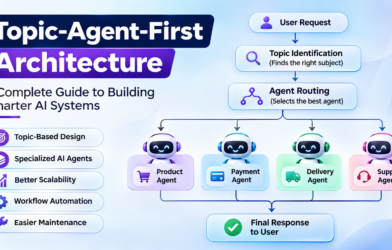
An AI agent can also work with other agents to complete larger projects. Each agent may have a specific responsibility.
For example, one agent can perform research, another can analyze data, and a third can prepare a final report.
However, Agentic AI does not mean that AI has unlimited intelligence or complete independence. Its capabilities depend on the model, available tools, permissions, instructions, and human supervision.
2. How Does Agentic AI Work?
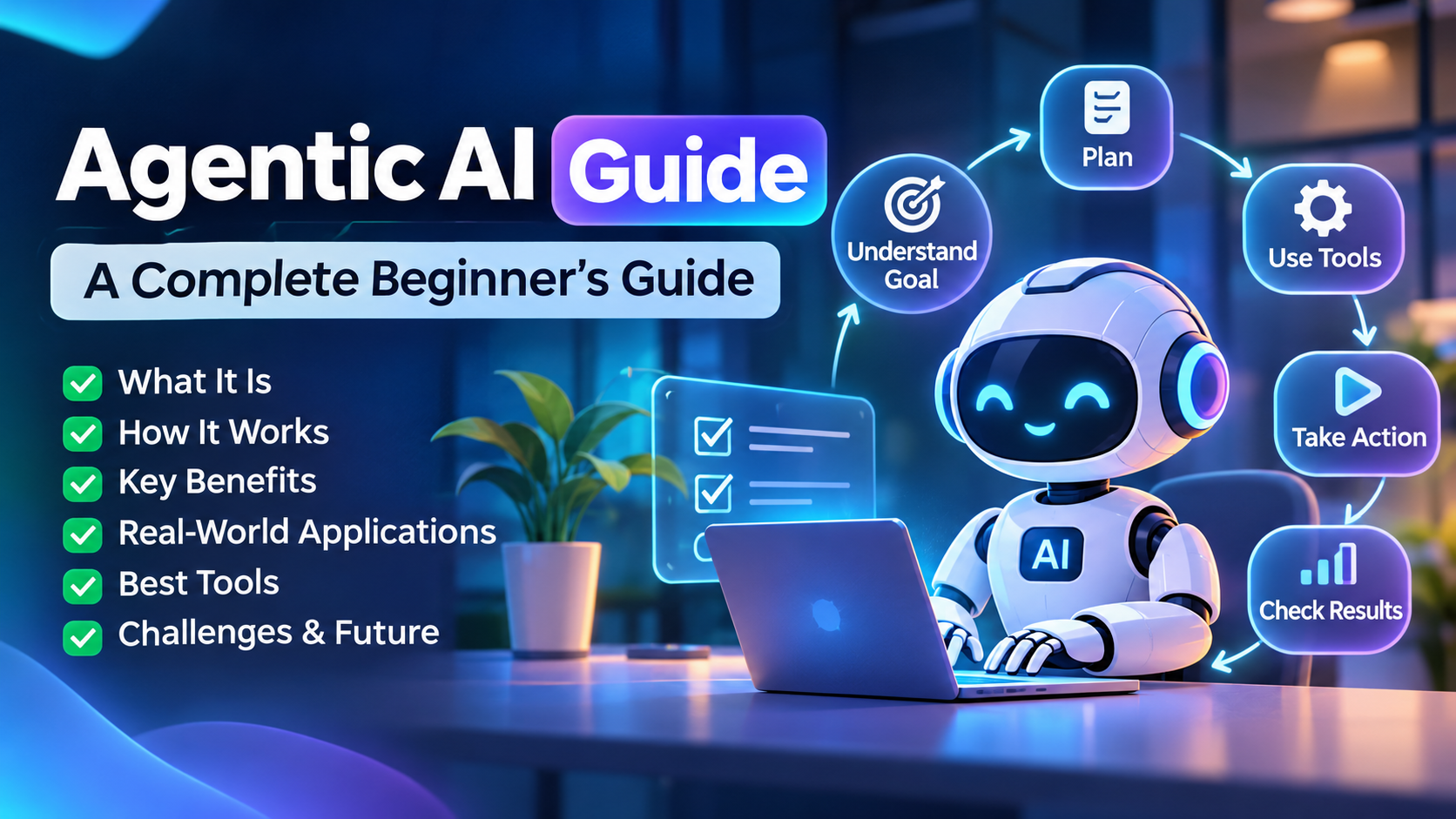
Agentic AI works through a continuous process of understanding, planning, taking action, and checking results.
Instead of generating one answer and stopping, an AI agent can repeat these steps until it reaches its goal or needs human assistance.
Let’s understand the process through a simple example.
Suppose you ask an AI agent to create a market research report for your business.
The agent may identify the research requirements, search for useful information, analyze competitors, organize the findings, and prepare a report.
Main Steps in the Agentic AI Working Process
1. Goal Understanding
The first step is understanding the user’s request. The AI agent identifies what needs to be completed and what the expected result should look like.
2. Task Planning
After understanding the goal, the agent divides the main task into smaller steps. It decides which actions are required and in what order they should happen.
3. Information Collection
The agent collects useful information from connected databases, websites, documents, APIs, or other approved sources.
4. Decision Making
The AI model evaluates the available information and decides which action should happen next. It can change its approach when new information becomes available.
5. Tool Usage
The agent uses external tools to perform tasks. These tools may include web search, email services, spreadsheets, databases, coding environments, or business applications.
6. Result Checking
After performing an action, the agent checks whether the result matches the required goal. If something is missing, it may try another approach.
7. Task Completion
When the required work is complete, the agent shares the result with the user. If it cannot complete the task safely or correctly, it can request human assistance.
This repeated process is commonly called the AI agent loop.
3. What Are the Main Components of Agentic AI?
An Agentic AI system is made up of different components that work together. Each component has a specific responsibility.
Understanding these components makes it easier to understand how modern AI agents are designed.
1. Large Language Models (LLMs)
Large Language Models are the intelligence behind many modern AI agents. They understand natural language, analyze information, generate responses, and help decide the next action.
Examples include GPT models, Claude models, and Gemini models.
2. Memory
Memory helps an AI agent retain useful information during a task or across supported sessions.
For example, a customer support agent may use previous conversation details to understand a customer’s issue without asking the same questions again.
Memory can include short-term task information and longer-term stored context, depending on the system design.
3. Planning and Reasoning
Planning allows an AI agent to divide a large objective into smaller tasks.
Reasoning helps it evaluate information, compare possible actions, and select an appropriate next step.
4. Tools and APIs
Tools allow AI agents to interact with external software and services.
For example, an agent may use a search tool to find information, an email API to prepare messages, or a spreadsheet tool to organize data.
5. Feedback System
A feedback system helps the agent check its actions and identify mistakes.
It can use the results of previous actions to decide whether to continue, change its approach, or ask for assistance.
6. Guardrails and Permissions
Guardrails define what an AI agent is allowed to do and what actions are restricted.
For example, an agent may prepare an email automatically but require human approval before sending it to customers.
These components work together to make Agentic AI systems useful, flexible, and more controlled.
4. Agentic AI vs Generative AI: What Is the Difference?
Many people think Agentic AI and Generative AI are the same. However, they have different purposes.
Generative AI mainly focuses on creating new content, while Agentic AI focuses on completing goals through multiple actions.
For example, Generative AI can write a marketing email. An Agentic AI system can potentially research a customer segment, prepare personalized email drafts, organize a campaign, and report the results using connected tools.
Here are the major differences.
| Feature | Generative AI | Agentic AI |
|---|---|---|
| Main purpose | Creates content | Completes goals |
| Working style | Responds to prompts | Plans and takes actions |
| Decision-making | Mostly produces outputs | Selects next steps |
| Tool usage | May use tools | Often uses multiple tools |
| Task handling | Usually individual tasks | Multi-step workflows |
| Automation | Limited or workflow-based | Can adapt actions |
| Human involvement | Usually prompt-driven | Depends on autonomy and risk |
Both technologies can work together. In fact, many Agentic AI systems use Generative AI models as their reasoning and language-processing foundation.
5. What Are the Different Types of AI Agents?
AI agents can be designed in different ways depending on the complexity of the task and the level of decision-making required.
Here are some common types of AI agents.
1. Simple Reflex Agents
These agents respond to specific conditions using predefined rules.
For example, an automated system may send an alert when website traffic falls below a particular level.
2. Model-Based Reflex Agents
These agents maintain an internal understanding of their environment. They use available information and previous states to make better decisions.
For example, a smart system can consider current room temperature and previous readings before controlling an air conditioner.
3. Goal-Based Agents
Goal-based agents work towards a specific objective.
For example, a travel planning agent may search for flights, compare hotels, and prepare an itinerary according to a user’s requirements.
4. Utility-Based Agents
These agents compare different possible actions and select one based on a defined measure of usefulness.
For example, a delivery planning agent may compare routes based on distance, traffic, delivery time, and cost.
5. Learning Agents
Learning agents use feedback and experience to improve their future performance.
For example, a recommendation system may improve its suggestions based on user interactions.
These categories come from established AI agent concepts. Modern Agentic AI systems can combine several of these approaches.
6. What Are the Real-World Applications of Agentic AI?
Agentic AI is useful in industries where work involves multiple steps, changing information, and repeated decisions.
Businesses are exploring AI agents to improve productivity and reduce repetitive work.
Let’s explore some important applications.
1. Agentic AI in Digital Marketing
Digital marketing includes several activities, such as keyword research, competitor analysis, content planning, social media management, and performance reporting.
An AI marketing agent can support these activities by collecting information, preparing content drafts, analyzing campaign performance, and organizing reports.
For example, a marketing agency can use different agents for SEO research, content creation, social media planning, and campaign analysis.
Human review remains important before publishing content or making campaign changes.
2. Agentic AI in Customer Support
Customer support teams receive many questions every day.
An AI customer support agent can understand customer questions, search knowledge bases, check order information, and suggest solutions.
For simple issues, it may complete approved actions. For complicated problems, it can transfer the conversation to a human representative.
3. Agentic AI in Healthcare
Healthcare organizations can explore AI agents for appointment coordination, administrative tasks, document organization, and patient communication.
For example, an agent may help patients find appointment information or organize medical documents.
However, medical decisions require qualified healthcare professionals. AI agents should not independently make high-impact clinical decisions without appropriate safeguards and professional oversight.
4. Agentic AI in Finance
Financial institutions can use AI agents to support document processing, transaction monitoring, customer service, and financial reporting.
An AI agent may identify unusual transaction patterns and send them for further investigation.
Important financial decisions should follow approved policies and human review.
5. Agentic AI in Education
AI agents can help students organize learning activities, find educational resources, create practice questions, and track study progress.
Teachers can also use AI agents to support lesson preparation and administrative work.
6. Agentic AI in Software Development
Software development is another important area for AI agents.
A coding agent can examine a codebase, identify errors, suggest improvements, write code, and run tests.
Developers can review the changes before using them in production.
7. Agentic AI in E-commerce
Online stores can use AI agents to support product research, customer support, inventory monitoring, and order-related workflows.
For example, an agent may check product availability, answer customer questions, and prepare an order update.
7. What Are the Best Agentic AI Tools and Platforms?
There are many platforms available for creating, testing, and managing AI agents.
Some tools are designed for beginners, while others are better suited to developers and businesses.
Here are some popular options worth exploring.
1. OpenAI Agent Tools
OpenAI provides tools and development capabilities for building AI agents that can reason, use tools, and perform multi-step tasks.
They can help developers create customer support agents, research assistants, and business automation systems.
2. LangChain
LangChain is a popular framework for building applications powered by language models.
It provides components for connecting models, tools, data sources, and agent workflows.
3. LangGraph
LangGraph helps developers create more controlled agent workflows.
It is useful when an AI system needs multiple steps, memory, human approval, and complex workflow management.
4. CrewAI
CrewAI is a framework for building multi-agent systems.
Developers can create different agents with separate roles and responsibilities.
For example, a research agent, writing agent, and editing agent can work together on a content project.
5. AutoGen
Microsoft AutoGen provides a framework for building applications in which multiple AI agents can communicate and collaborate.
It is useful for exploring multi-agent conversations and automated workflows.
6. n8n
n8n is a workflow automation platform that allows users to connect different applications and services.
It can be used to build AI-powered workflows, connect APIs, and automate business processes with visual workflow nodes.
7. Google Gemini
Google Gemini provides AI models and development capabilities that can be used to build intelligent applications and agent-based workflows.
The right platform depends on your technical knowledge, project requirements, budget, and the level of control you need.
8. What Is Multi-Agent AI and How Does It Work?
Multi-agent AI is a system in which multiple AI agents work together to complete a larger objective.
Instead of asking one AI agent to handle everything, a business can divide the work among several specialized agents.
Imagine a company wants to publish an SEO-friendly blog.
It can create a workflow with different agents.
- Research Agent: Finds relevant information and identifies the main topic.
- SEO Agent: Suggests keywords, search intent, and content structure.
- Writing Agent: Creates the first article draft.
- Editing Agent: Checks grammar, readability, and content quality.
- Publishing Agent: Prepares the approved article for publishing.
Each agent has a specific role.
A central coordinator or workflow system can manage the communication between these agents.
However, adding more agents does not automatically improve performance. Multi-agent systems can increase complexity, costs, and the chances of errors. They should be used when dividing work provides a clear advantage.
9. What Are the Benefits of Agentic AI?
Agentic AI offers several benefits for individuals, startups, and large organizations.
When designed properly, it can help businesses improve their operations and manage repetitive work more effectively.
1. Saves Time
AI agents can handle repetitive multi-step activities, allowing employees to focus on more important responsibilities.
2. Improves Productivity
An agent can support several connected tasks without requiring a person to provide instructions at every stage.
3. Supports Better Workflows
AI agents can connect different tools and applications, helping businesses organize their processes.
4. Reduces Manual Work
Businesses can automate suitable activities such as data collection, document classification, and report preparation.
5. Supports Business Growth
Startups can use AI agents to handle some repetitive operational tasks without immediately expanding every department.
6. Provides Faster Information Processing
Agents can collect and organize information from approved sources, making it easier for teams to review important details.
7. Offers Flexible Automation
Unlike simple fixed automation, agentic systems can select different actions depending on the information they receive.
The actual benefits depend on the quality of the system, the task, and how well the workflow is managed.
10. What Are the Risks and Challenges of Agentic AI?
Agentic AI has many opportunities, but it also introduces important challenges.
Since these systems can take actions through external tools, mistakes may have consequences beyond an incorrect answer.
Understanding the risks is necessary before using AI agents in business.
1. Incorrect Information
AI agents may produce incorrect information or misunderstand a user’s objective.
Businesses should verify important information before using it.
2. Data Privacy
Agents may access sensitive business or customer information.
Organizations should restrict access to the data required for each task.
3. Security Threats
AI agents connected to external tools may face security risks, including malicious instructions, unauthorized access, and prompt injection attacks.
4. High Operating Costs
Some agentic workflows require multiple model calls, external APIs, and computing resources.
These costs can increase when agents perform lengthy tasks.
5. Lack of Human Oversight
Giving an AI agent too much control can lead to unexpected actions.
Businesses should define approval requirements and clear operating limits.
6. Integration Problems
Connecting agents with existing software, databases, and business systems can be technically challenging.
7. Difficult Performance Evaluation
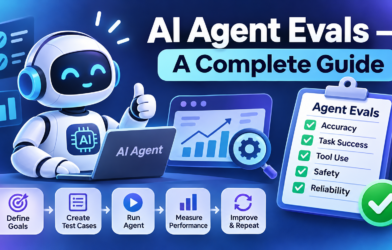
An AI agent may complete a task differently each time. Measuring accuracy, reliability, cost, and task completion is therefore important.
A responsible Agentic AI system should include monitoring, testing, limited permissions, clear accountability, and human intervention when required.
11. How Can Beginners Start Learning Agentic AI?
You do not need to become an expert programmer before learning Agentic AI.
Beginners can start with basic concepts and gradually move towards building simple AI-powered workflows.
Here is a practical learning roadmap.
Step 1: Understand Artificial Intelligence
Start by learning basic AI concepts, including machine learning, deep learning, Generative AI, and large language models.
Understanding these concepts will help you learn how modern AI agents work.
Step 2: Learn Prompt Engineering
Learn how to write clear instructions for AI models.
Good prompts should explain the objective, available information, expected output, and restrictions.
Step 3: Understand AI Agents
Study how agents use tools, memory, planning, and feedback to complete tasks.
Start with simple examples rather than complex multi-agent systems.
Step 4: Explore No-Code Automation
Try visual workflow automation platforms such as n8n.
Learn how to connect applications, use APIs, and create automated processes.
Step 5: Learn Basic Python
If you want to build advanced AI agents, learning Python will be helpful.
Focus on variables, functions, APIs, JSON, and basic programming logic.
Step 6: Explore Agent Frameworks
Once you understand the fundamentals, explore frameworks such as LangChain, LangGraph, and CrewAI.
Build small projects to understand how different agents communicate and use tools.
Step 7: Build Your First AI Agent
Start with a simple project, such as an AI research assistant that collects information and prepares a summary.
Test it with different requests and check whether it produces reliable results.
Step 8: Learn AI Security and Evaluation
Understand permissions, data privacy, monitoring, testing, and human approval.
These skills are essential when moving from a learning project to a real business application.
12. How Can Businesses Use Agentic AI to Automate Their Operations?
Businesses can use Agentic AI to improve workflows across different departments.
However, the best approach is not to automate everything at once. Start with a process that takes time, follows a clear objective, and has measurable results.
Here are some practical examples.
Marketing Department: Agents can support keyword research, competitor analysis, content planning, and campaign reporting.
Sales Department: Agents can organize lead information, prepare follow-up drafts, and summarize customer interactions.
Human Resources: Agents can help organize applications, summarize resumes, and schedule interviews with appropriate approval.
Finance Department: Agents can organize invoices, extract information, and prepare financial summaries for review.
Customer Service: Agents can search approved knowledge bases, answer common questions, and route complex cases to employees.
Operations Department: Agents can monitor workflow status, prepare reports, and notify employees when an issue requires attention.
Before implementation, businesses should identify the process, define success measurements, establish permissions, and test the system with real-world examples.
13. What Is the Future of Agentic AI?
The future of Agentic AI is expected to involve more capable AI assistants, connected business systems, and coordinated multi-agent workflows.
As AI models and software integrations improve, agents may become more useful in handling complex tasks across different industries.
Some important developments to watch include:
1. More Specialized AI Agents
Businesses may use specialized agents for marketing, sales, finance, research, customer service, and operations.
2. Better Multi-Agent Collaboration
Different AI agents may work together more effectively to complete complex projects.
3. Improved AI Automation
AI systems may handle more flexible workflows instead of following only fixed automation rules.
4. Stronger AI Security
As agents gain access to more business tools, organizations will need better permission controls, security testing, and monitoring.
5. Human and AI Collaboration
People will continue to provide direction, judgment, approval, and accountability while AI agents support repetitive and information-heavy work.
6. Growth of AI Agent Startups
Startups may build specialized AI products for industries such as healthcare administration, education, real estate, e-commerce, and digital marketing.
Agentic AI has significant potential, but its future success will depend on reliability, security, practical value, and responsible implementation.
14. Is Agentic AI Worth Learning in 2026?
Yes, learning Agentic AI can be valuable in 2026, particularly for people interested in artificial intelligence, automation, software development, and business operations.
Companies are exploring ways to use AI agents to improve productivity and manage complex workflows.
For students, it can provide an opportunity to understand a growing area of technology.
For developers, it can create opportunities to build intelligent applications and automation systems.
For business owners, it can help identify repetitive activities that could be improved through AI.
You do not need to learn every framework or programming language immediately.
Start with the fundamentals, understand how AI agents work, explore available tools, and build small projects.
The most important skill is knowing how to identify a useful problem and design an AI system that solves it safely and reliably.
Conclusion
Agentic AI represents an important development in artificial intelligence. It moves beyond simply generating answers and allows AI-powered systems to plan tasks, use tools, make decisions, and work towards specific goals.
From digital marketing and customer support to software development and business automation, AI agents are creating new possibilities for individuals and organizations.
However, successful implementation requires more than connecting an AI model to different applications. Businesses must also consider data privacy, security, permissions, testing, and human oversight.
If you are a beginner, start by understanding the basics of AI agents, exploring automation tools, and building simple projects. If you are a business owner, identify repetitive workflows where AI can provide measurable value.
The future will not simply be about using AI to generate content. It will also be about building intelligent systems that can help people complete meaningful work more efficiently.
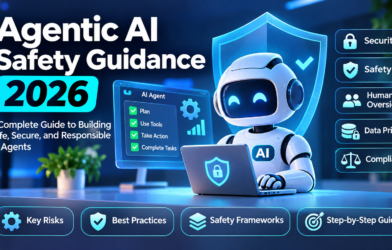
Agentic AI Safety Guidance 2026
Frequently Asked Questions (FAQs)
Separate FAQ section – suitable for adding FAQ schema to your blog.
1. What is Agentic AI in simple words?
Agentic AI is a type of artificial intelligence that can understand goals, plan tasks, use tools, make decisions, and perform multiple actions with limited human involvement.
2. How does Agentic AI work?
Agentic AI works by understanding a goal, creating a plan, collecting information, using external tools, checking results, and repeating actions until the task is completed or requires human assistance.
3. What is the difference between Agentic AI and Generative AI?
Generative AI creates content such as text, images, and code. Agentic AI uses AI models, tools, and workflows to complete multi-step tasks and achieve specific goals.
4. What are AI agents?
AI agents are software systems that use artificial intelligence to understand information, make decisions, and perform actions to achieve specific objectives.
5. What are the best Agentic AI tools in 2026?
Some popular tools and frameworks include OpenAI agent development tools, LangChain, LangGraph, CrewAI, AutoGen, n8n, and Google Gemini.
6. Can beginners learn Agentic AI without coding?
Yes. Beginners can start with no-code automation platforms such as n8n and learn basic AI agent concepts before moving towards programming and advanced frameworks.
7. What are the applications of Agentic AI?
Agentic AI can support digital marketing, customer service, healthcare administration, finance, education, software development, e-commerce, and business automation.
8. What is Multi-Agent AI?
Multi-Agent AI is a system in which multiple specialized AI agents work together. Each agent handles a particular task to complete a larger objective.
9. What are the main benefits of Agentic AI?
The main benefits include time savings, improved productivity, reduced repetitive work, flexible automation, faster information processing, and better workflow management.
10. Is Agentic AI safe to use?
Agentic AI can be used safely when proper security measures are implemented. These include limited permissions, human approval, data protection, monitoring, and regular testing.
11. Will Agentic AI replace human jobs?
Agentic AI may automate some repetitive activities and change certain job responsibilities. However, human judgment, creativity, communication, decision-making, and accountability will remain important.
12. How can I build my first AI agent?
Start by selecting a simple task, choosing an AI model, connecting an appropriate tool, defining clear instructions, and testing the agent. You can explore platforms such as n8n, LangChain, or CrewAI.
13. Is Agentic AI the future of business automation?
Agentic AI has strong potential in business automation because it can support complex workflows and adapt its actions to changing information. Its success will depend on reliability, security, and practical business value.
14. What skills are required to become an Agentic AI developer?
Useful skills include Python, prompt engineering, API integration, large language models, AI frameworks, workflow automation, database management, and AI security.
15. What is the difference between an AI chatbot and an AI agent?
A traditional chatbot mainly responds to user messages. An AI agent can go further by planning tasks, using connected tools, taking permitted actions, and checking whether the requested goal has been achieved.