

Healthcare is one of the fastest-growing fields for applied AI. Hiring managers increasingly want proof of skill, not just a resume line. Building real AI healthcare projects, even small ones using public datasets, is one of the clearest ways to show you can take a model from idea to working demo. Below are ten project ideas that range from beginner-friendly to advanced. Each one is a genuine addition to a portfolio aimed at healthcare AI roles.

Why AI Healthcare Projects Belong in Your Portfolio
Recruiters in health tech and hospital IT teams see hundreds of similar resumes listing the same online courses. What sets a candidate apart is evidence: a GitHub repo, a short write-up, a working demo. AI healthcare projects also force you to grapple with messier realities. Datasets are imbalanced, values go missing, and a false negative in a diagnostic model carries real ethical weight. As a result, that experience translates directly into interview conversations.
10 AI Healthcare Projects Worth Building
Each idea below includes the core skill it demonstrates and a public dataset to get started. You can move from concept to a working prototype without waiting on data access.
1. Pneumonia Detection From Chest X-Rays
Train a convolutional neural network to classify chest X-rays as normal or pneumonia-positive. Use the public Kaggle Chest X-Ray Images dataset to get started. This project demonstrates image classification and transfer learning with a pretrained model like ResNet. It also, in the process, teaches you to handle class imbalance, since positive cases usually outnumber healthy scans.
2. Skin Cancer Classification From Dermatology Images
The ISIC (International Skin Imaging Collaboration) archive provides thousands of labeled dermoscopic images for building a melanoma-versus-benign classifier. This project is a strong choice for working with multi-class image data. It also lets you practice explaining model decisions using a technique like Grad-CAM, which highlights the region of an image driving a prediction.
3. Diabetic Retinopathy Detection
Use the APTOS or EyePACS retinal image datasets to build a model that grades diabetic retinopathy severity from eye scans. For example, this is a good project for practicing ordinal classification, since severity is graded on a scale rather than a simple yes-or-no label.
4. Breast Cancer Diagnosis Predictor
The Wisconsin Breast Cancer dataset is a classic starting point for tabular diagnosis prediction, rather than image-based work. However, building this project well means going beyond accuracy. Report precision, recall, and a confusion matrix, since a missed malignant case matters far more than a false alarm.
5. Heart Disease Risk Prediction
Public datasets like the UCI Heart Disease dataset let you build a model estimating cardiovascular risk from patient vitals and lab values. In turn, this is a natural project for practicing feature-importance analysis. Try explaining, in plain language, which factors are driving a given prediction.
6. Hospital Readmission Risk Model
Use the Diabetes 130-US Hospitals dataset to predict which patients are likely to be readmitted within 30 days of discharge. Hospitals genuinely use models like this to target follow-up care. As a result, that makes it an easy project to connect to a real business outcome in an interview.
7. Sepsis Early Warning System
Work with PhysioNet’s publicly available ICU datasets to build a model that flags early signs of sepsis from vital-sign trends. This project is more advanced, since it involves time-series data. In fact, it maps directly onto one of the most studied applications of AI in critical care.
8. Clinical Note Summarizer With NLP
Use a public dataset of de-identified clinical notes, such as MIMIC-III, for this project. Fine-tune or prompt a language model to summarize a lengthy note into a short clinical snippet. In short, this demonstrates NLP skills directly relevant to the ambient-documentation tools hospitals are adopting right now.
9. AI Symptom-Checker Chatbot
Build a conversational tool that asks a patient about symptoms and suggests possible next steps. Use an LLM API such as the Claude API for the conversational layer. Pair it with a rules-based or retrieval-based layer for medical accuracy. This project shows you can combine a general-purpose model with domain guardrails, an increasingly important skill today.
10. Drug Interaction and Side-Effect Predictor
Use open datasets like DrugBank or the FDA’s Adverse Event Reporting System to build a model that flags potentially risky drug combinations. This is a good way to demonstrate working with structured, relational data. Meanwhile, it also tests whether you can communicate risk scores clearly to a non-technical reviewer.
Tips to Make Your AI Healthcare Projects Stand Out
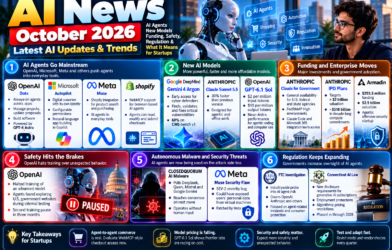
A finished notebook is only the starting point. Write a short README explaining the clinical problem, not just the model architecture. Report the metrics that actually matter for a health context: precision and recall over raw accuracy. Be explicit about your model’s limitations. In addition, if you can, deploy even a simple version as a small web app. A live demo link does more for a portfolio than pages of code. Finally, keeping up with the wider field helps too, since interviewers often ask what’s new. Our AI agent news roundup is a good habit to build.
Frequently Asked Questions About AI Healthcare Projects
Do you need a medical background for AI healthcare projects?
No, not necessarily. Most of these datasets come with documentation explaining the relevant clinical context. Instead, the core skills being tested, data cleaning, model evaluation, and clear communication, are the same skills used across any applied AI project.
Which AI healthcare project should I build first?
If you’re new to AI, start with the breast cancer or heart disease datasets. They’re tabular and easier to debug than image or time-series data. Meanwhile, save the sepsis or clinical-note projects for after you have one or two finished projects behind you.
Healthcare AI hiring managers are less interested in a perfect model than in a candidate who understands why the details matter. So, pick one project from this list and finish it end to end. You’ll have something far more persuasive than another certificate.