



Introduction
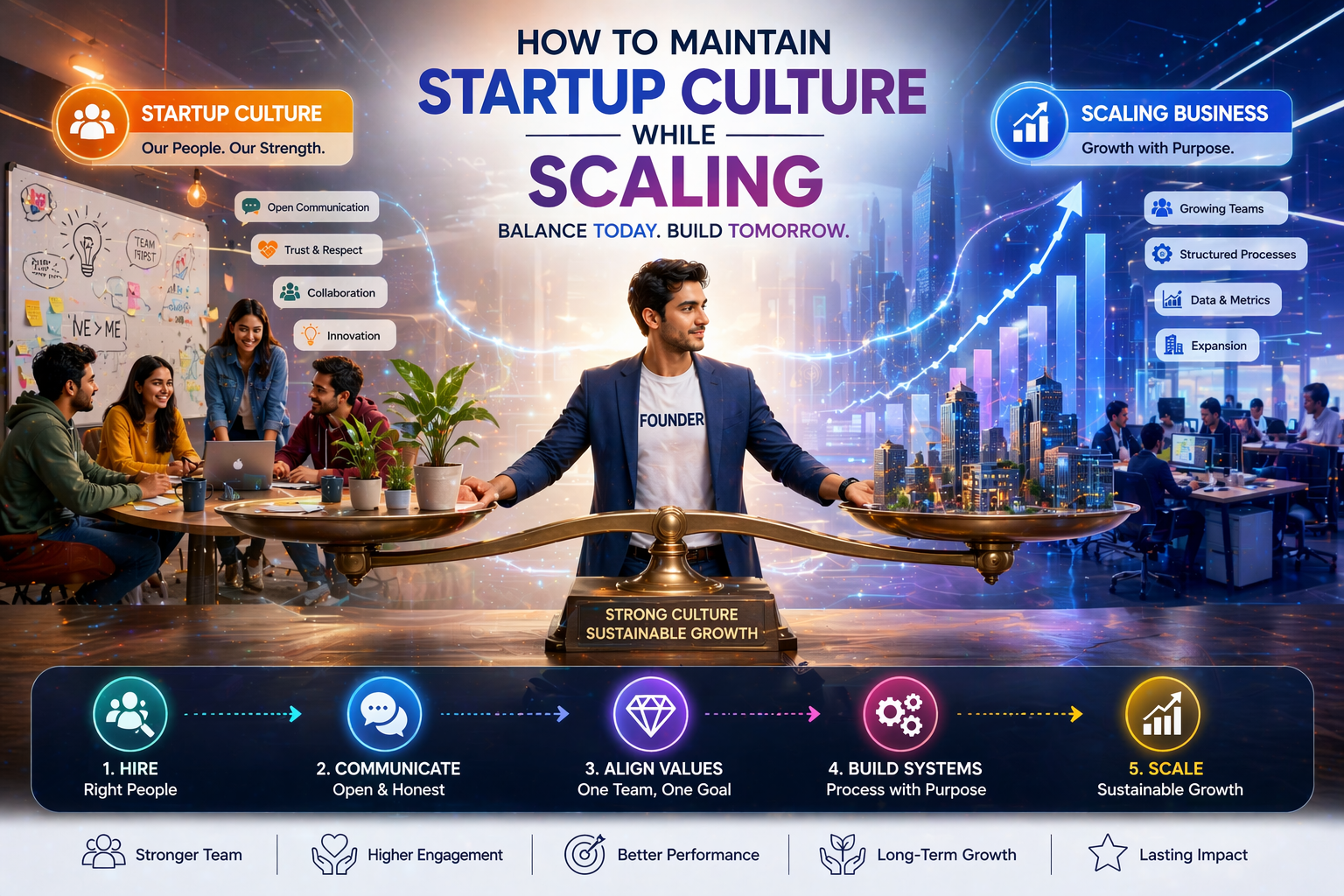
When a startup begins, everything feels fast, flexible, and exciting. The team is small, communication is easy, and everyone feels connected. This is called startup culture. But as the business grows, things start to change. More people join, processes become complex, and communication becomes slower. Many startups lose their original culture during this stage.
If you are a startup founder or leader, this is a very important topic for you. Maintaining startup culture while scaling is one of the biggest challenges in business. If you lose your culture, you may lose your team, productivity, and even your growth.
In this guide, you will learn everything in very simple language. We will explain what startup culture is, why it matters, common mistakes, and practical strategies to maintain it while scaling your business successfully.
What Is Startup Culture?
Before going deeper, let us understand the meaning.
Startup culture is the way people work, think, and behave inside a startup.
It includes:
Values
Work environment
Communication style
Decision-making
Team mindset
In simple words, startup culture defines how your company feels.
Why Startup Culture Is Important
Startup culture is not just about fun or flexibility. It directly impacts business success.
Importance of Culture
A strong culture helps your startup grow.
It builds trust in the team
It improves productivity
It increases employee satisfaction
It attracts talent
It supports innovation
Without a strong culture, scaling becomes difficult.
What Happens When Startups Scale
Scaling means growing your business.
But growth brings challenges.
Changes During Scaling
As your startup grows:
Team size increases
Communication becomes complex
Processes become structured
Leadership becomes distributed
These changes can affect culture.
Common Problems While Scaling Culture
Many startups face problems during growth.
Common Issues
Founders lose control
Communication gaps increase
Values are not followed
Employees feel disconnected
Decision-making slows down
These problems can damage culture.
Why Startups Lose Culture
Understanding the reasons helps you prevent mistakes.
Main Reasons
Lack of clear values
Rapid hiring
Poor leadership
No communication system
Ignoring employee feedback
If culture is not managed, it gets lost.
How to Maintain Startup Culture While Scaling
Now let us focus on solutions.
1. Define Your Core Values Clearly
Before scaling, you must define your values.
Why Values Matter
Values guide behavior.
They help teams make decisions.
What You Should Do
Write clear company values
Share them with the team
Use them in hiring
Follow them in decisions
Values should not just be written, they should be practiced.
2. Hire People Who Fit Your Culture
Hiring is one of the most important factors.
Importance of Hiring
Wrong hiring can damage culture.
What You Should Do
Hire based on values, not just skills
Check attitude and mindset
Look for cultural fit
Skills can be trained, but mindset is difficult to change.
3. Maintain Open Communication
Communication becomes difficult as teams grow.
Why Communication Matters
Good communication keeps teams connected.
What You Should Do
Use clear communication channels
Encourage open discussions
Share company updates regularly
Transparency builds trust.
4. Keep Leadership Strong and Visible
Leadership plays a big role in culture.
Role of Leadership
Leaders set the example.
What You Should Do
Stay connected with the team
Communicate vision clearly
Lead by example
If leaders follow culture, teams will follow too.
5. Build Simple and Clear Processes
Processes are necessary, but they should not kill flexibility.
Balance Between Structure and Flexibility
Too many rules can harm culture.
What You Should Do
Create simple systems
Avoid unnecessary complexity
Allow flexibility
Keep processes human-friendly.
6. Encourage Ownership and Responsibility
In startups, people feel ownership.
Do not lose this during scaling.
Why Ownership Matters
Ownership increases performance.
What You Should Do
Give responsibility to employees
Allow decision-making
Trust your team
When people feel responsible, they perform better.
7. Maintain Startup Mindset
Growth should not remove startup energy.
Startup Mindset
It includes:
Innovation
Speed
Risk-taking
Learning
What You Should Do
Encourage new ideas
Allow experiments
Accept failures
This keeps culture alive.
8. Use Technology to Support Culture
Technology can help manage growing teams.
Tools for Culture
Use tools for:
Communication
Project management
Feedback
But do not replace human connection.
9. Focus on Employee Experience
Employees are the heart of culture.
Why Employee Experience Matters
Happy employees build strong culture.
What You Should Do
Provide support
Recognize efforts
Create positive environment
Small actions make big impact.
10. Regularly Review Your Culture
Culture is not fixed.
It changes with growth.
Why Review Is Important
You need to check if culture is strong.
What You Should Do
Take feedback
Conduct surveys
Analyze team behavior
Improve continuously.
Leadership Role in Scaling Culture
Leaders are responsible for culture.
Key Responsibilities
Set vision
Communicate values
Build trust
Support team
Strong leadership keeps culture stable.
Role of HR in Startup Culture
HR is not just about hiring.
HR Responsibilities
Maintain culture
Handle employee concerns
Build engagement
Support growth
HR plays a key role in scaling culture.
Culture vs Performance
Some founders think culture slows growth.
But this is not true.
Reality
Strong culture improves performance.
It increases productivity
It reduces employee turnover
It builds long-term success
Real Example of Culture in Scaling
Let us understand with a simple example.
A startup grows from 10 to 100 employees.
If it:
Maintains communication
Keeps values strong
Supports employees
Then culture stays strong.
If it ignores these:
Culture breaks.
Mistakes to Avoid
Avoid these mistakes.
Common Mistakes
Hiring too fast
Ignoring values
Poor communication
Over-complication
Not listening to employees
These mistakes destroy culture.
Benefits of Strong Culture While Scaling
Maintaining culture gives many benefits.
Key Benefits
Better team performance
Higher retention
Stronger brand
Faster growth
Better innovation
Culture becomes a competitive advantage.
Future of Startup Culture (2026)
Startup culture is evolving.
Future Trends
Remote work culture
AI-driven workplaces
Flexible teams
Global teams
Culture will become more digital but still human-focused.
Why Founders Must Focus on Culture
Founders build the foundation.
Founder Impact
Your behavior defines culture.
If you:
Respect values
Communicate clearly
Support team
Then culture stays strong.
Conclusion
Maintaining startup culture while scaling is not easy, but it is possible. Culture is not something that happens automatically. It must be built and protected.
As your startup grows, you must focus on values, communication, hiring, and leadership. These factors help you keep your culture strong.
A strong culture leads to strong growth. It keeps your team motivated and your business successful.
Do not ignore culture while scaling. It is one of your biggest assets.
Read More Blog-How to Use the Startup India Portal: From Registration to Growth
Frequently Asked Questions (FAQs)
1. What is startup culture?
Startup culture is the work environment, values, and mindset of a company.
2. Why is culture important while scaling?
It helps maintain team performance, trust, and growth.
3. How can I maintain culture during growth?
Focus on values, hiring, communication, and leadership.
4. Does scaling destroy culture?
Not always, but poor management can damage it.
5. What is the biggest mistake founders make?
Ignoring culture while focusing only on growth.
6. Can remote teams maintain culture?
Yes, with proper communication and engagement.
7. How often should culture be reviewed?
Regularly, especially during growth phases.