

Startups don’t need a fifty-person team to compete with well-funded rivals anymore. AI tools have closed that gap fast. Almost 78% of companies have already adopted AI in some form. Small teams now use it to punch above their weight in marketing, sales, support, and operations. This guide breaks down the best AI tools for startups in 2026, organized by category. Pick the ones that fit your stage and budget.
Why Startups Are Leaning on AI Tools Now
The numbers explain the rush. Specifically, companies that implement AI see a 6-10% average revenue increase, according to recent industry research. Meanwhile, 44% of business leaders report a real productivity boost after rolling out AI tools. In addition, 81% of employees say they perform better with AI support. For a resource-constrained startup, that’s not a marginal edge. In fact, it’s the difference between a two-person team acting like ten.
Cost matters just as much as output. Overall, over half of businesses, 54%, report measurable cost savings from AI adoption in their IT and business processes. Instead of hiring specialists for every function, many early-stage teams assign narrow tasks to AI tools. As a result, that keeps headcount lean until revenue justifies otherwise.
AI Tools for Startups, by Category
Workflow Automation and AI Agents
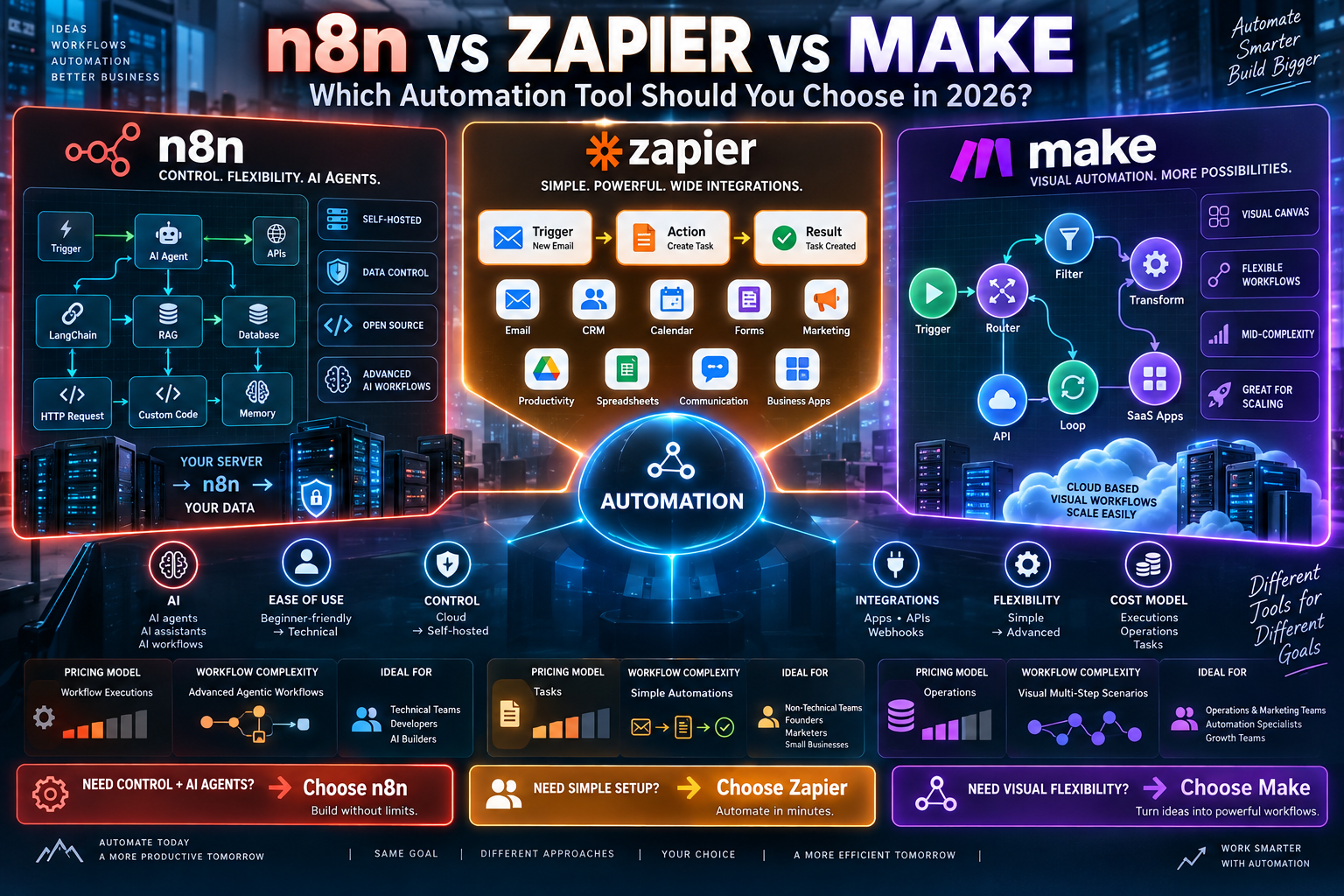
Manual busywork eats founder time fast. For instance, automation platforms like Activepieces connect the apps a startup already uses, from email to CRM to spreadsheets. AI agents then handle the repetitive steps between them. Activepieces offers a free tier with 10 active flows, then scales to paid plans as workflows grow. For startups comparing n8n, Zapier, or Make instead, our full comparison of n8n vs Zapier vs Make breaks down which tool fits which team.
Design and Marketing Content
Canva AI remains the fastest way for a non-designer to produce on-brand marketing assets. Notably, magic design templates and an AI writing assistant cover most early marketing needs. Built-in image and video generation round it out, without a design hire. The free plan covers basic use. Meanwhile, Canva Pro starts at $15/month once a team needs brand kits and more generation credits.
Business Planning and Fundraising
Before a single line of code ships, most startups still need a plan and a pitch. For example, Upmetrics uses an AI business plan generator alongside pitch deck creation. Financial forecasting tools are built in too. As a result, work that used to take weeks now takes days. Plans start around $19/month, rising to $49/month for the professional tier.
Writing, Research, and Coding
ChatGPT remains the default AI assistant for founders juggling research, drafting, and code. Its free plan covers casual use. Meanwhile, the $30/user/month business tier adds team features for startups scaling past a solo founder. Notably, most teams pair it with a dedicated writing tool for customer-facing content. Otherwise, general-purpose assistants can miss brand voice on their own.
Writing Polish
Grammarly handles the layer ChatGPT doesn’t: tone, clarity, and plagiarism checks across every app a team writes in. The free plan covers grammar basics. In addition, Grammarly Pro, at $12 per member per month, adds AI-assisted drafting and deeper tone control. For customer emails and public content, this second pass catches what a first draft misses.
Sales and CRM
HubSpot’s Breeze AI brings predictive lead scoring and automated email drafts into a CRM many startups already run sales through. Social content generation is included as well. Free tools cover early-stage needs. However, the Starter tier, at $15/seat/month, unlocks the AI features that matter once a pipeline gets real volume.
Customer Support
As a startup’s user base grows, support tickets stop fitting in one shared inbox. Front consolidates email, chat, and SMS into a single workflow. In addition, automation and analytics are layered on top, starting at $35/seat/month. Specifically, it’s built for teams that have outgrown ad hoc support but aren’t ready for a full help desk platform.
Knowledge Management
Notion AI turns a startup’s scattered docs into something searchable. Content drafting and document summarization are both built in. For instance, a Q&A search feature means new hires can find answers fast, without pinging the founder constantly. The free workspace tier covers small teams. Meanwhile, Plus, at $12/member/month, adds the AI search and drafting features.
How to Choose the Right AI Tools for Your Startup
More tools isn’t automatically better. Before adding another subscription, check three things. Does it solve a problem you actually have today? Does it integrate with systems your team already relies on? And can you cancel it without disrupting a workflow if it doesn’t work out? Overall, early-stage startups should favor generous free tiers and monthly billing over annual contracts. After all, priorities shift fast in the first two years.
Common Mistakes When Adopting AI Tools
Tool sprawl is the most common failure mode. Founders sign up for a new AI tool every time a problem appears. Within a year, nobody remembers which apps actually get used. Instead, audit your stack quarterly and cut anything with low usage.
Skipping ROI tracking is the second mistake. If a tool claims to save time, measure it instead of assuming it. As a result, teams that track usage against documented AI adoption outcomes catch wasted spend early. Specifically, that happens months before a founder would otherwise notice a bloated software budget.
Data privacy gets overlooked too often at the earliest stage. Customer data, financial records, and proprietary code shouldn’t flow into a free AI tool unchecked. Instead, always review its data-retention and training policies first.
Frequently Asked Questions
Do startups really need AI tools, or is it hype?
Both, depending on the tool. General productivity gains are well documented. Specifically, double-digit percentages of business leaders and employees report real output improvements. However, not every AI feature justifies its price tag. Instead, the tools worth paying for solve a specific, recurring problem your team already has.
How much should a startup budget for AI tools?
Most early-stage teams spend $200 to $500 per month total across their AI tool stack. That covers automation, writing, design, and CRM combined. Specifically, start with free tiers wherever possible. Overall, upgrade only the two or three tools your team uses daily.
AI tools won’t replace a startup’s judgment about what to build or who to hire. Instead, what they do is compress the time between an idea and its execution. As a result, a small team can operate at a scale that used to require a much bigger headcount. Pick the categories above that match your current bottleneck. Finally, start with the free tiers, and expand from there.