


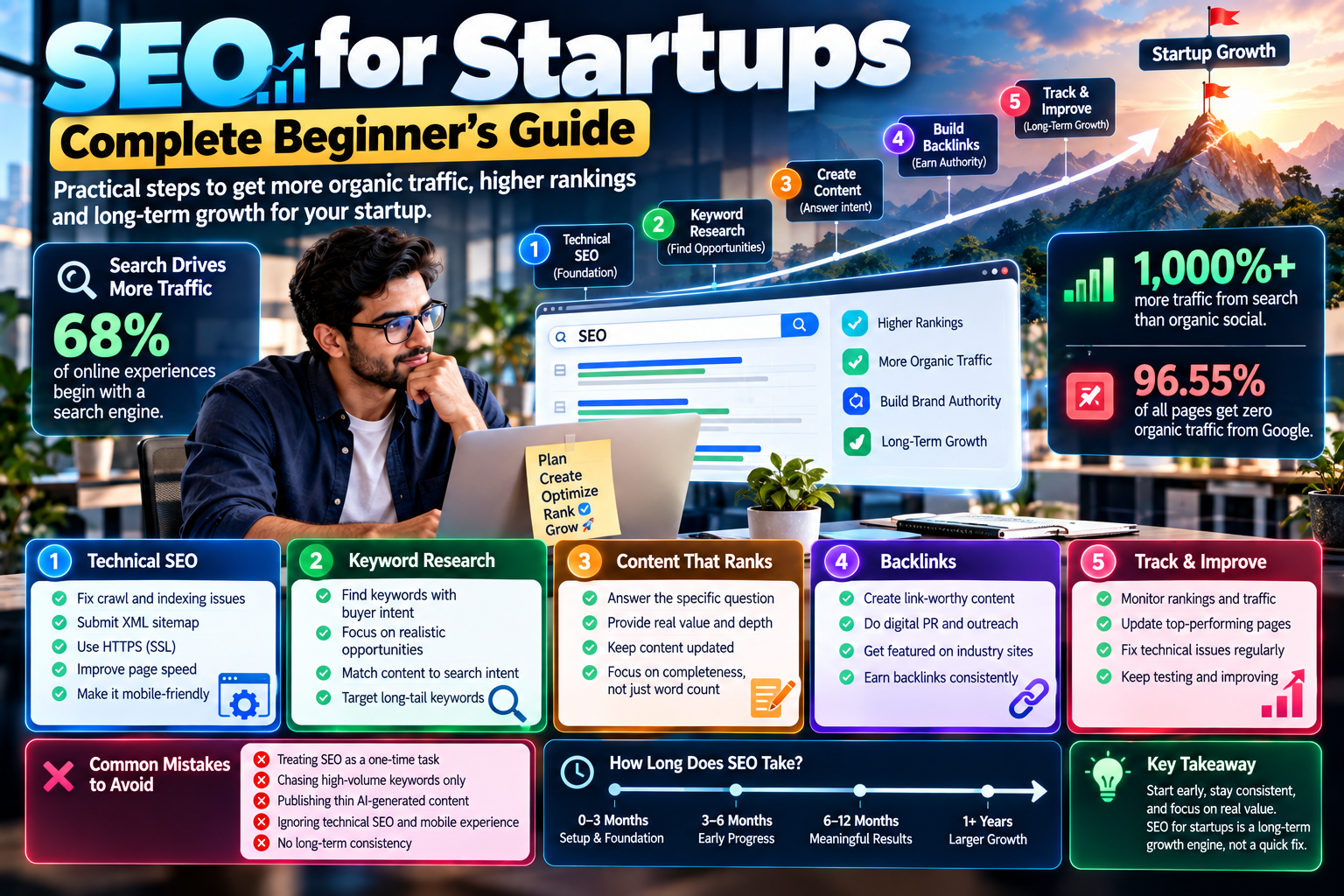
SEO for startups starts with a hard truth: 96.55 percent of all pages get zero organic search traffic from Google. That isn’t a reason to skip it. It’s a reason to do it deliberately instead of publishing content and hoping. Search still drives more traffic than any other channel, with 68 percent of online experiences beginning with a search engine. Here’s what actually moves the needle for a new company with no existing authority.
Why SEO for Startups Is Worth the Early Investment
Search delivers over 1,000 percent more traffic than organic social, according to industry data. That gap compounds over time, since a page that ranks keeps earning traffic without a fresh ad budget every month. The catch is patience. Only 1.74 percent of newly published pages reach the top 10 within a year. In fact, 72.9 percent of top-ranking pages are more than three years old. Starting early, even before you need the traffic, is what makes that math work in your favor later.
Start With Technical SEO Before Anything Else
Content and backlinks don’t matter if search engines can’t crawl and index your site. Before writing a single blog post, confirm your site allows indexing, submit an XML sitemap, and fix broken links and error pages. Add SSL, too, so the site loads over HTTPS. Page speed and mobile-friendliness matter as well, since a slow or broken mobile experience quietly caps how well every other SEO effort performs. Run this audit once at launch, then again after any major redesign.
Keyword Research That Matches What Buyers Actually Search
Keyword volume alone is a weak signal. A term can get real search volume and still convert nobody, because the people searching it aren’t looking to buy. Instead, match each keyword to the intent behind it. Someone searching “what is CRM software” wants an explanation, not a demo request. Someone searching “best CRM for small teams” is closer to a decision. Build content, and calls to action, around where each keyword actually sits in that journey.
Content That Actually Ranks: Search Intent Over Word Count
Ranking content answers the specific question behind a search. It does so with enough depth that a reader doesn’t need to click back and try another result. Length isn’t the goal; completeness is. Publishing once and never revisiting a page also hurts more than most founders realize. Search engines favor pages that stay accurate and current, so a quarterly refresh of your best-performing pages often outperforms writing something new from scratch.
Backlinks: The Slow but Real Ranking Factor
Backlinks remain one of the clearest signals search engines use to judge a page’s authority. Top-ranking pages typically gain new backlinks at a rate of 5 to 14.5 percent a month. That’s a pace, not a one-time task. For an early-stage startup, the fastest legitimate path is usually digital PR around a genuine data point or launch, plus guest contributions to industry publications. Ultimately, the goal is being worth linking to because the content answers something well.
How Long SEO for Startups Actually Takes
Realistically, expect the first meaningful results in 6 to 12 months, and longer in a competitive category. That timeline is exactly why this work needs to start before it feels urgent. A founder who waits until revenue slows to invest in SEO is starting a 6 to 12 month project at the worst possible time.
Common SEO Mistakes New Startups Make
The most common mistake is treating SEO as a one-time setup task instead of an ongoing habit. A close second is chasing high-volume keywords with no realistic path to ranking. Instead, start with less competitive terms a new domain can actually win. Thin, AI-generated content with no real expertise behind it also tends to underperform, since search engines increasingly reward pages that demonstrate direct experience. For a broader view of channels beyond search, see our guide to startup marketing strategies.
Frequently Asked Questions About SEO for Startups
How Long Does SEO for Startups Take to Work?
Most startups see meaningful movement in 6 to 12 months, based on industry benchmark data. Competitive categories can take considerably longer, sometimes years, before a new domain earns enough authority to rank for its hardest keywords.
Should a Startup Do SEO or Paid Ads First?
Most startups benefit from running both, at different speeds. Paid ads can generate traffic and validate messaging immediately. Meanwhile, SEO compounds in the background and eventually reduces dependence on ad spend. Cutting SEO entirely in favor of ads alone usually means starting from zero later, at a worse time.
SEO for startups isn’t a growth hack. It’s closer to compound interest. The technical foundation, the keyword targeting, and the content all matter, but the biggest lever is simply starting months before you need the traffic. Do that, and the math in this guide starts working for you instead of against you.